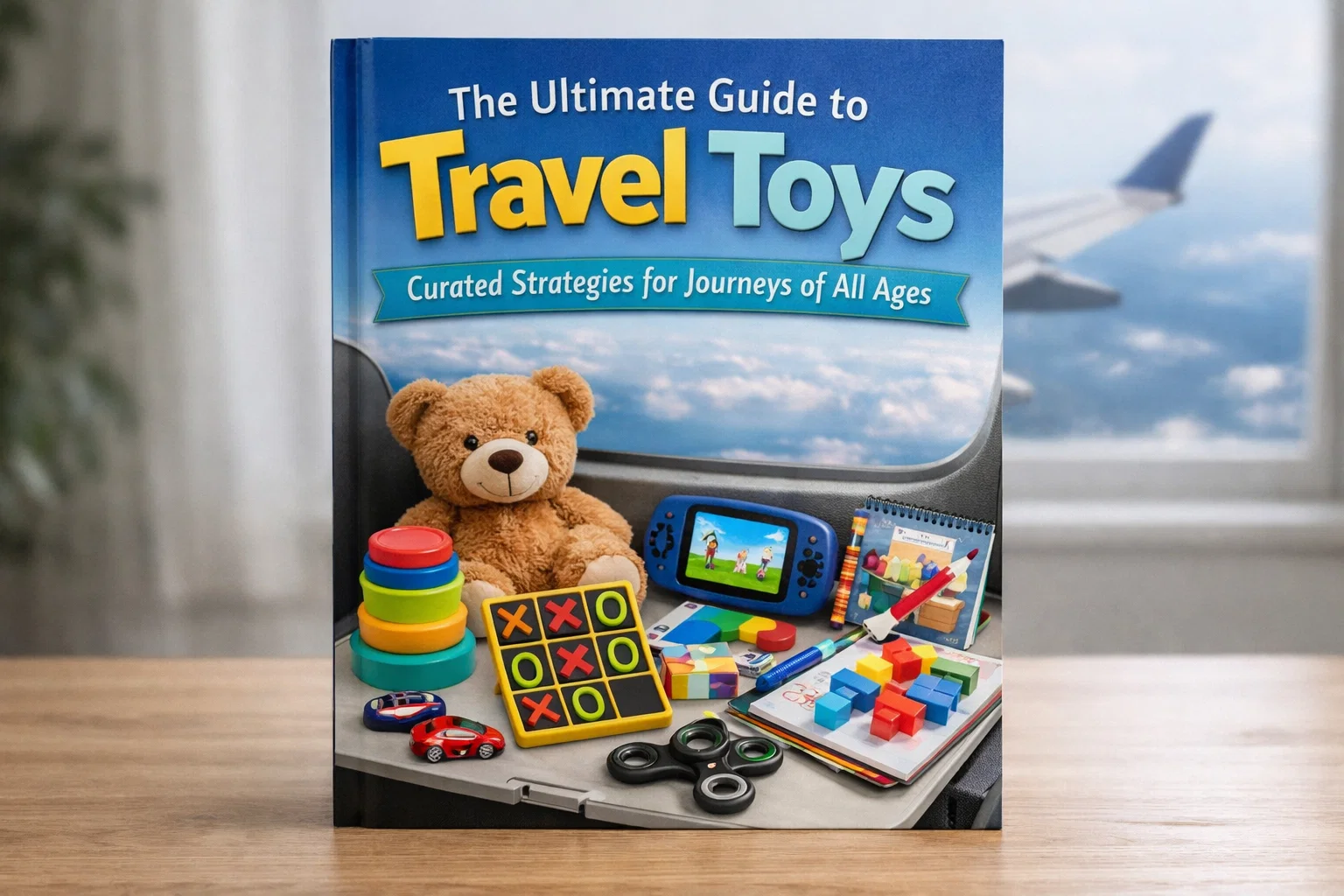
The Travel Toy Compendium: Mastering the Art of On-the-Go Engagement
Executive Summary: This definitive resource moves beyond simple product lists to deliver a holistic, strategic framework for selecting and utilizing travel toys. It addresses the core challenges parents and caregivers face—managing space, minimizing meltdowns, and fostering meaningful engagement—by blending developmental psychology, practical logistics, and hands-on experience. You will learn how to build a versatile travel toy kit tailored to your child’s age, temperament, and the unique demands of your journey, transforming travel from a potential stressor into a part of the adventure.
Introduction
The phrase “Are we there yet?” echoes through generations as the universal anthem of childhood travel impatience. In today’s world of packed itineraries, confined spaces, and high expectations for family vacations, the right selection of travel toys serves as more than mere distraction; it is a critical tool for preserving sanity, ensuring safety, and cultivating a child’s curiosity about the world. This guide explains the strategic art of choosing and using playthings for journeys. It is designed for parents, grandparents, and caregivers who seek to navigate the complex intersection of developmental needs, portability, and engagement during transit. We will move past generic advice to provide a nuanced, expert-level resource that helps readers build intelligent travel toy systems, address common pain points head-on, and understand the why behind the what of effective travel play.
Understanding the Core Purpose of Travel Toys
At its heart, a travel toy is not defined by its size, but by its function. It is any item of play specifically curated to meet the unique constraints and opportunities of a journey. The primary intent is to facilitate manageable, contained engagement in a shared, public, or confined space where a child’s usual play environment is absent. Unlike the sprawling collection of toys at home, effective travel toys for kids must fulfill a trifecta of requirements: they must be engaging enough to captivate, compact enough to transport, and quiet enough to respect fellow travelers.
This matters most when you’re trapped on a transcontinental flight with a toddler or navigating a long highway stretch. The goal shifts from pure entertainment at home to strategic engagement on the road. A successful travel toy kit addresses several psychological and practical needs: it provides a sense of familiar comfort in an unfamiliar setting, offers a constructive outlet for restless energy, and can even scaffold learning about the new environments the child is passing through. It’s about creating a portable “micro-environment” for play.
Key Takeaway: Travel toys are strategic tools for contained engagement, serving psychological comfort and practical needs within the unique constraints of travel environments.
The Travel Toy Philosophy: Beyond Distraction
A common misconception is that the sole purpose of a travel toy is to distract a child until the journey ends. This is a limited, and often stressful, viewpoint. A more effective philosophy frames travel toys as bridges. They bridge the gap between home and destination, between boredom and curiosity, between passive viewing and active participation. This philosophy informs every selection.
From a hands-on use perspective, the most successful items often do not scream “toy.” They might be a set of magnetic building tiles that become a spaceship, then a castle, then a abstract sculpture. They could be a sketchpad where a child draws what they see out the window. They are tools for doing, not just having. This approach aligns with modern shifts in parenting and education, which emphasize experiential learning and minimizing overstimulation. Instead of a bag full of loud, single-purpose plastic, the modern travel kit is lean, multi-purpose, and often open-ended.
Integrating this philosophy means considering the child’s agency. Allowing them to choose a few special items from their approved travel bin at home invests them in the process. It also means sequencing the revelation of toys throughout the journey, turning moments of rising fussiness into opportunities for a “new” activity, thus extending the engagement life of your entire kit.
Key Takeaway: Adopt a philosophy where travel toys act as bridges to curiosity and active participation, prioritizing open-ended, multi-purpose tools over passive, single-use distractions.
Critical Considerations Before You Pack: The Pre-Trip Audit
The impulse is to pack every beloved item to avoid potential upset. This leads to an overstuffed bag, parental frustration, and a child overwhelmed by choice. A disciplined pre-trip audit prevents this. Start by considering three foundational vectors: the Child, the Journey, and the Destination.
First, the Child: Age is the starting point, but temperament is the master key. A sensory-seeking three-year-old will need different fidget items than a contemplative one. Consider their current passions (dinosaurs, vehicles, fairies) and how to translate that into travel-friendly formats. Also, audit for small parts if you have younger siblings along.
Second, the Journey: A two-hour car ride demands a different strategy than a fourteen-hour flight with layovers. For air travel, pressure changes make chewable or suckable items (a water bottle with a straw, a silicone necklace) crucial for infants and toddlers. For road trips, think about items that can be used in a car seat and won’t become dangerous projectiles in a sudden stop. Travel toys for airplanes must also consider noise—nothing that beeps, buzzes, or requires loud vocalizations.
Third, the Destination: Will you have space to unpack at a hotel? Are you camping or moving frequently? Will there be downtime at a relative’s house? Your kit might include a single, more substantial item (like a collapsible play tunnel) for destination use, separate from the in-transit bag.
Key Takeaway: Conduct a strategic audit focusing on the child’s temperament, the journey’s specific logistics, and the destination’s amenities to build a targeted, effective toy kit.
Age-by-Age Strategies: From Infant to Tween
One-size-fits-all advice fails with children. Developmental stages dictate capabilities, interests, and risks. Here we break down evidence-based strategies for each major age group, addressing the core user problem of selecting age-appropriate items that truly engage.
Infants (0-12 months): The world is sensory. Travel toys for babies are less about complex play and more about comforting stimulation. High-contrast soft books, a clutch ball with varied textures, and silicone teethers are ideal. A favorite lovey is non-negotiable. At this stage, parents are the ultimate toy; simple games like peek-a-boo and singing are paramount. The goal is to provide familiar, soothing sensory input.
What are travel toys for infants?
Travel toys for infants are sensory-focused items designed to provide comforting, familiar stimulation in new environments. They prioritize safety, soft textures, high-contrast visuals, and chewability. Their primary function is to soothe and offer mild engagement, often serving as an extension of parental interaction during the journey.
Toddlers (1-3 years): This is the most challenging and critical age for travel. Toddlers are mobile, opinionated, and have minimal impulse control. The core problem here is managing boundless energy in a confined space. Solutions include novel fidget items (a silicone pot scrubber with ribbons woven through it), simple puzzles with knobs, board books with lift-the-flaps, and a doodle board. A small bucket with a few toy cars they can “drive” on their tray table is golden. The key is rapid rotation—have a “deep bag” of many simple items.
Preschoolers (3-5 years): Imaginative play blooms. Travel toys should fuel this. Think small figurines (animals, people), play dough in a single can (great for fine motor skills), lacing cards, and sticker scenes. This is a prime age for “busy books” with zippers, buttons, and snaps. They can also start engaging with the journey itself: a simple camera (even a discontinued smartphone) to take pictures, or a map they can trace.
School-Age Children (6-10 years): Reading and rule-based games become engaging. Activity books (word searches, mazes), travel-sized board games, card games like Uno, and craft kits (friendship bracelets, origami) are excellent. Building systems like LEGO in a small tray or magnetic tiles are hugely popular. This age also benefits from strategy—give them their own small backpack and let them manage their entertainment, teaching responsibility.
Tweens (10+): The line between toy and tool blurs. Engagement comes from technology (with limits), books, complex puzzle books like Sudoku, detailed drawing kits, or journalling supplies. A focus on destination-related engagement works well: a bird guide if you’re hiking, a phrasebook if traveling abroad. The goal is to respect their growing independence while providing off-screen options.
Key Takeaway: Successful travel toy selection is fundamentally rooted in developmental stages, requiring a shift from sensory soothing for infants to imaginative and strategic engagement for older children.
The Indispensable Categories: Building Your Toolkit
Rather than listing specific products, which quickly become outdated, we focus on perennial categories that have proven their worth across countless journeys. Think of these as the “food groups” of a balanced travel toy diet.
The Novelty Factor: This is the most powerful category. A never-before-seen item has immense captivating power. It doesn’t need to be expensive—a pack of glow sticks for a night flight, a set of window clings, a new pack of exotic animal erasers. The key is to wrap these novelties and dole them out at strategic low points.
The Fidget & Sensory Items: Essential for managing anxiety and restless energy. Think thinking putty, a small sensory bag filled with beads and trinkets to manipulate, a kaleidoscope, or a textured rubber ball. For young children, pop-its and their variations have become a modern staple for good reason.
The Creative & Mark-Making Suite: A closed-ended activity with an open-ended outcome. This includes a sturdy travel doodle board, washable markers and a notepad, sticker books, and water-wow books where paint appears with just water. The mess is contained, and the creative potential is limitless.
The Constructive Challenge: Items that involve building, connecting, or solving. Magnetic tiles, pipe cleaners, LEGO sets in a tackle box, and travel-sized puzzles fall here. They promote STEM skills and can provide extended, focused play.
The Narrative & Imaginative Play Cluster: Small worlds in a bag. Miniature doll sets, toy vehicles, animal figurines, and a play scarf that can be a cape, a sea, or a blanket. These items allow a child to create their own stories, a deeply absorbing process.
The Analog Tech (The Anti-Screen): Physical items that mimic the appeal of tech. A kid-friendly camera, a portable audio player with pre-loaded stories or music, a pocket microscope for destination exploration. They offer engagement without the hyper-stimulation of a tablet.
Key Takeaway: A resilient travel toy kit is built from versatile, perennial categories like novelty items, fidget tools, creative supplies, and constructive challenges, ensuring coverage for different moods and needs.
The Logistics of Travel Play: Containment, Rotation, and Sanity
The best toys are useless if buried in a suitcase. The how of managing your kit is as important as the what. The core user problem here is organization under pressure.
Containment Systems: Use multiple small containers within a larger bag. A hanging toiletries bag with clear pockets is perfect for small items, allowing a child to see choices. Use a silicone pencil case for markers. A small baking sheet with a lip becomes a magnetic play board and a catch-all tray in a car or plane seat. The principle is portable play containment.
The Art of the Rotation: Never give access to the entire kit at once. Start with one or two medium-engagement items. When interest wanes, put them away and introduce a novelty item. Later, you can cycle a previous item back in; it will often feel fresh. This practice dramatically extends the attention span across the journey.
The “Deep Bag” Principle: Your publicly accessible bag should have 5-7 items in rotation. Your “deep bag” (a separate pouch in your carry-on) holds the reserves—more novel items, replacements for lost pieces, and the “big guns” for emergency meltdowns. This layered approach gives you strategic depth.
Clean-Up and Lost Parts: Choose toys where losing one piece doesn’t ruin the whole set. Pack a small spare bag for trash and used stickers. Immediately after play, do a quick “parts check” before stowing an item to prevent loss under seats.
Key Takeaway: Masterful logistics—using containment systems, strategic rotation, and a layered “deep bag”—are essential to maximizing the utility and longevity of your travel toy arsenal.
Addressing Common Travel Scenarios with Toy Solutions
Different journeys pose unique challenges. Here, we apply the toolkit to specific scenarios, offering practical problem-solution pairings.
The Long-Haul Flight: The ultimate test. Pressure changes demand a sippy cup or pacifier for take-off/landing. Adhesive window clings provide mess-free window play. A busy book with quiet activities (laces, buttons) is superb. For the dark cabin, a small, dim book light for reading and those glow sticks mentioned earlier. The goal is a mix of calming, familiar items and surprising novelties stretched across the flight timeline.
The Road Trip: Space is less constrained, but safety and accessibility are key. Use a car seat organizer with pockets. Magnetic boards with shapes avoid drops. Audio entertainment shines here—audiobooks, family-friendly podcasts, or storytelling recordings. For rest stops, always pack a compact, active item like a foldable frisbee or a jump rope to burn energy.
The Restaurant Wait: This is about quiet, table-top engagement. A small tin of play dough, a mini figurine set, a pocket-sized puzzle, or a tangram set are perfect. The classic “crayons and kids’ menu” is a staple for a reason. The objective is to facilitate family interaction, not replace it, so simple conversational games like “I Spy” are also part of this kit.
The Airport Layover: This scenario requires a blend of energy-burning and calm-down tools. If space allows, a soft, inflatable ball for gentle kicking in a quiet corner. A scavenger hunt list to spot things in the terminal. Then, as boarding nears, transition to calmer items like a book or sketchpad to settle before the next flight.
Key Takeaway: Tailor your toy selection to the specific physical and psychological demands of each travel scenario, from the pressurized cabin of a plane to the moving vehicle of a road trip.
The Materials and Safety Deep Dive
Safety is non-negotiable, and material choice impacts durability, cleanliness, and peace of mind. A common oversight is not considering the environment in which the toy will be used.
Material Matters: Silicone, wood, and high-quality, BPA-free plastics are durable and easy to wipe clean. Fabric toys should be machine-washable. Avoid toys with sharp edges or those that can shatter. In practice, wooden toys, while beautiful, can be heavy and noisy if dropped; silicone is often the superior travel choice for young children.
Choking Hazards: This is the paramount concern. Use a toilet paper tube as a tester—if any part fits entirely inside, it’s a choking hazard for children under three. Be extra vigilant with siblings; an older child’s LEGO set is a minefield for a crawling infant in a hotel room.
Cleanability: Travel exposes toys to germs. Prioritize items that can be wiped down with a disinfecting cloth or washed in a sink. Avoid complex electronic toys with crevices. For stuffed lovies, having an identical backup is a travel-pro tip for emergency washes.
Cords and Strings: Be mindful of cords on pull toys or strings on mittens; they pose a strangulation risk, especially in car seats or unsupervised moments.
Key Takeaway: Prioritize safety and hygiene by selecting travel toys made from wipeable, durable materials, rigorously checking for age-appropriate sizing to avoid choking hazards, and considering real-world cleanliness.
The Digital Dilemma: Tablets and Screens as Travel Toys
To ignore the tablet is to ignore reality. The key is intentional use, not guilt-ridden default. Frame digital devices as one tool in the kit, not the entire toolbox.
The Strategic Approach: Designate screen time for specific, predictable segments of the journey—e.g., the final hour of a flight when everyone is exhausted. This makes it a planned treat, not a reflexive pacifier. Download content ahead of time; never rely on in-flight or spotty cellular entertainment.
Curating Content: Choose a mix of calming shows, interactive educational apps, and perhaps a movie the whole family can watch together. There’s a difference between passive watching and an app that involves puzzle-solving or creative storytelling.
The Supporting Cast: A tablet is vastly improved as a travel toy when paired with physical accessories. Child-friendly headphones are a must. A stand to prop it up saves little arms. Consider a stylus for drawing apps to bridge digital and physical creativity.
Setting Boundaries: Use parental controls to lock the device when time is up. The transition away from the screen should be facilitated by the immediate introduction of a compelling physical activity from your kit, easing the shift.
Key Takeaway: Integrate screens intentionally as a powerful, but limited, tool within a broader ecosystem of analog play, using curated content and clear boundaries to prevent overreliance.
The Power of Non-Toy Toys and Everyday Objects
Some of the most engaging “toys” are not toys at all. Harnessing this requires a shift in perspective, solving the problem of limited space and budget with creativity.
The Magic of the Mundane: A pack of colorful pipe cleaners can become animals, glasses, rings, and shapes. A pill organizer becomes a sorting tray for tiny treasures or a paint palette. A small flashlight can fuel shadow puppet shows. A roll of painter’s tape can make a road on the floor, a hopscotch grid, or secure paper for drawing.
Destination-Specific Scavenging: At a beach, shells and a muffin tin become a sorting game. In the woods, a collected leaf and crayon rubbing kit is entertainment. This not only occupies time but deeply connects the child to the new environment.
The “Gift of Time” Kit: Assemble a small bag with new but ordinary items: a small notepad, a fun pen, a packet of postcards to write, a mini flashlight, a magnifying glass. This celebrates curiosity and resourcefulness over commercial toys.
As one experienced child development specialist notes, “The most portable and adaptable playthings are often those that harness a child’s innate imagination. A simple blank notebook and pencil invite a child to author their own experience, turning observation into narrative. This internal resource is the ultimate travel tool.”
Key Takeaway: Cultivate creativity and resourcefulness by recognizing the play potential in everyday objects, reducing packing load and encouraging children to engage interactively with their environment.
The Special Considerations: Sensory Needs, Siblings, and Gifting
Standard advice fails for nuanced situations. Addressing these gaps is a mark of expert guidance.
For Children with Sensory Processing Needs: Predictability and sensory regulation are key. Weighted lap pads, noise-canceling headphones, chewelry, and favorite fidgets are not luxuries but necessities. Pack multiples of beloved sensory items. Create a visual schedule of the journey to reduce anxiety, and include toys that provide the needed sensory input (proprioceptive, tactile, vestibular).
Managing Multiple Siblings: The core problem is conflicting needs and rivalry. Solutions include: 1) Individual Kits: Let each child pack their own small bag from a shared “travel toy” bin, ensuring ownership. 2) Shared, Collaborative Items: A travel game everyone can play, or a building set to work on together. 3) Novelty Swap: Pack a few identical novelty items to avoid fights. 4) The “Specialist” Role: Assign one child to be the map reader, another the snack distributor, using roles as engagement.
Travel Toys as Gifts: When gifting for a child who will travel, think portability and novelty. A “travel kit” gift—a cool backpack filled with a mix of the categories discussed—is a profoundly thoughtful present for both child and parents. Avoid gifts with a hundred tiny pieces or loud electronic features.
Key Takeaway: Advanced travel toy strategy requires customization for unique needs, such as sensory regulation, multi-child dynamics, or gift-giving, moving beyond one-size-fits-all solutions.
The Evolution and Future of Travel Play
The concept of travel toys is not static. It evolves with parenting philosophies, material science, and cultural trends. Historically, travel play was minimal—perhaps a carved toy or a single doll. The advent of plastics and mass production created the era of the cheap, disposable travel trinket.
Today, the trend is swinging toward sustainability, open-ended play, and “slow” parenting. Parents are seeking toys made from natural materials, with heirloom quality, that grow with the child. There is also a growing awareness of the importance of boredom—allowing quiet spaces in the journey where a child must look out the window and daydream, which is itself a critical cognitive process.
Future innovations will likely continue in smart material design—toys that are ultra-lightweight, antimicrobial, and transformable. However, the timeless principles of engaging a child’s hands, mind, and imagination will remain constant. The core challenge will always be balancing the seductive ease of digital immersion with the rich, developmental benefits of hands-on, analog play.
Key Takeaway: While materials and trends change, the enduring principles of travel play center on fostering imagination and engagement with thoughtfully curated, adaptable tools that respect both the child’s development and the journey’s constraints.
A Comparative Framework: Choosing Your Travel Toy Archetype
Not all toys are created equal, especially under travel duress. This table compares common toy archetypes across critical travel criteria to guide decision-making. Use it as a lens to evaluate items you already own or are considering purchasing.
| Toy Archetype | Engagement Duration | Mess Factor | Noise Level | Space Efficiency | Developmental Value (Example) |
|---|---|---|---|---|---|
| Open-Ended Builder (e.g., magnetic tiles) | Very High | Low (if contained) | Low | Medium-High | STEM, spatial reasoning, creativity |
| Consumable Activity (e.g., sticker book) | Medium (finite) | Low-Medium (sticker backs) | Low | High | Fine motor, planning, storytelling |
| Fidget/Sensory Tool (e.g., thinking putty) | Medium-High | High if uncontained | Low | Very High | Self-regulation, focus, tactile processing |
| Small World Figurines | High | Low | Low (with play) | Medium | Narrative skills, social-emotional learning |
| Electronic Toy | Medium | Low | Often High | Varies | Cause-effect, but often passive |
| Analog Creative Kit (e.g., doodle board) | High | Very Low | Low | High | Creativity, pre-writing, expression |
Key Takeaway: Use a comparative framework to evaluate potential travel toys across axes like engagement duration, mess, and noise, aligning the archetype’s strengths with your specific journey needs.
The Destination Unpack: Transitioning from Transit to Exploration
A frequently overlooked phase is the arrival. How do you transition from the contained play of travel to the exploration of the destination without creating a toy-cluttered temporary home?
The Destination Kit: Separate from your transit bag, pack a small kit for hotel/Airbnb downtime. This might include a pack of cards, a read-aloud book, and one active item like a soft ball. Keep it minimal.
Local Integration: Upon arrival, shift the focus from imported toys to local engagement. Visit a market and buy a local children’s book or a simple, traditional game. This becomes a treasured souvenir and travel toy rolled into one.
The “Home Base” Container: Use a single, collapsible bin or a designated drawer to contain all toys in your accommodation. This establishes order, prevents loss, and makes cleanup trivial.
Real-World Example: A family traveling to a coastal national park packed a small, dedicated “explorer kit”: a child’s field guide to local wildlife, a pair of binoculars, a small notebook, and a magnifying glass. During hikes, the children were tasked with spotting and drawing animals or plants. The kit served as both a travel toy during car rides to trailheads and the core activity during the exploration itself, seamlessly blending transit and destination play.
Key Takeaway: Plan a distinct strategy for destination play, aiming to integrate local discoveries and minimize clutter, ensuring toys facilitate rather than detract from the experience of the new place.
The Ultimate Travel Toy Checklist: A Pre-Departure Guide
Before your conclusion, use this actionable checklist to audit your preparations. This consolidates key insights into a practical, step-by-step guide.
- [ ] Completed the Child/Journey/Destination audit.
- [ ] Selected items from at least 4 of the 6 perennial categories (Novelty, Fidget, Creative, Constructive, Narrative, Analog Tech).
- [ ] Ensured all items are age-appropriate and pose no choking hazards.
- [ ] Chosen durable, wipe-clean materials where possible.
- [ ] Prepared a containment system (e.g., multi-pocket bag, small containers).
- [ ] Segregated kit into “Rotation Bag” and “Deep Bag” reserves.
- [ ] Included non-toy items (pipe cleaners, tape, flashlight) for creative play.
- [ ] Strategically planned screen time (content downloaded, headphones packed).
- [ ] Addressed special needs (sensory items, sibling-sharing strategy).
- [ ] Prepared a separate, minimal “Destination Kit” for accommodation downtime.
- [ ] Involved child in packing their personal small bag to build ownership.
- [ ] Test-packed the kit to ensure it is manageable and fits in carry-on/personal item.
Conclusion
Mastering the art of travel toys is less about amassing gear and more about embracing a mindful strategy. It is the understanding that these curated objects are partners in the journey, helping to shape a child’s experience of movement, patience, and discovery. By focusing on developmental appropriateness, logistical cleverness, and the timeless power of open-ended play, you equip yourself not just with a bag of tricks, but with a framework for smoother, more joyful family travel. The ultimate goal is reached not when you arrive at your destination, but when the journey itself becomes a remembered part of the adventure—a time of shared focus, curiosity, and calm. Remember, the best travel toy is often the engaged, prepared, and present adult, using these tools to build connection and wonder, mile by mile.
Frequently Asked Questions
What are the most important features of a good travel toy?
A great travel toy is compact, quiet, and versatile. It should have minimal loose parts, be made of durable, cleanable material, and ideally offer open-ended play possibilities to sustain engagement. The best toys often fit in a child’s hand, can be used in a car seat or airline tray, and won’t cause distress if lost.
How many travel toys should I pack for a long flight?
Quality trumps quantity. For a long flight, aim for 8-12 different items in your total kit, but only have 4-6 accessible in the rotation bag at any time. This includes a mix of novel toys, familiar comforts, creative supplies, and a fidget item. The strategic rotation of this smaller set is more effective than a huge pile of options.
Are magnetic toys safe and practical for travel?
High-quality magnetic building tiles are excellent travel toys for children over three (due to choking hazard risks). They are engaging, foster STEM learning, and the pieces stick together, reducing drops and loss. Always use them on a metal tray or within a contained box for maximum control and to prevent interference with electronic devices.
How can I keep my child engaged without relying on a tablet?
Build a layered kit of analog activities. Start with creative tools (doodle board, stickers), move to a constructive challenge (puzzle, building set), then introduce a novel fidget or imaginative play item. Intersperse these with non-toy activities like “I Spy,” snack time, and simply watching the world go by. The key is planned sequencing.
What is a good travel toy for a child who gets carsick?
Avoid activities that require close focal points, like books or screens, which can exacerbate nausea. Opt for audio entertainment (audiobooks, music), verbal games (storytelling, 20 Questions), or simple fidget toys they can use without looking down. A cool cloth and looking at the horizon are the best remedies, supported by low-visual-strain toys.
Internal Linking Opportunities: For more on managing travel with specific age groups, consider exploring our detailed guides on toddler travel essentials and road trip activities for school-aged children. Readers often benefit from pairing this knowledge with our resource on packing light for family vacations.