Executive Summary
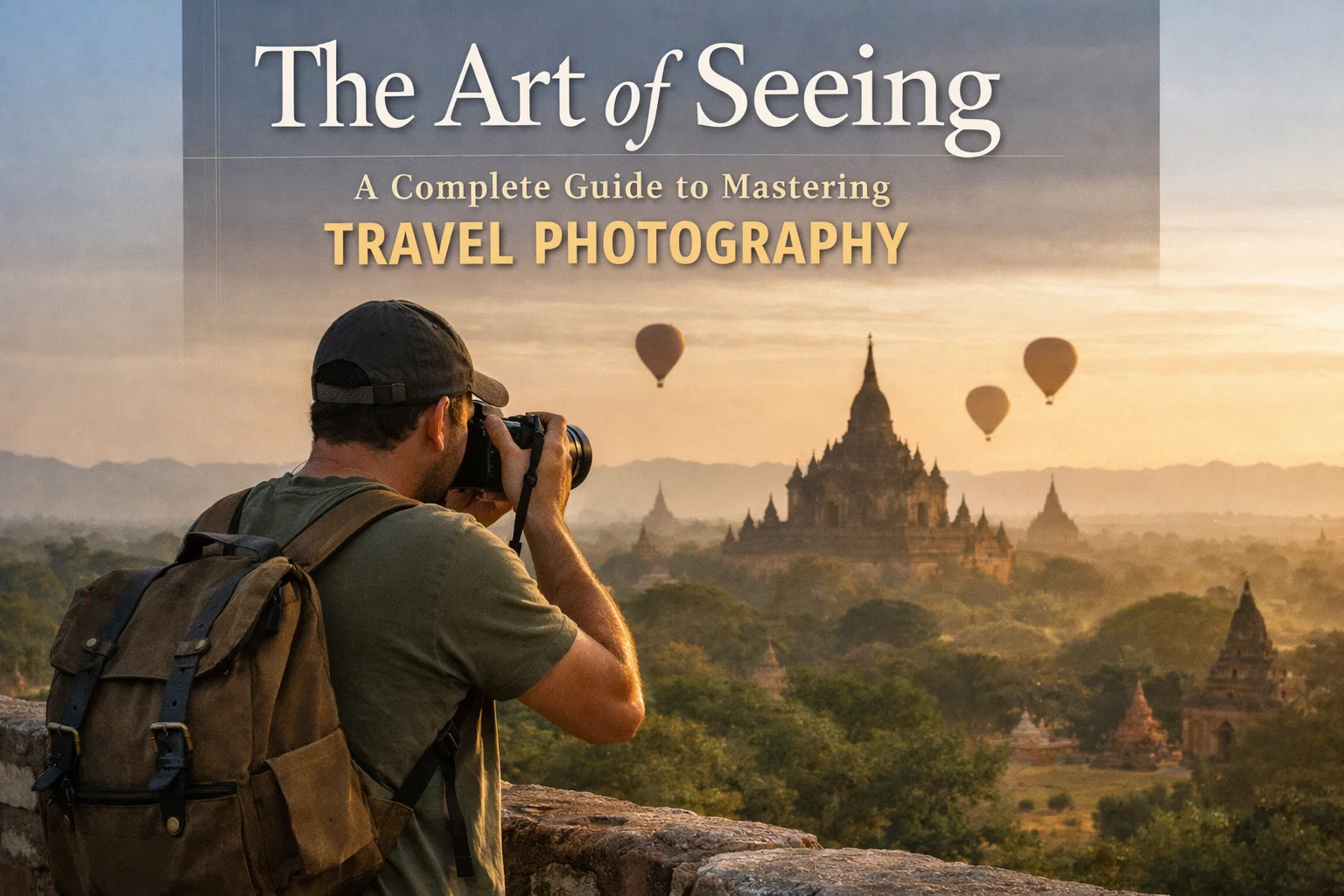
This definitive guide explores travel photography as both a technical craft and a profound form of storytelling. Moving far beyond simple snapshots, it provides a holistic framework for creating powerful, authentic images that capture the essence of a place. From foundational gear choices and advanced composition to the nuanced ethics of photographing cultures, this resource equips photographers of all levels with the strategic, practical, and philosophical knowledge needed to elevate their work. The journey outlined here prioritizes meaningful connection over mere collection, transforming how you see, experience, and document the world through your lens.
Introduction
At its core, travel photography is the passionate pursuit of telling a place’s story through imagery. It is a unique fusion of exploration, cultural immersion, and visual artistry. Unlike other photographic genres, it demands adaptability, empathy, and a keen observational sense, often compressing fleeting moments and vast experiences into a single frame. For many, the allure of travel photography lies in this beautiful challenge: to move beyond the postcard view and reveal a more intimate, authentic narrative. This guide is designed to be your comprehensive companion on that journey, offering not just technical advice but a philosophy for seeing. We will delve into the equipment, techniques, and, most importantly, the mindset required to create photographs that resonate with depth and truth, ensuring your images are as compelling as the journeys themselves.
The Philosophy Behind the Lens: More Than Souvenirs
True travel photography begins long before you press the shutter. It starts with an intention—a decision to engage deeply rather than simply record superficially. This mindset shift is what separates a collection of geographic souvenirs from a cohesive visual narrative. The most impactful travel photographers act as visual anthropologists, seeking to understand the rhythm, light, and spirit of a location.
This philosophy requires patience and presence. It means putting the camera down to share a meal, learn a few words of the local language, or simply observe the flow of daily life. The goal is to capture the feeling of a place: the mist rising off a mountain at dawn, the focused silence of a craftsman at work, the chaotic energy of a vibrant market. Your photographs become interpretations, not just documents, infused with your personal perspective and the genuine connections you forge.
Key Takeaway: Elevate your work by adopting a storyteller’s mindset, prioritizing meaningful connection and authentic narrative over the mere collection of scenic shots.
Defining Your Kit: Gear for the Journeying Photographer
A practical starting point for any travel photography endeavor is assembling a versatile and manageable kit. The optimal gear balances performance with portability, allowing you to respond creatively without being weighed down. Your choices should directly reflect your personal style and the specific nature of your travels—a photojournalistic trek through urban landscapes demands different tools than a serene landscape-focused retreat.
For most, a mirrorless camera system offers the ideal blend of image quality, speed, and compact size. Pair your camera body with a versatile zoom lens, like a 24-70mm f/2.8, which covers wide-angle to short telephoto perspectives. A second, lightweight prime lens (such as a 35mm or 50mm) encourages creative composition and excels in low light. Essentials beyond the camera include extra batteries, ample memory cards, a robust but lightweight tripod, and protective gear for diverse climates. Remember, the best camera is ultimately the one you have with you, ready to capture the moment.
Key Takeaway: Choose gear for versatility and reliability, prioritizing a lightweight, core kit that empowers rather than hinders your mobility and creative response.
Mastering Light: The Photographer’s Prime Material
Light is the fundamental language of photography. In travel photography, where you often cannot control your environment, learning to see and harness existing light is a paramount skill. The quality, direction, and color of light radically alter the mood and story of your image. Golden hour—the period shortly after sunrise and before sunset—provides a soft, warm, and directional light that adds depth and dimension, ideal for landscapes and portraits.
However, compelling travel photography isn’t limited to perfect golden hours. The harsh contrast of midday sun can be used for graphic, high-impact street scenes. Overcast days offer a giant softbox in the sky, perfect for capturing even tones in forests or portraits without sharp shadows. Embrace twilight’s blue hour for cityscapes where artificial and natural light balance. The skill lies in observing how light interacts with your subject and adapting your composition and camera settings to work with it, not against it.
Key Takeaway: Become a student of natural light, learning to leverage its different qualities throughout the day to create mood, dimension, and narrative in your travel images.
The Art of Composition: Framing Your Story
Composition is the deliberate arrangement of elements within your frame to guide the viewer’s eye and convey your intended message. Strong composition transforms a random snapshot into a compelling photograph. Foundational techniques like the Rule of Thirds, leading lines, and framing within the frame provide a reliable starting point for creating balanced and engaging images.
Yet, the most powerful travel photography often comes from moving beyond these basics. Seek out layers to create depth—a foreground element, a middle-ground subject, and a distant backdrop. Pay meticulous attention to the edges of your frame, ensuring no distracting elements intrude. Use patterns, textures, and contrasts (of light, color, or scale) to create visual interest. Most importantly, remember that composition serves the story. The empty space around a solitary figure, or the tight crop on a vendor’s weathered hands, are compositional choices that directly communicate isolation or detail.
Key Takeaway: Master compositional principles to intentionally guide the viewer’s experience, using the frame to isolate and highlight the story you wish to tell.
Capturing Culture: Ethics and Authenticity in Portraiture
Photographing people is one of the most rewarding yet sensitive aspects of travel photography. A genuine portrait can convey universal humanity, but it must be approached with respect and ethical consideration. The cornerstone of this practice is meaningful connection and consent. A smile, a gesture, or a few shared words can build a brief bridge of trust, transforming a subject from an object of your lens into a collaborative participant.
The ethical approach prioritizes dignity over intrusion. Always seek permission, understanding that a nonverbal cue of refusal should be respected without question. When a shared language is absent, your demeanor—a friendly expression, an open posture, and a camera raised with a questioning look—becomes your primary tool for communication. Consider the context; a candid street scene capturing public life differs from an intimate portrait. The goal is to create an image that feels authentic to the subject’s experience, not an exploitative stereotype.
Key Takeaway: Approach portrait photography with empathy and respect, prioritizing consent and authentic connection to create dignified and powerful human stories.
The Decisive Landscape: Conveying Scale and Atmosphere
Landscape photography in travel contexts is about evoking the emotional impact of a place. It challenges you to convey vast scale, intricate detail, and palpable atmosphere within a two-dimensional rectangle. Success hinges on careful planning and patient execution. Researching locations, understanding weather patterns, and arriving early to scout compositions are all critical steps.
Technical control is essential for landscape work. A sturdy tripod is non-negotiable for stability, allowing for low ISO settings and maximum image quality. Mastering depth of field through aperture control ensures foreground to background sharpness. Utilize filters, such as a circular polarizer to manage reflections and enhance skies, or neutral density filters to create motion blur in water or clouds. The most evocative travel landscapes often incorporate a human element or a sense of weather—a figure gazing at a vista, or storm clouds breaking over a ridge—to provide scale and narrative tension.
Key Takeaway: Create immersive landscape images through meticulous planning, technical precision, and the intentional inclusion of elements that communicate scale and fleeting atmosphere.
Storytelling in the Streets: The Pulse of Place
Street photography captures the spontaneous, unscripted theater of public life. It is a fantastic discipline for honing your reflexes, compositional eye, and ability to find order in chaos. The aim is to document slice-of-life moments, interesting characters, or humorous juxtapositions that reveal the unique character of a city or town. This facet of travel photography turns the entire environment into your studio.
To excel, cultivate a mindset of relaxed awareness. Practice observing scenes unfold, anticipating moments before they happen. Be discreet and respectful; a small, quiet camera and a patient demeanor are preferable to aggressive tactics. Look for interesting light, graphic backgrounds, or cultural specifics that anchor the image to its location. A successful street photograph often contains an interaction, a gesture, or a poignant juxtaposition that invites the viewer to ponder a larger story beyond the frame.
Key Takeaway: Develop a keen sense of observation and anticipation to capture the candid, authentic moments that define the rhythm and character of a destination’s everyday life.
Technical Excellence: From RAW File to Finished Image
The journey of a travel photograph is only half-complete in-camera. Post-processing is the modern digital darkroom, where you refine your vision and ensure the final image matches the scene as you experienced it. This process begins with shooting in RAW format, which captures significantly more image data than JPEG, providing greater flexibility in adjusting exposure, color, and detail without quality loss.
A streamlined editing workflow is key. Start with global adjustments—correcting lens distortion, adjusting white balance, and fine-tuning exposure and contrast. Then, use local tools like gradients and brushes to dodge, burn, or selectively enhance areas of the image. The goal of ethical editing for travel photography is typically enhancement, not fabrication. Aim to correct distractions, emphasize the existing mood, and ensure color accuracy, creating a polished result that remains truthful to the moment. Developing a consistent editing style can also help unify a portfolio from diverse locations.
Key Takeaway: Leverage post-processing as an essential creative tool to thoughtfully refine your images, ensuring technical excellence and emotional impact while maintaining authenticity.
Navigating the Practicalities: A Travel Photographer’s Logistics
The art of travel photography is supported by a foundation of practical logistics. Careful planning prevents missed opportunities and frustrating obstacles. Research is your first tool: understand cultural norms regarding photography, identify seasonal events or ideal lighting conditions at specific landmarks, and learn about any permit requirements for tripod use or commercial shooting.
Packing intelligently is equally crucial. Use padded, carry-on-friendly bags to protect your gear and ensure it never leaves your possession during transit. Organize accessories in modular pouches. Beyond gear, consider practical items: a lightweight rain cover for your bag, power adapters, and backup solutions for your images, such as a portable hard drive or cloud uploads from your hotel. Logistically smooth travel allows you to focus your mental energy on creativity and observation, not problem-solving.
Key Takeaway: Meticulous research and pragmatic packing are the unsung heroes that enable a focused, stress-free, and productive photography expedition.
The Evolving Visual Language: Trends and Authenticity
The visual language of travel photography is continually evolving, influenced by technology, social media, and a growing desire for authenticity. There is a marked shift away from overly staged, perfectionist imagery toward a more documentary and immersive style. Photographers are seeking to show the genuine, sometimes imperfect, experience of travel—capturing quieter moments, environmental details, and interactions that feel real and relatable.
New technology plays a dual role. While smartphone cameras and computational photography make high-quality imaging more accessible, they also increase the volume of derivative content. The counter-trend, and the path to standing out, is a return to deliberate, craft-oriented photography. This includes a renewed interest in film simulation, manual techniques, and projects with a deep, long-form focus, like documenting a single community or a slow travel journey. The modern authority in travel photography comes from a unique personal vision, not just technical perfection.
Key Takeaway: Stay relevant by embracing a more authentic, narrative-driven style that reflects genuine experience, using technology as a tool to serve your unique perspective rather than dictate it.
Building a Cohesive Portfolio: From Single Images to a Body of Work
As your collection of travel images grows, the next level of mastery is curating them into a cohesive portfolio. A powerful portfolio is more than a gallery of your best shots; it is a curated statement of your vision, style, and what you find compelling about the world. It demonstrates your ability to see consistently and develop themes across different subjects and locations.
Start by editing ruthlessly. Select only your strongest images that speak to each other visually or thematically. Group images into series or projects—perhaps focused on a particular region, a concept like “doorways” or “market colors,” or a specific photographic technique. Variety within unity is key; include a mix of wide shots, details, portraits, and landscapes that together create a rich, multifaceted view. A well-constructed portfolio tells a prospective client or audience not just that you can take a good picture, but that you have a distinct photographic voice.
Key Takeaway: Transform your collection into a statement of artistic identity by curating a tight, thematic portfolio that showcases your unique perspective and storytelling consistency.
Legal and Commercial Considerations
Transitioning from passionate pursuit to professional practice in travel photography introduces important legal and commercial frameworks. Understanding copyright is fundamental; you automatically own the copyright to your images the moment you create them, but registering that copyright strengthens your legal standing. When photographing people for commercial use, a signed model release is typically required, especially for recognizable individuals used in advertising or promotional contexts.
Property releases may be needed for certain private buildings or artworks. If you aim to license your work through stock agencies or sell prints, you must ensure all necessary releases and permits are secured. Furthermore, always research drone regulations, as they vary dramatically by country and region. Operating commercially without this due diligence can lead to serious legal and financial repercussions. Adhering to these standards protects your business and respects the rights of your subjects.
Key Takeaway: Protect your work and operate ethically by securing necessary permissions, understanding copyright law, and thoroughly researching local regulations for commercial photography and drone use.
Essential Gear Comparison for Different Travel Styles
The ideal photography kit is not one-size-fits-all; it should be tailored to your destination and creative goals. The table below provides a structured comparison to help you make informed packing decisions.
| Travel Photography Focus | Primary Camera Recommendation | Essential Lens Kit | Critical Accessories | Packing Priority |
|---|---|---|---|---|
| Urban & Street Exploration | Compact Mirrorless or High-end Smartphone | Fast Prime (35mm), Standard Zoom (24-70mm) | Extra Batteries, Discrete Bag, Portable Battery Pack | Discretion, Speed, Low-Light Performance |
| Wilderness & Landscape | Weather-Sealed Mirrorless/DSLR | Wide-Angle Zoom (16-35mm), Telephoto Zoom (70-200mm) | Sturdy Tripod, Filters (ND, CPL), Rain Cover, Headlamp | Durability, Dynamic Range, Stability |
| Cultural & Portrait Journey | Mirrorless with Excellent Autofocus | Fast Standard Zoom (24-70mm f/2.8), Short Telephoto (85mm) | Reflector (small), Lens Wipes, Off-Camera Flash (small) | Lens Sharpness, Beautiful Bokeh, Connection Tools |
| Lightweight Adventure Travel | Advanced Compact or Entry Mirrorless | All-in-One Superzoom (24-200mm), Fast Prime | Multi-Port Charger, Dust Blower, Durable SD Card Case | Versatility, Weight, All-Weather Reliability |
The Power of Constraints: A Case Study in Creativity
A powerful method to spark creativity is to impose intentional constraints. On a recent project in a visually overwhelming ancient medina, I limited myself to a single, fixed 50mm lens for two days. This constraint eliminated the distraction of changing gear and forced me to “zoom with my feet,” moving physically closer or farther to compose. I had to engage more intimately with scenes and people, leading to a series of tightly framed portraits and architectural details that felt more cohesive and focused than my usual varied shots. This exercise reinforced that limitations often breed innovation, compelling you to see familiar subjects in new ways and ultimately strengthening your personal vision in travel photography.
The Deeper Journey
As the renowned photojournalist David duChemin famously advocates, “Gear is good, but vision is better.” This philosophy cuts to the heart of meaningful travel photography. The relentless pursuit of newer equipment often distracts from the core mission: developing a unique way of seeing. Your vision—your personal response to light, moment, and subject—is the only thing truly irreplaceable. It is cultivated not in camera reviews, but in the field, through hours of observation, failed frames, patient waiting, and reflective editing. The camera is a tool of translation, converting your vision into an image others can see. Invest first in your curiosity, your empathy, and your compositional eye. These are the assets that will define your photographic voice long after any particular piece of gear has become obsolete.
Key Takeaway: Cultivate your unique vision and storytelling ability as your primary asset; the best equipment merely serves to express that inner perspective.
The Photographer’s Checklist for Every Journey
Before you depart and during your travels, use this actionable list to stay prepared and focused.
- [ ] Research Completed: Cultural photography norms, golden hour times, permit needs.
- [ ] Gear Checked: All equipment cleaned, sensors checked, firmware updated.
- [ ] Pack List Verified: Kit organized in carry-on, backups (batteries/cards) packed.
- [ ] Connection Tools Ready: Simple local phrases learned, small smiles practiced.
- [ ] Creative Intent Set: A personal project or theme identified for the trip.
- [ ] Logistics Secured: Power adapters, insurance, emergency contacts noted.
- [ ] Mindset Engaged: Patience and observation prioritized over hurried checking-off.
- [ ] Backup Routine Established: Daily image backup to separate drive or cloud.
- [ ] Editing Planned: Time allocated for initial review and selection while memories are fresh.
- [ ] Ethics Top of Mind: Model releases packed, respect for privacy and dignity paramount.
Conclusion
Masterful travel photography is, in the end, a lifelong practice of attentive seeing. It is a discipline that marries technical skill with human curiosity, demanding both mastery of your tool and humility before your subject. The journey outlined here—from the philosophical choice to connect, through the practicalities of light and composition, to the ethics of representation—provides a map for that practice. Remember that your most powerful lens is your own perspective. The world is endlessly generous with its stories, waiting in bustling plazas, quiet alleys, towering peaks, and in the faces of its people. Your role as a travel photographer is not to simply take from these scenes, but to engage with them deeply, and then, with care and artistry, to give back a thoughtful, beautiful interpretation. Go forth with your camera as a passport to perception, and create images that don’t just show where you’ve been, but reveal what you’ve truly seen.
Frequently Asked Questions (FAQ)
What is the single most important skill for travel photography?
Beyond technical know-how, the most critical skill is cultivating patience and observation. Great travel photography often hinges on waiting for the right light, the authentic moment, or the scene to unfold naturally. The ability to watch, anticipate, and be fully present allows you to capture images that feel decisive and genuine, rather than rushed and superficial.
How can I make my travel photos look more professional and less like tourist snapshots?
The difference often lies in composition and light. Avoid shooting from eye level in the middle of the day. Instead, move deliberately—get low, find a higher vantage point, or step to the side. Actively seek out interesting light, like side-light for depth or the warm glow of golden hour. Most importantly, take your time to consider what element in the scene is the true subject and compose to highlight it.
What is the best camera for someone starting in travel photography?
The best starter camera is one you find intuitive and enjoyable to carry. A modern mirrorless camera with an APS-C sensor or a high-end smartphone with advanced manual controls are excellent choices. Pair a mirrorless camera with a versatile kit zoom lens (e.g., 18-135mm). Invest first in learning this tool completely; mastery of a basic kit will improve your photography far more than an expensive camera you find cumbersome.
How do I respectfully photograph people in different cultures?
Always prioritize connection and consent. Start with a warm smile and eye contact. Use gestures to ask for permission. If granted, photograph respectfully and, if possible, show them the image on your screen—it’s a wonderful way to share the moment. If permission is refused, smile, thank them, and move on without objection. This respectful approach is fundamental to ethical travel photography.
How should I store and back up my photos while traveling?
Never rely on a single memory card. Implement a redundant backup routine daily. Use a portable hard drive or a laptop to copy files from your cards. For critical work, consider a device that allows you to upload smaller, select files to a cloud service when you have Wi-Fi. Keep your primary cards and backup drive in separate, secure locations in your luggage or accommodation.
Best SEO Title:
Travel Photography Mastery: The Definitive Guide to Capturing Your Journey
Meta Description:
Elevate your travel photography with our expert guide. Learn techniques for stunning landscapes, authentic portraits, and storytelling. Master light, composition, and ethics.