Executive Summary: The money belt for travel remains a cornerstone of travel security, yet its role and design have evolved significantly. This comprehensive guide moves beyond the basic “hide your cash” advice to explore the strategic, practical, and modern considerations of using a money belt. We will dissect types, materials, and placement techniques, address common pitfalls, and integrate the money belt into a broader, layered security strategy. Whether you’re a first-time backpacker or a seasoned traveler re-evaluating your kit, this resource provides the nuanced, expert-level knowledge needed to make an informed decision and use this tool effectively, ensuring your peace of mind from bustling souks to serene countryside.
Introduction
For decades, the money belt for travel has been a rite of passage, tucked into packing lists alongside passports and guidebooks. Yet, for every traveler who swears by its discreet protection, another complains of discomfort, inconvenience, or a false sense of security. This divide often stems from a fundamental misunderstanding of the tool’s purpose and its practical application. This guide explains the modern, strategic use of a money belt, positioning it not as a magical safety device but as a critical component in a layered defense for your valuables. We will move past generic advice to deliver a hands-on, nuanced exploration. This resource helps readers navigate the crowded market, avoid common user errors, and deploy a money belt in a way that genuinely enhances security without sacrificing comfort or travel enjoyment. The intent here is both deeply informational and softly commercial—arming you with the knowledge to choose and use the right product for your journey.
Understanding the Core Purpose: More Than Just a Pouch
A money belt, at its essence, is a concealment device. Its primary function is not daily access but secure storage, acting as a moving safe worn under your clothing. The core principle is separation of assets. By dividing your valuables between what’s immediately accessible (a daily spending wallet) and what must be secured (passport, backup cards, bulk cash, emergency funds), you create a resilient system. If your daypack is snatched or your pocket picked, your ability to recover and continue your trip remains intact.
In practice, the most successful users treat their money belt as an emergency reserve, not a pocket. Opening it in public should be a rare event, reserved for private spaces like a hotel bathroom or a secured train compartment. This behavioral shift is the single biggest factor in its effectiveness. A common user problem is treating the belt like an inconvenient wallet, constantly fishing under layers for small change, which not only defeats its purpose but also advertises its location to observers. The solution is a disciplined routine: load it once at the start of your day with your “do not lose” items, and forget it’s there until you return to your secure accommodation.
Key takeaway: A money belt’s true value lies in being an infrequently accessed, concealed reserve, not a replacement for your everyday wallet.
Navigating the Modern Market: Types, Materials, and Hidden Flaws
Gone are the days of a single, sweaty nylon pouch. Today’s market offers a variety of designs, each with pros, cons, and specific use cases. Understanding these distinctions is crucial to finding a belt that you will actually wear.
Traditional Waist-Worn Belts: The classic design loops through your trousers’ belt loops and sits against the small of your back or slightly to the side. Modern versions use moisture-wicking, anti-microbial fabrics like merino wool blends or advanced technical synthetics to combat the classic complaint of sweat and discomfort. Look for RFID-blocking layers if you carry contactless cards, though the physical theft barrier is often more critical.
Neck Pouches or “Travel Wallets”: Worn under a shirt, these hang from a lanyard. They offer easy peeking access but can create an obvious bulge if overstuffed and are less secure in crowded spaces where a quick grab-and-cut is possible. They work best under multiple layers or looser clothing.
Leg and Arm Wallets: Strapped to the calf or bicep, these are highly secure for active pursuits like hiking or cycling. However, they can be cumbersome to access and may be noticeable under tight clothing. They represent a niche but valuable option for specific activities.
Pouch-Only Systems: These are simple sleeves with a clip or loop, designed to be worn inside the waistband of your pants or skirt, independent of your belt. They offer maximum flexibility in placement and can be more comfortable for all-day wear, especially in hot climates.
From hands-on use, the most common flaw across all types is poor strap design. A flimsy plastic buckle will snap; a rough-edged nylon strap will chafe. A quality money belt for travel will feature a sturdy, low-profile mechanical buckle (like a side-release) and a wide, soft, breathable strap. Another often-overlooked aspect is silence. Does the hardware clink? Does the material rustle loudly when you move? In a quiet museum or temple, these sounds can betray your security.
Key takeaway: The best money belt is the one you forget you’re wearing; prioritize breathable materials, a secure and silent closure, and a design that suits your wardrobe and activity level.
The Strategic Layering of Travel Security
Relying solely on a money belt is a critical mistake. It is one layer in a comprehensive security strategy. Think of it as your last line of defense. In front of it should be other, more accessible but still secure layers.
Layer 1: The Decoy/ Daily Wallet. Carry a small, inexpensive wallet in your front pocket or a secured zip pocket. This holds a small amount of local currency for the day, one commonly used credit card, and perhaps an expired ID. It’s what you willingly hand over if confronted, satisfying a thief without losing your vital assets.
Layer 2: The Daypack or Crossbody Bag. This holds items you need frequent access to but can still be secured: camera, guidebook, water bottle, jacket. It should always be worn in front in crowds, have slash-resistant straps, and feature locking zippers that can be secured to a fixed point in transit.
Layer 3: The Concealed Reserve (Your Money Belt). This holds your passport, visa documents, primary debit card, backup credit cards, larger bills of local currency, and emergency cash in a stable currency like USD or EUR. It stays under your clothing, untouched in public.
Layer 4: The Digital Layer. Secure digital copies of all documents in a password-protected cloud service. Use your smartphone’s digital wallet for contactless payments where safe, reducing how often you need to pull out physical cards.
A real-world example: In a packed Barcelona metro, a traveler using this system feels a tug on her crossbody bag (Layer 2). The locking zipper resists a quick grab. The pickpocket moves on. Later, she buys lunch using a card from her front-pocket wallet (Layer 1). Her passport and backup funds, secure in her under-clothing pouch (Layer 3), remain untouched and unknown to anyone. This layered approach spreads risk and creates redundancy.
Key takeaway: A money belt is most effective as part of a multi-layered security system, acting as the final, hidden safeguard for your most critical documents and funds.
Material Science and Design: What Actually Works
The choice of material impacts comfort, durability, and security more than any marketing claim. Let’s demystify the options.
Nylon/Polyester: Common and affordable, but often non-breathable, leading to sweat accumulation. Can be noisy. Look for ripstop varieties for added durability.
Merino Wool Blends: Excellent for temperature regulation and moisture-wicking. Naturally odor-resistant, making it ideal for long-term wear. Softer against the skin but may be less durable than synthetics and requires more careful washing.
Technical Synthetics (e.g., CoolMax, Supplex): Engineered for breathability, quick-drying, and abrasion resistance. Often the best balance of performance and durability for active travel.
Leather: Durable and molds to the body, but can be hot, heavy, and prone to mildew in humid climates. Its stiffness can also make it less comfortable for all-day wear.
A crucial technical aspect is the RFID-blocking question. Many belts now advertise this feature. While it provides a layer of protection against electronic pickpocketing (which is a relatively rare but real threat), the physical barrier against theft is far more important. An RFID-blocking layer is a beneficial addition, but it should not be the primary reason for your purchase. From hands-on testing, the quality of the RFID shielding varies; some cheaper belts use ineffective metallic fibers.
As one seasoned travel security consultant notes: “The most sophisticated RFID-blocking material is worthless if the belt is so uncomfortable you leave it in your hostel. Security is about consistent behavior, not just possessing the gear.”
Key takeaway: Prioritize materials that balance comfort (breathability, softness) with durability; treat features like RFID-blocking as a useful bonus, not the core deciding factor.
Optimal Placement and Wear: The Art of Invisibility
Where and how you wear your money belt dictates its security. The goal is to eliminate any visible tell—no outlines, bulges, or adjustments.
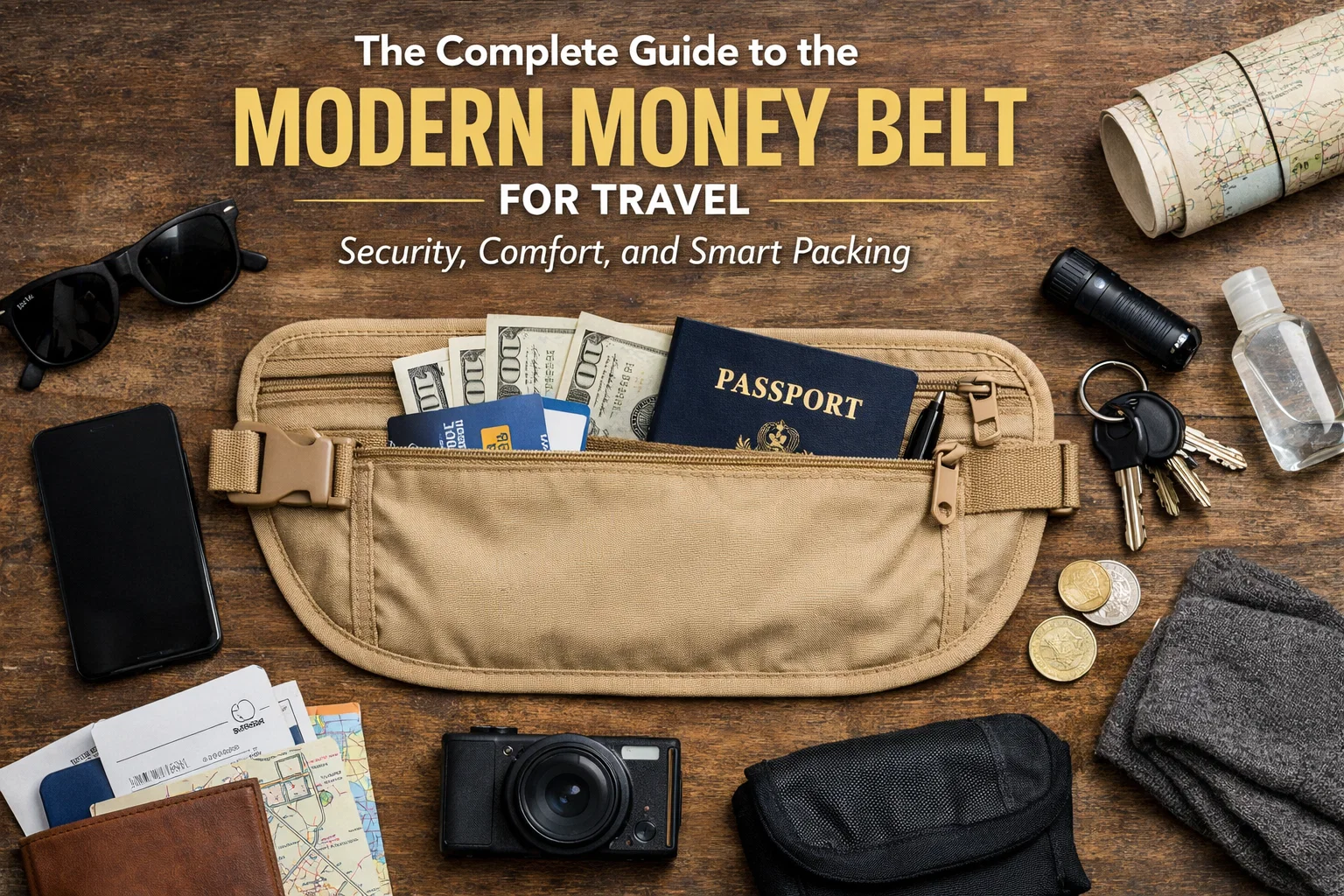
For Waist Belts: The most secure position is slightly off-center on your lower back, just above the trouser line. Avoid wearing it over your stomach, as the outline is more visible when you sit or bend. Ensure it sits flat against your skin, under your underwear or base layer. The strap should be snug enough not to slide but not so tight it restricts breathing or causes chafing. Wear it under looser-fitting pants and a longer shirt or untucked blouse.
For Neck Pouches: Center it on your chest. Wear it under a base layer, like an undershirt, and then a button-down or polo. The layered look naturally disguises any slight bulge. Never wear it outside your clothing.
Common Misconception: Many believe a money belt is only for baggy travel clothing. In reality, with a slim, pouch-only style, it can be worn effectively under tailored trousers, dresses, or even athletic wear. The key is matching the belt’s profile to your clothing’s fit.
Consider exploring different placements at home before your trip. Walk, sit, bend, and look in the mirror. Does it print? Does it shift? This pre-travel testing is essential for finding your personal “sweet spot.”
Key takeaway: Effective placement makes the belt undetectable; test different positions under your actual travel clothing to find a secure and comfortable fit that leaves no visible trace.
What to Store (and What to Leave Behind)
Discipline in loading your money belt is critical. Overstuffing creates an obvious bulge and makes it uncomfortable.
Essential Items to Store:
- Passport & Visas
- Primary Debit Card (for ATM access)
- One major backup credit card
- Emergency cash (in a stable currency, small denominations)
- Photocopies of important documents (as a last-resort backup)
- A single, crucial emergency contact number on paper
Items to Avoid Storing:
- Your entire wallet’s contents
- All your cash
- Hotel key cards (if they can be easily replaced at the front desk)
- Bulky items like coins or large phones
- Anything you need to access more than once or twice a day
This matters most when you’re deciding between convenience and security. Your daily spending cash and a single card belong in a more accessible, separate location. The money belt is for the “can’t go home without it” items.
Key takeaway: Practice minimalist packing within your money belt; it should contain only your most vital, irreplaceable documents and emergency reserves, not your daily spending kit.
Comparison of Major Money Belt Styles
The following table offers structured guidance to help you decide which style might best suit your travel profile.
| Style | Best For | Primary Advantage | Primary Disadvantage | Ideal Placement |
|---|---|---|---|---|
| Traditional Waist Belt | General city travel, first-time users, cooler climates. | Secure, familiar design, often largest capacity. | Can be hot, may ride up or chafe if poorly designed. | Under trousers, against small of back. |
| Neck Pouch / Travel Wallet | Travelers who prefer shirts, need occasional private access (e.g., for passport checks). | Easy to peek at without revealing full belt. | Creates a chest bulge; vulnerable to grab-and-cut. | Under a base layer and shirt, centered on chest. |
| Pouch-Only (Inside Waistband) | Hot climates, formal wear, travelers seeking maximum discretion. | Most discreet, flexible placement, highly breathable. | Limited capacity, relies on pants’ waistband for security. | Clipped inside trousers, front or side hip. |
| Leg/Arm Wallet | Active travel (hiking, cycling), beach days, festivals. | Extremely secure during physical activity. | Very difficult to access, noticeable under tight clothes. | Around calf (under pants) or upper arm. |
Addressing Common User Problems and Limitations
Every tool has trade-offs. Acknowledging them allows for better planning.
Problem 1: Sweat and Discomfort. This is the number one complaint. Solution: Choose a moisture-wicking material (merino or technical synthetic). Wear the belt over a thin, breathable undershirt as a barrier. For waist belts, position it where there is less bending (lower back). Clean it regularly according to manufacturer instructions.
Problem 2: Inconvenient Access. Fumbling under layers in public. Solution: This is a feature, not a bug. Plan your access. Only retrieve items when in a truly private, secure space—a locked bathroom stall, your hotel room, a stationary and uncrowded car. Use your decoy wallet for all public transactions.
Problem 3: False Sense of Security. Believing the belt makes you invulnerable. Solution: Remember it is one layer. Stay situationally aware. In high-risk areas like crowded trains or tourist scams, maintain physical contact with your other bags. The belt protects your core assets, not your day-to-day belongings.
Problem 4: Airport Security Hassles. Solution: Develop a routine. Before reaching the security conveyor, discreetly remove the entire belt (if possible) and place it in your carry-on tray inside your jacket or within your bag. Avoid having to unfasten it and reveal contents at the body scanner. Practice this smooth transition.
Key takeaway: Anticipate practical challenges like sweat and access; developing smart habits and routines around your money belt is as important as choosing the right one.
The Historical Context and Modern Evolution
The concept of concealing valuables on one’s person is ancient, from coin purses sewn into tunics to pockets hidden within Victorian crinolines. The modern nylon money belt emerged alongside the rise of mass tourism and backpacking culture in the latter half of the 20th century. It was a practical response to the need for portable security in unfamiliar environments.
Today, its evolution reflects broader travel trends. The minimalist “one bag” travel movement has spurred demand for slimmer, more technical designs. The digital nomad lifestyle, requiring the security of passports and multiple bank cards during long-term stays, has reinforced its utility. Furthermore, a shift towards experiential travel—venturing beyond sanitized resorts into local markets and public transport—has made discreet security tools relevant for a wider audience than just budget backpackers. The modern money belt for travel is no longer a bulky, one-size-fits-all relic but a specialized piece of travel tech designed for comfort and integration into contemporary travel styles.
Key takeaway: The money belt has evolved from a generic security pouch to a specialized travel accessory, adapting to the needs of modern, diverse, and experience-driven travelers.
Evergreen Best Practices for Money Belt Mastery
Trends in theft and fashion change, but core principles remain. Here are timeless best practices:
- Break It In: Wear your new belt around the house for a few hours before your trip. Adjust the strap, test the clasp, and ensure it’s comfortable.
- The Night Before Routine: Each evening, in the privacy of your room, replenish your daily wallet from the secure reserve in your belt. This minimizes public interaction with the belt.
- Use It Everywhere, Even “Safe” Places: Jet lag and disorientation make you vulnerable. Wear it from the moment you leave your front door until you return, including in airports and on planes. Most theft occurs during moments of transition and fatigue.
- Never Reveal Its Location: If you need to access it, do so in absolute privacy. Do not lift your shirt in a crowd or even in a semi-public cafe corner.
- Have a Backup Plan: Know what you would do if it were stolen. Where is your nearest embassy? Do you have digital copies of everything? Who would you call to freeze cards? This knowledge reduces panic.
Readers often benefit from pairing their money belt strategy with research on common scams in their destination, as the two forms of knowledge work hand-in-hand to foster awareness.
Key takeaway: Consistent, disciplined habits—like a private daily routine and wearing the belt from door to door—are what transform a simple pouch into a reliable security system.
Pre-Trip Checklist: Your Action Plan for Security
Before you embark, use this checklist to ensure you and your money belt are prepared:
- [ ] Selected the Right Type: Chosen a belt style matching my primary activities and wardrobe.
- [ ] Tested for Comfort & Fit: Worn it at home for several hours; it is comfortable and leaves no visible printing under my travel clothes.
- [ ] Loaded it Strategically: It contains only my passport, backup cards, emergency cash, and essential documents—not my daily spending money.
- [ ] Prepared My Layers: My decoy wallet, secure daypack, and digital backups are ready as part of my layered system.
- [ ] Practiced My Access Routine: I know how to retrieve items smoothly and privately.
- [ ] Planned for Security Checks: I have a method for discreetly handling the belt at airport security.
- [ ] Made Digital Copies: All documents in the belt are scanned and saved in a secure, accessible cloud drive.
- [ ] Shared My Itinerary: A trusted contact knows my travel plans and has copies of key documents.
Conclusion
The modern money belt for travel is far more than a piece of fabric with a zipper. It is a philosophy of proactive security, a tool for risk management, and a test of travel discipline. Its value is not inherent but derived from intelligent integration into your personal travel ecosystem. By understanding its strategic purpose, selecting a design that aligns with your comfort and style, and committing to the subtle behaviors that make it effective, you transform it from an optional accessory into a cornerstone of confident exploration. It grants the ultimate luxury for any traveler: the peace of mind to immerse fully in the wonders of your journey, knowing your essential lifelines are silently, securely safeguarded. In a world of unpredictable adventures, that assurance is priceless.
Frequently Asked Questions (FAQ)
Are money belts still necessary with RFID-blocking wallets and digital payments?
While digital payments and RFID-protected wallets address specific threats, they don’t replace the core function of a money belt: physical concealment of irreplaceable items. A wallet can still be stolen, and phones can be lost, run out of battery, or be rendered useless without network access. A money belt provides a universal, low-tech, and reliable physical barrier for your passport and emergency backups that is independent of technology and power.
What is the most comfortable type of money belt for hot, humid climates?
For intense heat and humidity, a slim, pouch-only style made of a technical, breathable synthetic or a merino wool blend is often the most comfortable. Worn inside the waistband of your shorts or trousers, it minimizes skin contact and allows for maximum airflow compared to a full waist belt. Pair it with a lightweight, loose-fitting shirt worn untucked for optimal discretion and comfort.
Can I wear a money belt comfortably with a dress or skirt?
Absolutely. The pouch-only style is ideal for this. It can be clipped directly to the inside of the dress’s waistband or to the top of lightweight, secure shorts or leggings worn underneath. Another option is a slim thigh wallet, which can be discreetly worn under a flowing skirt or dress. The key is ensuring the pouch lays flat and the clip or strap is secure on the garment’s fabric.
How much cash should I keep in my money belt versus my daily wallet?
Your money belt should hold your emergency reserve—enough cash to cover a few nights in a budget hotel, several meals, and transport to an embassy or bank in case all your cards are compromised. This is often a mix of local currency and a stable foreign currency like USD or EUR, totaling perhaps $200-$400 equivalent. Your daily wallet should hold only what you reasonably plan to spend that day, minimizing potential loss.
What’s the best way to handle my money belt at airport security?
The goal is discretion and efficiency. Before you reach the screening area, if possible, discreetly remove the entire belt (often easier with pouch-only styles) and place it inside your carry-on bag or jacket that will go through the X-ray. If you must wear it through a body scanner, be prepared to potentially be patted down. Never open it and reveal the contents in the public security line. Know your chosen method beforehand to avoid flustered, revealing fumbling.