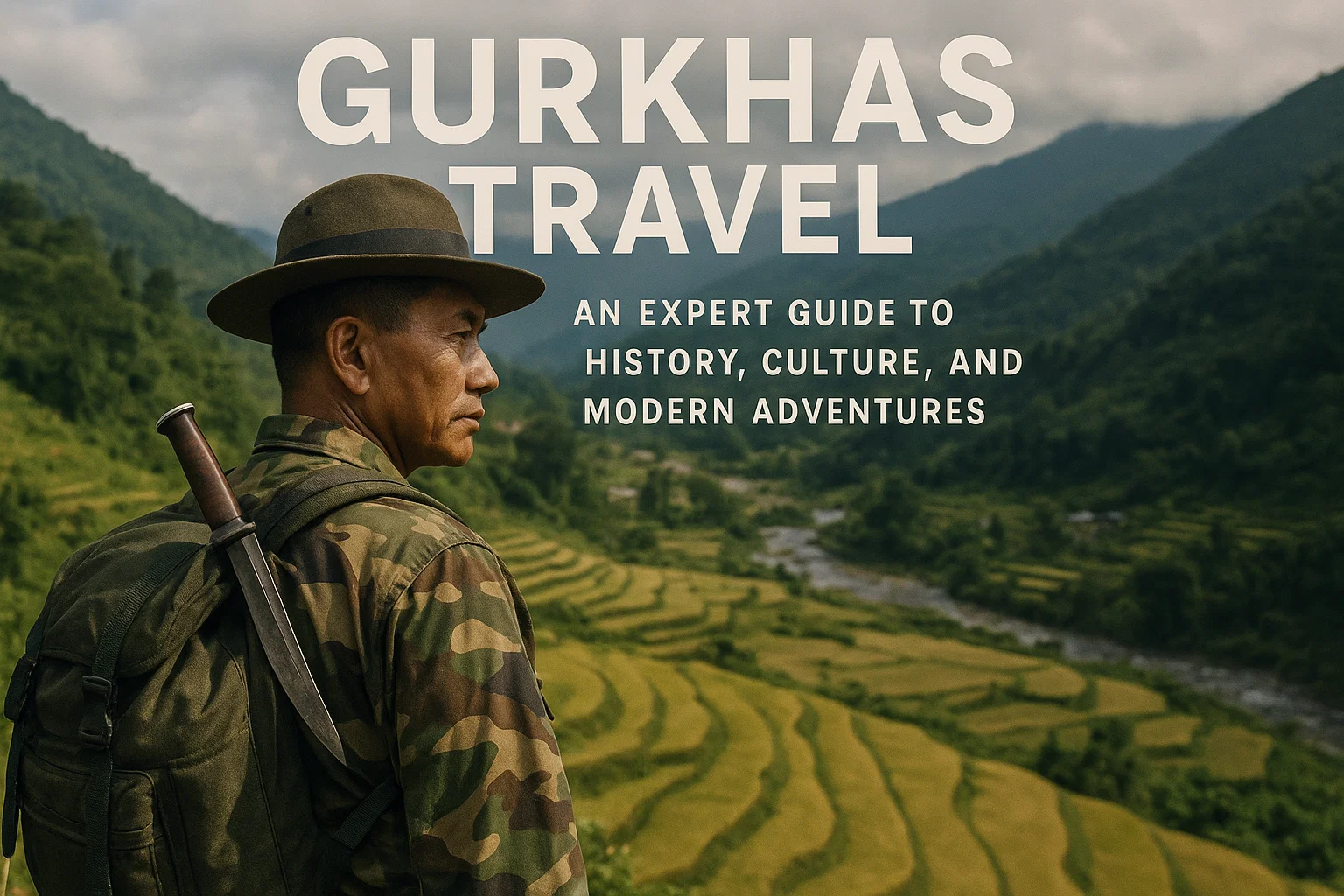
Gurkhas Travel: A Journey Through Legacy, Landscape, and Living Culture
Executive Summary: This comprehensive guide delves into the profound world of Gurkhas travel, moving far beyond typical tourism. It connects the storied history of Nepal’s legendary soldiers with the breathtaking landscapes and living cultures of their homeland. We provide expert insights for travelers seeking meaningful experiences in Nepal’s western hills, Kathmandu, and beyond, blending historical context with practical, modern travel strategy.
Introduction: Beyond the Legend, Into the Land
The word “Gurkha” evokes a powerful image: one of unwavering courage, loyalty, and martial prowess, forged in the high hills of Nepal and honed on battlefields across the world. For generations, this reputation has traveled globally. Yet, to truly understand this legacy, one must journey in reverse—traveling not just to hear stories, but to walk the ground that shaped them. This form of Gurkhas travel is not a pilgrimage to monuments of war, but an immersive exploration of a resilient culture, breathtaking geography, and communities whose values have defined a global identity.
Modern travel to the Gurkha heartlands offers an unparalleled opportunity. It allows you to contextualize history within vibrant, living villages, understand the socio-economic impact of service, and witness landscapes of staggering beauty that demand their own form of endurance. This guide is designed for the intellectually curious traveler—one who seeks to replace vague admiration with deep understanding. We will navigate the historical pathways, cultural nuances, and practical logistics of a journey that connects the legendary Gurkha spirit with the authentic soul of Nepal.
The Historical Crucible: Origins of the Gurkha Legacy
The Gurkha story begins not with a regiment, but with a kingdom. In the mid-18th century, the small hill state of Gorkha, under King Prithvi Narayan Shah, embarked on a formidable campaign of unification. The martial skill and fierce loyalty of his warriors were instrumental in forging modern Nepal. This foundational era established the cultural and ethical bedrock—the concept of “izzat” (honor) and unwavering duty—that would later become synonymous with Gurkha soldiers worldwide.
Following the hard-fought Anglo-Nepalese War (1814-1816), the British East India Company, deeply impressed by their adversaries’ valor, began recruiting Nepalese hill men into their own ranks. The 1815 Sugauli Treaty formalized Nepal’s borders and inadvertently opened a path for military service abroad. Thus began a 200-year tradition of Gurkha service in the British and Indian armies, where their legendary use of the kukri knife and their battle cry “Ayo Gorkhali!” (“The Gurkhas are here!”) became etched into military history.
Key Takeaway: The Gurkha identity is rooted in the 18th-century unification of Nepal and was globally cemented through post-1816 military service, creating a unique bridge between a Himalayan kingdom and world history.
Defining the Gurkha Heartland: Geography and Key Regions
The term “Gurkha homeland” is often loosely used, but it specifically refers to the mid-hill regions of western and central Nepal. This is not a single district but a cultural and ethnic mosaic. The primary recruitment areas traditionally include the districts of Gorkha (the namesake), Lamjung, Tanahun, Kaski (around Pokhara), and Syangja, extending westward through Gulmi and Arghakhanchi. These regions are predominantly inhabited by hill tribes such as the Gurung and Magar, who have historically formed the core of Gurkha regiments.
Topographically, this heartland is defined by the massive river valleys of the Marsyangdi and Trisuli, and the foothills of the Annapurna and Manaslu mountain ranges. The terrain is rugged, with steep, terraced hillsides, deep gorges, and challenging ridges. This very landscape is a key character in the Gurkha story; it cultivated the physical toughness, acclimatization to altitude, and mental resilience that proved so valuable in military theaters from the deserts of North Africa to the jungles of Southeast Asia.
Key Takeaway: Authentic Gurkhas travel focuses on the specific mid-hill districts of western Nepal, where the challenging geography directly shaped the formidable attributes of its soldier sons.
Cultural Pillars: The Society That Forges Character
To understand the soldier, one must first understand the society. Gurkha communities are built on a framework of deep-seated values that transcend the military context. The foremost is “izzat,” or personal and familial honor. This concept governs conduct, promises, and social standing. Closely linked is the principle of “satyagraha” (truth-insistence) and an ingrained sense of duty, first to family and community, then to the chosen cause. These are not abstract ideals but daily lived practices observed in village governance, family structures, and social interactions.
Life in these hill communities has always been one of subsistence and endurance. Agriculture on steep terraces is demanding, weather is variable, and resources are finite. This environment fosters incredible practicality, resourcefulness, and communal interdependence. The decision to pursue military service, therefore, is often viewed through a dual lens: a path to personal honor and a vital economic lifeline for the extended family. Remittances from serving and retired soldiers have historically transformed infrastructure, education, and healthcare in these regions.
Key Takeaway: The legendary Gurkha traits of honor, loyalty, and resilience are not innate but are carefully cultivated within a communal, agrarian society that values duty and interdependence above individualism.
Modern Gurkha Service: Pathways and Global Presence
Today, the tradition of Gurkha service continues through several distinct pipelines. The British Army maintains four Gurkha regiments (part of the Brigade of Gurkhas), with recruitment conducted at the central depot in Pokhara. Selection is notoriously competitive, with thousands of applicants vying for a few hundred places, undergoing rigorous physical and psychological testing. Simultaneously, the Indian Army recruits a significantly larger number of soldiers into its own Gurkha regiments, a process managed under the Tripartite Agreement between India, Nepal, and the UK.
Furthermore, Gurkhas serve with distinction in the Singapore Police, the Brunei Reserve Unit, and in various UN peacekeeping forces globally. A growing number also serve as highly sought-after security professionals in the private sector worldwide. This modern diaspora means that a journey focused on Gurkhas travel will reveal a fascinating global-local dynamic: villages where traditional stone houses stand beside modern homes built with overseas earnings, and where conversations seamlessly weave between local dialects and global experiences.
Key Takeaway: Contemporary Gurkha service is a global enterprise with structured, highly competitive pathways into the British, Indian, and other forces, creating a unique transnational community rooted in Nepalese hills.
Travel Planning Essentials: When to Go and How to Prepare
Strategic timing is crucial for a successful trip. The optimal windows are the pre-monsoon spring (March to early June) and the post-monsoon autumn (late September to November). Autumn offers crystal-clear skies, stable weather, and spectacular mountain views—ideal for trekking. Spring brings blooming rhododendrons and warmer temperatures, though hazier skies. The monsoon (June-September) makes hill trails slippery and travel difficult, while winter (December-February) can bring cold nights and occasional snow at higher passes.
Preparation goes beyond visas and flights. Physically, even cultural travel here involves walking on steep, uneven terrain. A baseline level of fitness will dramatically enhance your experience. Culturally, learning a few basic Nepali phrases (“Namaste,” “Dhanyabad”—thank you) is a sign of profound respect. More importantly, adopt a mindset of observation and patience. Travel in these regions operates on a different rhythm than urban or standard tourist hubs. Understanding this is the first step in authentic engagement, a core component of any serious Gurkhas travel itinerary.
Key Takeaway: Plan your visit for autumn or spring, prioritize physical readiness for hills, and invest time in basic cultural and linguistic preparation to transform a simple visit into a meaningful connection.
Core Destinations: From Symbolic Towns to Trekking Trails
Any meaningful itinerary must include Gorkha Bazaar, the historical nucleus. A visit to the imposing Gorkha Durbar, the palace fortress of King Prithvi Narayan Shah, perched high on a ridge, is essential. The views alone are instructive, showcasing the strategic mindset of the kingdom. Nearby, the Gurkha Memorial Museum provides crucial historical context. However, the true essence is found in the surrounding hillsides, in villages like Ghalegaun and Sirandanda, where Gurung culture remains vibrant and the impact of generations of service is a living family history.
For many, the gateway to the region is Pokhara. While a major tourist center for Annapurna treks, it is also the primary hub for the British Gurkha recruiting depot and home to a significant retired community. From here, classic trekking routes like the Annapurna Base Camp or the Annapurna Sanctuary traverse the heartland of Gurung and Magar villages. Opting for homestays or community-run teahouses on these trails turns a scenic hike into a direct cultural exchange, offering insights into the daily life that has supplied generations of soldiers.
Key Takeaway: Combine the historical weight of Gorkha with the living communities along trekking trails near Pokhara to experience both the source and the sustained reality of the Gurkha legacy.
Cultural Engagement and Ethical Considerations
Engaging respectfully requires understanding your role as a guest. If invited to a home, remove your shoes before entering. Use your right hand for giving and receiving items, especially food. Dress modestly, covering shoulders and knees. Photography demands particular sensitivity; always ask explicit permission before photographing people, especially elders or religious ceremonies. A respectful refusal is not a negotiation point. These are not mere rules but demonstrations of the “izzat” you afford your hosts.
The economic dimension of your travel is powerful. Prioritize community-based tourism initiatives, homestays, and locally-owned guesthouses. This ensures your spending benefits households directly. Be wary of superficial “military tourism” that seeks to commodify service for quick photos. Instead, support museums, cultural centers, and legitimate guides from the area. Your visit should contribute to the sustainable economy of the region, honoring the community’s past while supporting its future beyond remittances. This ethical approach defines responsible Gurkhas travel.
Key Takeaway: Prioritize deep cultural respect and direct economic contribution to local communities to ensure your travel is ethical, welcomed, and mutually beneficial.
The Kukri: More Than a Weapon, A Living Symbol
No object is more synonymous with the Gurkha than the kukri. Its distinctive forward-curving blade is designed for versatility—chopping, slicing, and utility work. In military tradition, it is a weapon of last resort, and its unchallenged draw in combat carries profound meaning. The folklore that it must “taste blood” before being sheathed speaks to its deadly seriousness. However, in village life, the kukri is an indispensable daily tool for farming, woodcutting, and cooking, symbolizing the seamless blend of the martial and the practical in hill life.
For travelers, seeing a kukri in its domestic context is enlightening. You’ll observe its careful use in preparing meals or clearing brush. While replicas are widely sold as souvenirs, authentic, hand-forged kukris are serious items. If interested in purchasing one as a artifact, seek reputable dealers, understand the legalities of export, and appreciate it as a cultural object, not merely a trophy. Its presence throughout the region is a constant, subtle reminder of the underlying cultural ethos.
Key Takeaway: The kukri embodies the dual identity of Gurkha communities: a sacred weapon of war and an essential tool of daily agrarian life, representing the unity of the martial and the mundane.
Veteran Connections and Personal Narratives
The most profound insights often come from personal stories. Retired Gurkha veterans, or “pensioners,” are respected figures in their communities. Some may be willing to share experiences, often through a guide or community elder who can facilitate an introduction with proper protocol. These conversations are not interviews but privileged listens. They reveal not just tales of distant battles, but reflections on sacrifice, the weight of comradeship, and the complex experience of returning home after a life in foreign service.
It is crucial to approach this with utmost respect and without entitlement. Compensate a veteran for their time if they agree to speak, perhaps as a donation to a local school they support. Focus on listening. As one retired Subedar-Major once shared during a quiet conversation in Lamjung, “We did not fight for glory, but for the promise we made and for the future of our families behind us. The uniform was ours, but the reason was always here.” This quote encapsulates the profound homeward orientation that defines the service.
Key Takeaway: Personal narratives from veterans offer irreplaceable depth, but must be sought with humility, respect, and fair compensation, focusing on the human story behind the legend.
Trekking as Thematic Immersion
Trekking through the Gurkha heartland is the ultimate form of contextual immersion. Routes like the Ghandruk Loop or the trails around Sikles are physically demanding, mirroring the conditioning of recruits. You traverse the same steep stone steps, cross the same swinging bridges over roaring rivers, and weather the same changeable mountain conditions that have been a part of life here for centuries. This physical engagement fosters a visceral appreciation for the innate toughness the region cultivates.
Choosing less-trodden paths leads to more authentic interactions. Opt for community homestays over large commercial lodges. In villages like Ghalegaun or Chhomrong, you may see veteran association notices, families gathering to watch parade footage on a smartphone, or children playing in donated school uniforms from overseas charities. This immersion allows you to see the ongoing, living relationship between a global diaspora and a rooted homeland, a dynamic central to understanding modern Gurkhas travel.
Key Takeaway: Trekking the region’s trails provides a physical and cultural immersion, connecting the challenging landscape to the lived reality of its communities and their global connections.
Memorials and Museums: Contextualizing Service
Dedicated sites like the Gurkha Memorial Museum in Gorkha and the smaller but poignant Gurkha Museum in Pokhara serve as vital educational hubs. They curate artifacts, letters, medals, and historical accounts that trace the journey from hill villages to global battlefields. They provide the necessary chronology and scale, helping visitors understand the sheer breadth of Gurkha service across two centuries and multiple continents. These institutions are the starting point for knowledge, framing the stories you will encounter in the villages.
However, the most moving memorials are often local and organic. In many village squares, you will find simple stone plaques listing the names of local men who served. Small memorial parks, often maintained by retired associations, dot the landscape. These local sites, visited by families and adorned with fresh flowers during festivals, ground the immense history in personal and communal loss and pride. They remind us that every regimental history is, in truth, a collection of thousands of individual family histories.
Key Takeaway: Museums provide essential historical framework, but local village memorials reveal the intimate, personal cost and pride embedded within the broader narrative of service.
Economic Impact and Development Realities
The financial remittances from generations of soldiers have been transformative. They have funded the construction of schools, health posts, roads, and suspension bridges. This has created a visible development disparity between villages with a strong tradition of service and those without. It has also fueled educational aspirations, with many families prioritizing schooling in hopes of securing the highly competitive military positions or other professional careers. This cycle has significantly altered the socio-economic fabric.
This reality presents a complex duality. While providing crucial capital, it has also created a degree of economic dependency on foreign service. It can sometimes skew local aspirations and lead to demographic shifts as youth leave. The thoughtful traveler will observe this nuanced economy—the modern house beside the traditional farm, the good school funded by pensions, the conversation about “going for selection.” It’s a living economic model unlike any other, where global earnings are reinvested directly into remote Himalayan hills.
Key Takeaway: Gurkha remittances have driven tangible local development but have also created a unique, complex economy centered on global service, shaping modern aspirations in the hills.
Navigating Logistics: Transport, Guides, and Accommodation
Road travel in the hills is an experience in itself. Public buses are crowded and slow but offer full immersion. Private 4×4 vehicles with experienced drivers provide flexibility and safety on winding, often rough roads. For deeper access, such as to specific villages off the main highways, hiring a local jeep is usually necessary. Domestic flights from Kathmandu to Pokhara save time and offer stunning Himalayan views, but are weather-dependent. Always build buffer days into your schedule for unforeseen delays.
Employing a local guide from the region is arguably the single best investment for this type of travel. A good guide is a translator, cultural interpreter, logistics manager, and facilitator of genuine community access. They can arrange homestays, explain subtle social customs, and help you navigate interactions with respect. Look for guides certified by the Nepal Tourist Board but with specific experience in the Gorkha or Annapurna regions, not just general trekking expertise. For specialized Gurkhas travel, this local knowledge is indispensable.
Key Takeaway: Overland travel requires patience and flexibility; hiring a knowledgeable local guide from the region is critical for logistical ease, cultural translation, and meaningful access.
The Culinary Journey: Fuel of the Hills
The local diet is a reflection of the environment and physical demands. “Dal Bhat Tarkari” (lentil soup, rice, and vegetable curry) is the sustaining staple, often eaten twice daily and offering complete nutrition. In Gurung and Magar communities, you might encounter “Gundruk” (fermented leafy greens) and “Sukuti” (dried, spiced meat), both preserved foods ideal for long periods or travel. “Raksi,” a clear, potent homemade spirit, is the traditional alcoholic drink for ceremonies and hospitality.
Sharing a meal, especially dal bhat eaten with the hands from a shared plate, is a significant act of communion. If offered food in a home, it is polite to accept at least a small portion. The cuisine is not spicy by South Asian standards but is hearty and functional. It perfectly fuels the demanding lifestyle of the hills, and partaking in it connects you directly to the daily rhythm of life that has supported generations of physically resilient people.
Key Takeaway: The local cuisine is hearty, functional, and central to daily life; accepting shared meals is a key act of cultural participation and respect.
Festivals and Community Calendar
Timing your visit to coincide with a major festival can be revelatory. Dashain, Nepal’s most important Hindu festival (usually September/October), is a time of family gatherings, animal sacrifices, blessings, and the receiving of “tika” (a mixture of rice, yogurt, and vermillion) from elders. In Gurkha communities, it often includes honoring veterans. Tihar, the festival of lights (soon after Dashain), involves worshipping animals and the bond between brothers and sisters, highlighting familial structures.
These are deeply familial, not tourist, events. You will be an observer, not a participant. However, being in a village during this time allows you to witness community cohesion, traditional dress, and religious devotion at their peak. It’s a window into the cultural and spiritual fabric that binds these societies together, providing the strong home base that enables sons to serve far away. Always research exact dates (based on the lunar calendar) and be extra respectful of private family time during these periods.
Key Takeaway: Major festivals like Dashain and Tihar offer unparalleled insights into community and family bonds, but require a respectful, observatory approach from visitors.
Common Misconceptions and Nuanced Truths
A prevalent misconception is that “Gurkha” is an ethnicity. It is not. It is a national and cultural identifier linked to military service. Soldiers come primarily from specific ethnic groups (Gurung, Magar, Rai, Limbu), but the identity is earned through service, not birthright. Another myth is the idea of a singular, monolithic “Gurkha” experience. Stories and traditions can vary significantly between those who served in the British Army, the Indian Army, or other forces, reflecting different historical trajectories and post-service lives.
Perhaps the most important nuance is avoiding the reduction of these communities to a martial stereotype. While proud of their military heritage, these are complex, evolving societies with rich artistic, agricultural, and spiritual lives. The danger of Gurkhas travel is focusing solely on the soldier narrative and missing the vibrant, multifaceted culture that produces it. Your understanding should encompass the full spectrum of their identity, seeing the service as one proud chapter in a much larger, ongoing story.
Key Takeaway: Gurkha is a service-derived identity, not an ethnicity, and these communities possess rich, multifaceted cultures that extend far beyond their celebrated martial role.
Strategic Comparison: Travel Focuses in the Region
| Aspect | Standard Annapurna Trekking Focus | Cultural Gurkha Heritage Focus |
|---|---|---|
| Primary Goal | Scenic vistas, mountain peaks, trekking achievement. | Historical understanding, cultural immersion, human connections. |
| Key Destinations | ABC, Poon Hill, Thorong La Pass. | Gorkha Durbar, specific Gurung/Magar villages (Ghalegaun, Sikles), Pokhara’s recruiting areas. |
| Accommodation | Commercial teahouses & lodges on main trails. | Homestays, community lodges, heritage stays in villages. |
| Guide Priority | Trekking safety, altitude management, logistics. | Cultural interpretation, local language, community networking. |
| Interaction Depth | Often transactional (lodging/meals). | Conversational, observational, participatory in daily life. |
| Key Takeaway | A physical journey through stunning landscapes. | An intellectual and emotional journey into a living history. |
The Future of the Tradition and Traveler’s Role
The future of Gurkha service faces new realities. Geopolitical shifts, changing military structures, and evolving career aspirations among Nepalese youth mean the tradition will continue to adapt. However, the core values remain deeply embedded in the hill culture. Future Gurkhas travel will likely see a greater emphasis on documenting and sharing the veteran experience, preserving personal stories, and highlighting the community development fueled by this unique global-local exchange.
As a traveler, your role is that of a respectful witness and a conscientious contributor. By choosing to engage deeply, spend locally, and listen actively, you help validate the cultural richness of the region beyond its military exports. You become part of a sustainable model that values the community’s entire narrative. In doing so, you honor the legacy not by focusing solely on past battles, but by supporting the vibrant, enduring society that continues to produce remarkable individuals.
Key Takeaway: The tradition is adapting to modern times, and the responsible traveler’s role is to support the holistic, sustainable future of the communities that carry this legacy forward.
Actionable Pre-Travel Checklist
- Research Deeply: Go beyond travel blogs. Read historical accounts (like John Parker’s The Gurkhas) and contemporary articles on Nepalese society.
- Secure Logistics: Book a reputable, local guide specializing in the region. Arrange private transport or buffer ample time for public options.
- Get Fit: Prepare for hills with stair climbing, hiking, and leg-strength exercises. Break in sturdy, comfortable footwear.
- Learn Basics: Master a dozen Nepali phrases. Understand cultural norms around dress, photography, and temple/home entry.
- Pack Thoughtfully: Include layers for variable weather, a headlamp, a basic first-aid kit, and gifts like school supplies for village children (give via a teacher or guide).
- Set Intentions: Move beyond checklist tourism. Define what you hope to understand about the culture and history.
Conclusion: The Journey of Understanding
True Gurkhas travel is an act of connection. It is a journey that begins with a global legend and leads you to the misty hills, stone villages, and resilient smiles where that legend is born and sustained. It challenges you to replace simplistic admiration with a complex, respectful understanding of a culture that has turned necessity into an ethic of honor, and service into a bridge to the world. You return not with mere souvenirs, but with a nuanced appreciation for the profound interplay between place, people, and history.
This journey reminds us that the most powerful travel experiences are those that change our perception. Walking these trails, sharing a meal in a hill home, and hearing a veteran’s quiet reflection transforms the Gurkha from a distant figure of myth into a neighbor, a father, a farmer—a human product of a specific, extraordinary land. It is an invitation to see Nepal not just as a landscape of mountains, but as a landscape of character, where every step tells a story of endurance, duty, and home.
Frequently Asked Questions
What exactly is meant by “Gurkhas travel”?
Gurkhas travel refers to a focused, culturally immersive form of tourism in Nepal that explores the historical origins, living communities, and geographic heartlands of the Gurkha soldiers. It goes beyond standard sightseeing to engage with the social, economic, and cultural realities of the regions that have supplied generations of soldiers to armies worldwide.
Is Gorkha the only place to visit for this theme?
No. While Gorkha District is the historical namesake and essential starting point, authentic Gurkhas travel extends to the surrounding mid-hill districts like Lamjung, Tanahun, and Kaski. Key Gurung and Magar villages in these areas, as well as Pokhara—a major hub for recruitment and the retired community—are integral to the experience.
Do I need to be interested in military history to appreciate this trip?
Not exclusively. While military history provides crucial context, the journey is equally about anthropology, human geography, and contemporary culture. The focus is on understanding the society that creates the soldier: its values, challenges, landscapes, and daily life. The military tradition is one compelling aspect of a much richer whole.
How physically demanding is this kind of travel?
Very. The regions involved are all hilly, with steep, uneven terrain. Even cultural visits to villages involve significant walking and stair climbing. Trekking components, while adjustable in length, are inherently strenuous. A good general level of fitness and stamina is highly recommended to fully enjoy and access the areas central to Gurkhas travel.
What is the single most important thing I can do to travel respectfully?
Listen more than you speak, and follow the lead of your local hosts and guide. Prioritize understanding over judgment, and contribution over extraction. This mindset of humble observation and cultural deference is the foundation of an ethical and meaningful journey into the Gurkha heartland.