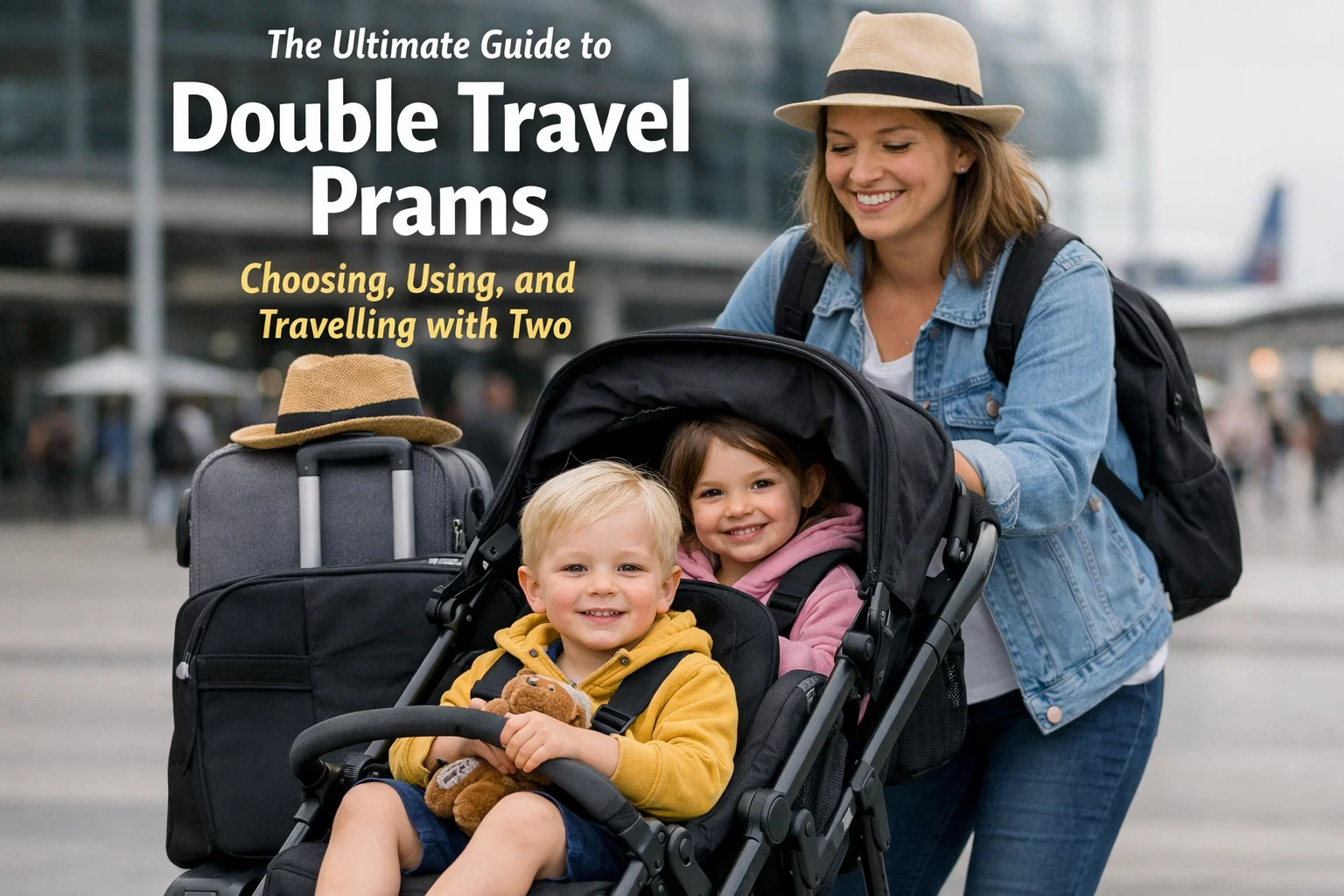
The Ultimate Guide to Double Travel Prams
Embarking on adventures with two young children requires not just courage, but the right equipment. At the heart of this mobile toolkit is the double travel pram, a specialised piece of gear designed to navigate the world with two little ones in tow. This comprehensive guide delves into every facet of selecting and using these essential systems. We’ll move beyond basic specifications to explore the nuanced decisions that affect daily life and travel, helping you find a solution that truly aligns with your family’s rhythm and destinations. Whether you’re planning a city break, navigating airport terminals, or simply managing the school run, the right double travel pram can transform chaos into coordinated movement.
Introduction
The journey into parenting multiples or children close in age is a beautiful, complex dance of logistics. A standard double pram, while serviceable for local parks, often becomes a cumbersome anchor when facing the dynamic challenges of travel. Narrow aeroplane aisles, crowded train stations, bustling foreign market streets, and the trunk of a rental car demand a different kind of vehicle. This is the precise niche the modern double travel pram is engineered to fill. It represents a category defined by compromise and clever design, prioritising compact folds, manageable weight, and agile manoeuvrability without completely sacrificing comfort and durability. This guide is born from hands-on testing, real-world travel scenarios, and countless conversations with families in the trenches. We aim to cut through the marketing noise and provide the substantive, practical knowledge you need to make a confident investment that will serve as your trusted travel companion for years.
Understanding the Double Travel Pram Landscape
The term “double travel pram” is often used as a catch-all, but the market is segmented into distinct configurations, each with profound implications for use. The primary divide is between side-by-side models and tandem (or inline) designs. Side-by-side prams offer equal seating, excellent visibility for both children, and often superior stability. However, their width is their defining limitation, potentially problematic for shop aisles, narrow footpaths, and standard doorways.
Tandem prams, where one seat is positioned behind the other, solve the width issue by maintaining a footprint similar to a single pram. Modern tandems are innovative, offering reversible seats, adjustable recline positions, and even modular designs where the second seat can be removed or converted into a rider board. A subset of the tandem category is the lightweight double travel stroller, which emphasises minimalism, often sacrificing some features for unprecedented portability. Understanding this landscape is the first step toward matching a pram’s architecture to your most common environments.
Key Takeaway: The fundamental choice between side-by-side and tandem configurations will dictate where you can go easily, making it the most critical first decision in your selection process.
Core Design Features That Define a True Travel Pram
Not every double pram is suitable for travel. Specific engineering features elevate a model to true double travel pram status. First and foremost is the fold. A one-handed, self-standing fold is not a luxury for travel; it’s a necessity. Imagine disembarking a train while managing luggage and a toddler—you need the pram to compact swiftly and stand securely without collapsing. The folded dimensions are equally vital. It must fit through airport x-ray machines and, ideally, in an aeroplane’s overhead bin to avoid gate-checking hassles and potential damage.
Weight is a relentless factor. Every kilogram matters when lifting the pram onto public transport, in and out of car boots, or up a flight of stairs. High-quality aluminium alloys are the industry standard for balancing strength and lightness. Finally, wheel technology is paramount. Large, air-filled tyres cushion rides on cobblestones but can puncture. Smaller, swivelling composite wheels offer agility on smooth surfaces but may struggle on rough terrain. The best travel-friendly double buggy often features a hybrid approach, with lockable front swivels for control and suspension for comfort.
Key Takeaway: Prioritise a compact, self-standing fold, a manageable weight, and versatile wheels; these features are the non-negotiable hallmarks of a pram built for real-world travel.
Matching the Pram to Your Children’s Ages and Stages
A pram is a purchase for today, but it must remain functional for tomorrow. This is especially true for a double stroller for travel, which is a significant investment. The ideal model grows and adapts. For a newborn and a toddler, you need a pram that accommodates a carrycot or a fully flat reclining seat for the infant while providing a sturdy, forward-facing seat for the older child. Modular systems that allow you to click different seats, bassinets, and car seats into a single chassis offer unparalleled flexibility.
If your children are both toddlers or older, consider seat weight limits and legroom. A seat that only reclines partially may be fine now but could hinder naptime on long travel days later. The recline mechanism itself—whether it’s a simple strap or a multi-position handle—impacts ease of use when one hand is occupied. For those with a baby and a much older child, some tandem double buggies offer the option to replace the rear seat with a standing platform, effectively future-proofing your purchase for several years.
Key Takeaway: Analyse not just your children’s current needs but their probable development over the pram’s lifespan, prioritising adaptable, modular systems for the longest useful life.
The Critical Balance: Weight vs. Durability
This is the perennial tension in pram design, magnified for travel. Ultra-lightweight models, sometimes under 10kg, are incredibly appealing for portability. However, this lightness often comes from using thinner frame materials, simpler fabrics, and minimising suspension and features. They may be perfect for smooth city breaks but could feel less robust on uneven terrain or with heavier, active children.
Conversely, a more durable double travel pram might use reinforced frames, higher-denier fabric, and comprehensive suspension, adding 3-5kg. This extra weight translates to a smoother ride, greater longevity, and often higher weight limits. The decision hinges on your typical use case. If your travel primarily involves airports, pavements, and taxis, prioritise weight. If your adventures include countryside trails, gravel paths, or daily use on challenging surfaces, leaning toward durability will provide better long-term value and comfort. There is no universally correct answer, only the right balance for your family’s adventures.
Key Takeaway: Lightweight enhances portability, while durability ensures longevity and ride comfort; your regular travel environment should dictate which factor you prioritise.
Navigating Air Travel and Public Transport
For many, the ultimate test of a double travel pram is navigating an airport. Proactive strategy is key. First, verify the airline’s specific policy for cabin baggage dimensions. Many travel prams are designed to meet cabin-size limits, allowing you to store them overhead and walk straight off the plane with your children seated. This is a game-changer for efficiency and avoids the risk of damage from hold luggage systems.
When gate-checking is unavoidable, use a protective bag. A high-quality, padded stroller travel bag is essential armour against scratches, tears, and bent frames. On trains, trams, and buses, the pram’s manoeuvrability and one-handed fold are tested. You need to be able to collapse the system quickly, hold a child, and board before the doors close. Practice the fold at home until it’s muscle memory. Furthermore, a pram that folds compactly with the seats attached saves precious minutes and hassle during transit changes.
Key Takeaway: Mastering air travel with a double pram requires knowing airline policies, investing in a protective bag, and practising a swift, reliable fold for seamless transitions on all forms of transport.
Safety Considerations and Compliance Standards
Safety is the non-negotiable foundation. Any reputable double stroller will comply with the stringent safety standards of its region, such as the British Standard BS EN 1888 or the American ASTM F833. Look for certifications on the frame or in the manual. Beyond compliance, inspect key safety features. A reliable, five-point harness is mandatory for each seat, with padding to prevent chafing. Effective brakes are crucial, especially on inclines; a foot-operated brake that locks both rear wheels is standard, but some models offer linked brakes on all four wheels for superior hill-holding.
For travel, consider additional safety aspects. Does the pram have reflective elements for low-light visibility in busy cities? Is the storage basket secure and positioned so that heavy bags don’t risk tipping the pram? A top industry expert, Sarah Weston, a Child Product Safety Auditor, notes: “Parents often prioritise portability, but with a double travel pram, you must scrutinise the stability and braking system under load. A lightweight frame must still pass the same rigorous dynamic and static stability tests as a heavier model.” Never compromise verified safety for marginal gains in weight or convenience.
Key Takeaway: Ensure your pram carries relevant safety certifications and scrutinise practical safety features like harnesses, brakes, and stability, as these are paramount when navigating unfamiliar environments.
The Real-World Test: A Day in a Historic City
To illustrate these principles, consider a real-world scenario: a family day out in a historic European city with cobbled streets, narrow sidewalks, and multiple café stops. A bulky, heavy-duty side-by-side pram would be a nightmare, constantly getting stuck and difficult to manoeuvre in tight spaces. A super-lightweight umbrella-fold tandem with small wheels would be easy to carry but would transfer every cobblestone’s jolt directly to the children, likely disrupting their sleep and comfort.
The ideal tool here is a mid-weight tandem double travel pram with all-wheel suspension and lockable, medium-sized wheels. The tandem format navigates narrow passages, the suspension absorbs the uneven terrain, and the lockable wheels provide stability on slopes. The manageable weight allows lifting up the occasional staircase, and a compact fold makes a taxi ride back to the hotel feasible. This scenario highlights why understanding the interplay of features is more important than any single specification.
Key Takeaway: Your most common travel scenario should be the benchmark for testing pram features; a city break demands different capabilities than a beach holiday or a countryside retreat.
Storage, Basket Utility, and Daily Practicalities
Daily usability often comes down to the details. The storage basket is a critical component. On a double buggy, it needs to be accessible, even with both seats fully reclined. Some tandem models have baskets split by the frame, rendering them almost useless. Look for a large, low-hanging basket you can access from multiple sides. Consider also the “parent console” for holding drinks, phones, and keys—these add-ons can be invaluable for keeping essentials at hand.
Canopies are another key feature. For travel, especially to sunny destinations, extended, UPF 50+ canopies with peek-a-boo windows are essential for sun protection and checking on children without disturbing them. Ventilation is equally important; look for mesh panels or zip-open vents to prevent overheating. These practical touches transform a pram from a simple transport device into a functional, mobile base for your children.
Key Takeaway: Do not underestimate ancillary features like basket access, canopy coverage, and storage; they dramatically impact daily convenience and comfort during long outings.
Comparing Leading Configurations: A Detailed Breakdown
The table below provides a structured comparison of the three main double pram configurations, highlighting their suitability for travel.
| Feature | Side-by-Side Double | Tandem (Inline) Double | Lightweight Double Stroller |
|---|---|---|---|
| Primary Advantage | Social interaction for kids, equal views, often more stable. | Narrow width, fits standard doors/easier transport. | Extremely lightweight & compact fold; ultimate portability. |
| Primary Disadvantage | Very wide; difficult on narrow paths/public transport. | Can be long; rear child may have limited view. | Often less durable, smaller seats, minimal features/suspension. |
| Typical Weight | Heavier (12-15kg+). | Moderate to Heavy (10-14kg). | Light (6-10kg). |
| Manoeuvrability | Good on open, smooth paths. | Good, but longer wheelbase affects turning. | Excellent on smooth surfaces. |
| Ideal Travel For | Open spaces, suburban travel, where width is not an issue. | City breaks, airports, destinations with narrow access. | Frequent flyers, minimalists, backup stroller for older kids. |
| Compromise | Portability for space & equality. | Some child interaction for navigability. | Durability/comfort for ultra-portability. |
Key Takeaway: This comparison underscores that every pram type involves a trade-off; your choice should consciously accept one set of limitations to gain your most-needed advantages.
Maintenance, Care, and Long-Term Upkeep
A double travel pram endures more wear and tear than a domestic model. Salt air, sand, dust, and rain require a proactive maintenance routine. Regularly clean the frame with a damp cloth and mild detergent, paying attention to folding mechanisms and wheel axles where grit can accumulate. Fabric seats should be removed and machine-washed according to instructions to maintain hygiene, especially after travel.
Wheels are high-wear items. Check bearings for smooth rotation and remove hair or string wrapped around axles. For pneumatic tyres, keep a small pump and puncture repair kit in your travel bag. Most reputable brands sell individual replacement parts—from canopies to wheel assemblies—which can extend your pram’s life significantly. Proper care not only maintains appearance but, more importantly, ensures the safety mechanisms and fold reliability remain intact over years of service.
Key Takeaway: A simple, regular maintenance routine preserves the safety, functionality, and appearance of your travel pram, protecting your investment for the long term.
The Evolution of Best Practices in Family Travel Gear
The industry is constantly evolving. A current trend is the move toward greater sustainability, with brands using recycled fabrics and more easily recyclable materials. Another significant shift is the expectation of true cabin-sized compatibility, pushing designers to create ever-more ingenious folding mechanisms that shrink a double pram to the dimensions of a carry-on suitcase.
Furthermore, the concept of a “travel system” has expanded. It’s no longer just about car seat compatibility. The best double travel pram now acts as a hub, potentially connecting to bassinets, toddler seats, and even inline skate attachments for parents. The focus is on creating a single, adaptable chassis that serves multiple purposes, reducing the need for multiple single-purpose products. Staying aware of these trends helps you select a pram that is modern in both form and function.
Key Takeaway: Modern best practices emphasise sustainability, airline cabin-size compatibility, and ultra-adaptable modular systems that serve families from infancy through the toddler years.
Final Pre-Purchase Checklist and Considerations
Before finalising your decision, run through this actionable checklist:
- Test the Fold: Can you perform it one-handed? Does it self-stand? Measure the folded dimensions.
- Assess the Weight: Lift it repeatedly. Imagine doing this while holding a child.
- Check Seat Configurations: Do both seats recline fully? Can they face each other or parents? Are weight limits adequate?
- Evaluate the Wheels & Push: Test on different surfaces. Are swivels lockable? Is the push handle adjustable?
- Inspect Storage & Canopies: Is the basket accessible? Do the canopies provide full coverage?
- Review Travel Credentials: Does it come with a travel bag? Are spare parts readily available?
- Consider Longevity: Will it adapt as your children grow? Is the brand known for durability?
Key Takeaway: This hands-on checklist forces practical engagement with the pram’s most critical travel-related functions, moving you from theory to confident purchase.
Conclusion
Selecting the ideal double travel pram is a significant decision that blends practical logistics with the promise of future adventure. It requires honest assessment of your family’s habits, a clear understanding of the inherent trade-offs in design, and a focus on the features that truly ease movement in the wider world. There is no single “best” pram, only the best pram for your unique journey. By prioritising a compact fold, manageable weight, and a configuration that suits your primary environments, you invest in more than a piece of equipment; you invest in freedom. A well-chosen double travel pram becomes the reliable foundation upon which countless memories are built, transforming the challenge of moving two children through the world into a seamless part of the adventure itself.
Frequently Asked Questions (FAQ)
What is the main advantage of a double travel pram over a regular double pram?
A true double travel pram is specifically engineered for portability and navigation in tight spaces. Its defining features are a compact, often one-handed fold, lighter weight, and a design focused on fitting in transport systems, making it fundamentally more suited for planes, trains, and crowded destinations than a standard, often bulkier double pram.
Can a double travel pram be used as an everyday stroller?
Absolutely, many are designed for this dual purpose. However, you may compromise on aspects like storage basket size, all-terrain capability, or the plushness of the seats compared to a dedicated, full-featured everyday model. If your daily environment is largely urban, a robust double travel pram can perfectly serve as your primary stroller.
How do I decide between a side-by-side and a tandem double travel pram?
Let your lifestyle dictate the choice. If your regular routes involve wide pathways and you prioritise child interaction, a side-by-side may work. For most travellers navigating cities, public transport, and narrow access, a tandem double stroller for travel is the pragmatic choice due to its standard-width footprint, despite the potential compromise on the rear child’s view.
Are lightweight double travel prams safe and durable?
Yes, provided they are from a reputable brand and carry relevant safety certifications (like BS EN 1888). Their durability is relative; they are built to be light and portable, so they may not withstand the same level of rough, daily abuse over many years as a heavier, more rigid model. They are safe for their intended use but require appropriate care.
What is the best way to protect my double travel pram on an aeroplane?
The best protection is to choose a model that folds to cabin-size and store it in the overhead bin. If gate-checking is required, a mandatory investment is a high-quality, padded stroller travel bag. This bag will shield the frame from scratches and dents and prevent straps and fabrics from getting caught in conveyor belts.