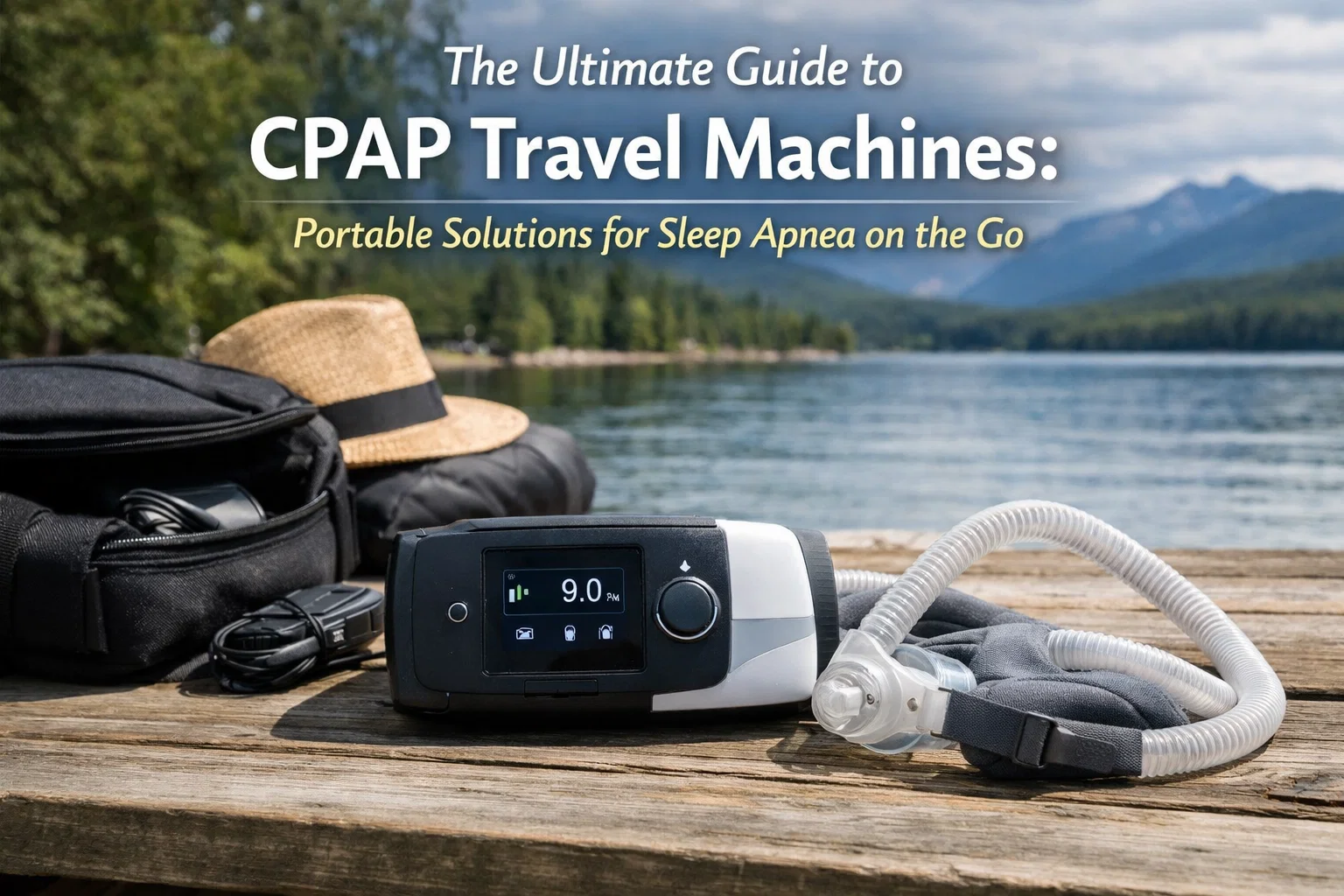
The Complete Guide to CPAP Travel Machines: Mastering Sleep Therapy Anywhere
For the millions who rely on CPAP therapy for restful sleep and vital health, the idea of travel can spark immediate anxiety. The familiar routine of nightly treatment seems to clash with the realities of packing, security checks, and unfamiliar destinations. This guide is dedicated to dismantling that barrier. We are going to explore the world of CPAP travel machines in exhaustive detail, transforming the challenge of mobile sleep apnea management into a simple, manageable part of your journey. This resource helps readers make informed decisions, navigate logistical hurdles, and achieve consistent, effective therapy whether they are camping under the stars, crossing time zones, or staying in a five-star hotel.
The evolution of sleep therapy technology has been nothing short of revolutionary. From the bulky, noisy machines of the past, we have entered an era of sophisticated, miniaturized devices designed for active lives. A modern CPAP travel machine is more than a scaled-down version of your home device; it is a feat of engineering prioritizing portability, power efficiency, and resilience. This guide explains not just the “what” and “how,” but the strategic “why” behind every feature and consideration. We will move from understanding the core technology and your options, to the hands-on practicalities of air travel, power management, and daily use on the road, ensuring you never have to choose between your health and your wanderlust.
Understanding the Portable CPAP Ecosystem
Before diving into specifications and packing lists, it’s crucial to grasp what we mean by “portable CPAP” and how these devices fit into the broader landscape of sleep therapy. The term is often used as a catch-all, but in practice, it encompasses several distinct categories of devices, each with its own design philosophy and ideal use case.
A CPAP travel machine is a compact, lightweight positive airway pressure device engineered specifically for mobility. Its primary purpose is to deliver the prescribed therapeutic air pressure to treat obstructive sleep apnea while minimizing the footprint and weight of the overall system. This involves compromises and innovations in size, sound level, and power consumption not always necessary in a stationary home device. The semantic field here extends beyond just the machine itself to include crucial ancillary components: travel CPAP batteries, DC power adapters, international power converters, and compact humidification solutions. Related search phrases like “mini CPAP,” “portable sleep apnea machine,” and “battery powered CPAP” all point to the user’s core need: effective therapy, untethered from a bedroom outlet.
From a historical perspective, the drive for portability has been a major catalyst for innovation in the sleep industry. The quest to make therapy more accessible and less intrusive has led to the development of advanced motor technology, more efficient algorithms, and novel form factors. Modern devices now leverage auto-adjusting pressure technology (APAP) even in tiny packages, use heated micro-tubing to reduce condensation without a bulky water chamber, and integrate smartphone apps for detailed therapy tracking on the go. This isn’t just about shrinking a box; it’s about reimagining the entire treatment experience for a mobile user.
What is a travel CPAP machine?
A travel CPAP machine is a medically certified, compact positive airway pressure device designed for easy transport and use outside the home. It maintains the core function of treating sleep apnea by delivering pressurized air through a mask but achieves this in a package often 50-70% smaller and lighter than standard units. Key differentiators include optimized size and weight, reduced power draw for battery operation, and frequently, ruggedized construction. Many are FAA-approved for in-flight use and operate quietly to accommodate shared spaces.
The core idea of portable CPAP is not merely miniaturization, but the holistic enablement of consistent sleep therapy in any environment.
Navigating Your Options: Types of Portable PAP Devices
The market offers a spectrum of portable devices, and the best choice hinges on your specific therapy needs, travel style, and personal preferences. Understanding the nuances between these categories is the most critical step in selecting your ideal CPAP travel machine.
First, we have true travel CPAP machines. These are devices designed from the ground up for portability. Brands like ResMed (AirMini), Philips (DreamStation Go), and Transcend have built their reputations here. They are typically the size of a large smartphone or soda can, weigh around one pound or less, and often forego integrated humidifiers in their most basic form to save space. Instead, they may use innovative humidification solutions like disposable moisture-exchange cartridges or compact, add-on water chambers. Their motors are engineered for extreme efficiency, allowing them to run for a full night on a modest travel CPAP battery. The trade-off is that some users find the sound profile or the feel of the air delivery slightly different from their larger home machines, though advancements have minimized these gaps significantly.
Second, there are compact or all-in-one CPAPs. These devices, such as some models from Breas or DeVilbiss, bridge the gap between a full-featured home machine and a dedicated travel unit. They are smaller than traditional CPAPs but larger than ultra-portables, and their key advantage is that they often include a fully integrated heated humidifier and sometimes even a heated tube. They are fantastic for users who travel frequently by car or who don’t mind a bit more bulk in exchange for a therapy experience nearly identical to home. They are portable, but not necessarily “pocket-sized.”
Third, we must consider BPAP travel machines. For users prescribed Bi-Level or BiPAP therapy for more complex sleep apnea, portability has historically been a greater challenge due to the increased mechanical and power requirements. However, the landscape is changing. Manufacturers now offer portable BiPAP devices that are remarkably compact. They provide the critical dual-pressure support but in a travel-friendly format. These are specialized devices and are essential for those whose therapy cannot be managed by a standard CPAP or APAP machine.
Finally, a category often searched is the battery powered CPAP. It’s vital to distinguish here: this usually refers not to a type of machine, but to a power setup. Most modern travel CPAPs are designed to run on DC power from a battery, but the battery is typically a separate purchase. Some kits bundle them, but understanding your device’s voltage and power consumption (measured in watts or amp-hours) is key to selecting a compatible, sufficiently capacious battery. A common user problem is purchasing a machine and a battery only to find the battery won’t last a full night at their prescribed pressure. The solution lies in careful calculation: always check the manufacturer’s battery guide and consider a battery with at least a 30-50% capacity buffer over their minimum estimate for your pressure.
Choosing the right type of portable device requires honestly assessing your need for ultra-compact size versus the desire for full-featured comfort like integrated humidification.
The Critical Considerations: A Feature-by-Feature Breakdown
Selecting a CPAP travel machine involves more than just picking the smallest device. It’s a series of strategic trade-offs. Let’s dissect the key features that demand your attention, moving from technical specifications to practical usability.
Size, Weight, and Form Factor: This is the most obvious starting point. Dimensions and weight are usually prominently advertised. Consider not just the device’s specs, but its packed dimensions with its power supply, hose, and mask. Does it come with a dedicated travel case? Is that case durable and discreet, or does it scream “medical device”? In practice, a machine that fits in a bedside drawer is different from one that fits in your carry-on’s laptop sleeve. The form factor also matters—some are long and thin, others are more cube-like. Think about how it will sit on a cramped hotel nightstand or a tent floor.
Power Requirements and Flexibility: This is arguably the most crucial technical consideration. Examine the device’s input voltage range (e.g., 12-24V DC). A wider range offers more flexibility with third-party batteries. Note its power consumption at your prescribed pressure; a machine that uses 12 watts will drain a 96 Watt-hour battery twice as fast as one that uses 6 watts. Does it come with both AC and DC power cords? For international travel, a universal power supply (100-240V) is non-negotiable. A subtle but important point: some machines have a proprietary power connector, locking you into the manufacturer’s (often more expensive) battery ecosystem, while others use a standard barrel plug, opening up a world of third-party options.
Humidification: This is the great compromise in portable CPAP. Dry air is a common cause of non-compliance. Traditional heated humidifiers with water tanks are bulky and power-hungry. The portable world offers innovative alternatives:
- Integrated Heated Humidifiers: Found on “compact” machines, these offer the gold standard but add size/weight.
- Heated Tube Systems: Some devices use a heated micro-tube that prevents rainout (condensation in the tube) and adds a slight warmth to the air, which can be more comfortable than cold, dry air.
- Passive Humidification: Devices like the AirMini use a disposable humidifier cartridge (often called a “HumidX” or similar). Your exhaled breath hydrates the cartridge, which then adds moisture to the incoming air. It’s lightweight and requires no power or filling, but its effectiveness can vary with climate and individual need.
- None: Some travelers simply forego humidification for short trips, using nasal moisturizing gels or saline sprays to counteract dryness.
Therapy Modes and Data: Most travel CPAPs now offer Auto-CPAP (APAP) functionality, which is highly advantageous for travel as it automatically adjusts to pressure needs that can change with altitude, fatigue, or alcohol consumption. Ensure the device can deliver your prescribed pressure range. Data tracking is also key. Does the machine store detailed therapy efficacy data like AHI (Apnea-Hypopnea Index) and leak rate? Can it sync via Bluetooth to a smartphone app for easy review? This data is vital for ensuring your therapy remains effective while away from your home machine’s SD card.
Noise Level: Measured in decibels (dB), a quieter machine is less disruptive to you and any travel companions. While most modern devices are very quiet (often under 30 dB), reviews from hands-on use suggest paying attention to the type of sound—a low hum may be less intrusive than a higher-pitched whirr.
Every feature of a travel CPAP involves a balance between portability and performance, and the right choice is deeply personal to your therapy needs and travel habits.
The Ultimate Travel CPAP Comparison Table
The following table provides a structured, at-a-glance comparison of the critical decision factors across the conceptual categories of portable devices. It is based on general market trends and is designed to guide your evaluation of specific models.
| Consideration | True Travel CPAP (e.g., AirMini, DreamStation Go) | Compact All-in-One CPAP | Portable BiPAP Device |
|---|---|---|---|
| Primary Advantage | Maximum portability & minimal weight | Full-featured therapy similar to home | Essential Bi-Level therapy in mobile form |
| Typical Size/Weight | Very small (≈ 6″ x 3″ x 2″); 0.5 – 1.5 lbs | Small to Medium (≈ 8″ x 6″ x 4″); 2 – 4 lbs | Varies, but compact relative to home BiPAP |
| Humidification | Often passive (cartridge) or optional add-on | Usually integrated heated humidifier | Often integrated, but may be optional |
| Power Efficiency | Excellent – designed for minimal battery draw | Good to Moderate – humidifier increases draw | Moderate – higher pressures require more power |
| Ideal Use Case | Frequent flyers, backpacking, ultra-light travel | Car travel, longer stays, users who need humidification | Travelers requiring prescribed Bi-Level therapy |
| Therapy Modes | CPAP, APAP common | CPAP, APAP common; may have more features | BiPAP, may include backup rate & advanced modes |
| Approx. Battery Life* | Longest (often 2+ nights per charge on med. battery) | Moderate (1-2 nights, humidifier off extends) | Shortest (requires larger, higher-capacity battery) |
| Compromise | Humidification less robust; may feel different to use | Less “pocketable”; more bulk to pack | Highest cost; most complex power needs |
Battery life is highly dependent on pressure settings and use of humidification. This is a generalized comparison.
Powering Your Journey: A Deep Dive into Batteries and Electricity
The freedom offered by a CPAP travel machine is ultimately enabled by its ability to run without a wall outlet. Navigating power solutions is where many travelers encounter confusion and frustration. Let’s demystify this critical component.
First, understand the units. Battery capacity is measured in Watt-hours (Wh) or Amp-hours (Ah). Watt-hours are the more universal measure. To estimate runtime, divide the battery’s Watt-hour rating by your machine’s average power consumption (in watts) at your pressure. For example, a 98Wh battery powering a 12-watt device would theoretically last about 8 hours (98 ÷ 12 = 8.16). Always derate this by 20% to account for battery efficiency loss and provide a safety margin. A common user problem is the “dead battery at 3 a.m.” scenario, which is solved by this conservative calculation and choosing a battery with excess capacity.
Types of CPAP Batteries:
- Manufacturer-Specific Batteries: These are designed and sold by the CPAP maker (e.g., ResMed’s Power Station II, Philips’ DreamStation Go battery). They are plug-and-play, often integrate seamlessly with the device, and sometimes offer pass-through charging (using the machine while the battery charges). The trade-off is a higher cost per Watt-hour and potential lack of versatility for other devices.
- Third-Party/Universal Batteries: Brands like Medistrom, EXPOWER, and TalentCell produce excellent batteries compatible with many machines via the correct DC cord. They often offer better value (more Wh per dollar) and features like multiple output ports (USB for phones, 12V for other gear). Crucially, you must verify voltage and plug compatibility. Using an incorrect voltage can damage your machine.
- Portable Power Stations: These larger units, from brands like Jackery or Goal Zero, are essentially large-capacity batteries with AC inverters. They can power any CPAP with its standard AC cord for many nights and can recharge phones, laptops, or even a small fridge. They are ideal for camping with CPAP or extended off-grid travel but are too heavy for typical airline carry-on.
Airline Regulations and Flying with a CPAP Battery: This is a major source of anxiety. The FAA and most international aviation authorities explicitly permit medical device batteries in carry-on baggage. The key limit is on the battery’s capacity: batteries with 100 Watt-hours or less are almost always allowed without airline approval. Batteries between 101-160 Wh typically require airline pre-approval (and you are often limited to two). Batteries over 160 Wh are generally prohibited on passenger aircraft. Pro Tip: Most dedicated CPAP batteries are under 100 Wh specifically for this reason. Always carry batteries in your carry-on, never in checked luggage, and be prepared to remove the CPAP and battery from your bag at security.
Real-World Example: Sarah, a photographer who camps frequently, uses a travel APAP at 10 cm H2O. Her machine draws 9 watts. She chose a third-party 78Wh battery. Her calculation: 78Wh ÷ 9W = 8.6 hours, derated to ≈ 6.9 hours. This covers her nightly 6-hour sleep with buffer. She keeps a slim 20,000mAh power bank (≈74Wh) with a USB-to-DC adapter as a lightweight emergency backup for multi-night trips, allowing her to pursue her passion without sleep apnea setbacks.
Charging Strategies: For multi-night trips without AC power, you need a recharging plan. Solar panels can recharge smaller batteries. For car travel, a DC-DC charger that plugs into your vehicle’s 12V outlet (cigarette lighter) is essential. Remember, the car must be running or you risk draining your car battery.
Your power solution is the lifeline of your travel CPAP; investing time in understanding capacity, compatibility, and regulations ensures peace of mind and uninterrupted therapy.
Conquering the Airport and Sky: The CPAP Travel Checklist
The journey from your front door to your destination bed is where theory meets reality. A systematic approach turns potential hassles into smooth routine. This matters most when you’re tired, in a busy security line, or facing a curious airline agent.
Pre-Flight Preparation:
- Carry a Doctor’s Letter: While not always required, a signed letter on your physician’s letterhead stating you have sleep apnea and require the use of a CPAP machine is invaluable. It should include the machine’s name and that it is medically necessary. This can resolve questions at security or the gate.
- Know Your Rights (U.S. Specific): Under the Air Carrier Access Act, your CPAP travel machine and its associated components (battery, humidifier, mask) do not count toward your carry-on allowance. You are allowed to bring it as an additional “medical device” item. Inform the gate agent if you are challenged, politely citing this regulation.
- Pack Smart: Pack your CPAP in its own carrying case. Use it as your personal item. Keep all components together—machine, hose, mask, power cords, battery. A small, clear zip-top bag for your mask and hose can be helpful for security. Have your doctor’s letter and a copy of your prescription easily accessible.
Navigating Security Checkpoints (TSA):
The TSA is familiar with CPAP machines. You have two options:
- Leave it in its case: You can inform the officer you have a medical device and request a visual inspection. They may still swab the outside of the case for explosives residue.
- Remove it from its case: Place the device in a separate bin for X-ray. Your mask and hose can usually stay in the case.
- Never check your CPAP. The risks of damage, loss, or temperature extremes in the cargo hold are too high. As one frequent flyer and sleep therapist notes, “I’ve seen too many patients have trips ruined because they trusted their $1,000 life-sustaining device to the baggage system. It stays with me, always.”
In-Flight Use:
- Ask Early: Notify the flight attendant during boarding that you will be using a medical device during the flight. They can often provide guidance on the best place to stow it and may offer you a seat with easier access to power, if available.
- Power in the Air: Most aircraft do NOT have accessible power at economy seats. You must use a battery for in-flight therapy. Ensure your battery is fully charged before boarding. Some first/business class seats and certain aircraft have AC outlets; a universal adapter is wise.
- Setting Up: Use distilled water in your humidifier only if absolutely necessary and fill it minimally to avoid spills. Consider foregoing it for the flight. Be mindful of your seatmate when routing your hose. A CPAP travel bag that doubles as a bedside caddy can be hung from the seatback tray table hinge to keep everything organized.
Advanced preparation and knowing your rights transform air travel from a CPAP hurdle into a manageable, even routine, part of your journey.
Mastering the Destination: Setup and Use in Unfamiliar Places
You’ve arrived. Now, the goal is to replicate the therapeutic efficacy of your home routine. This involves adapting to new environments, from hotel rooms to remote cabins.
Initial Room Setup:
Your first act should be to scout the bedside setup. Look for a stable, flat surface. Be wary of dusty or wet surfaces in rustic locations. A simple travel CPAP mat or even a clean hand towel can provide a clean base. Locate the nearest power outlet. Is it across the room? Pack a 10-foot AC extension cord—it’s a tiny addition that solves a major logistical problem. If using a battery, position it safely where it won’t be kicked or have something placed on it.
Water Quality and Humidification:
This is a critical, often overlooked issue. Never use tap water in your CPAP humidifier, especially while traveling. Mineral content can damage the device and introduce contaminants you’ll breathe. The gold standard is to bring a small bottle of distilled water. If you cannot find it, the next best option is to use bottled water that is labeled as “purified” or “demineralized.” In a pinch, you can use water that has been boiled for several minutes and cooled, but this is less ideal. For devices with humidifier cartridges, you simply need to ensure the cartridge is fresh and functional for the duration of your trip.
Ambient Challenges:
- Altitude: If traveling to a high-altitude destination, be aware that most modern APAPs will adjust automatically. Fixed-pressure CPAPs may deliver slightly less effective pressure due to the thinner air. Consult your doctor before a high-altitude trip if you use a fixed-pressure machine.
- Climate: In very dry climates, you may need more aggressive humidification or nasal moisturizers. In humid climates, you may struggle with rainout (condensation in the tube). Turning down humidification or using a heated tube or insulating tube cozy can prevent this.
- Noise and Light: Don’t forget the basics of sleep hygiene. A white noise app on your phone can mask unfamiliar sounds. A travel-sized sleep mask can block out early sunrise or streetlights.
Maintenance and Cleaning on the Road: You cannot maintain your full home cleaning routine. The focus should be on simplicity and prevention. Bring a small bottle of CPAP-friendly disinfectant spray or pre-moistened wipes designed for masks and tubes. Wipe down your mask cushion and the exterior of the machine daily. For the tube, some travelers use a flexible brush or simply ensure it air-dries thoroughly during the day. A common misconception is that travel requires lax hygiene; in fact, consistent, quick cleaning is more important to prevent exposure to new environmental microbes.
Successful destination use is about proactive problem-solving—anticipating issues with power, water, and environment to create a stable, therapeutic bubble wherever you sleep.
Beyond the Machine: The Essential Travel CPAP Accessory Kit
The machine is the star, but the supporting cast of accessories determines the success of the show. A well-curated kit addresses the small failures that can disrupt therapy.
The Non-Negotiables:
- Backup Mask Cushion: The silicone or foam cushion that seals to your face is the single most likely part to fail (tear, lose shape). Pack a brand-new, sealed spare of your exact model.
- Backup Hose: A standard or slimline hose can crack or develop leaks. A spare is cheap insurance.
- Universal DC Power Cord: If your machine uses a standard plug, an extra cord is wise. If it uses proprietary, consider if a spare is feasible.
- Plug Adapters: A set of international plug adapters that covers your destinations. Ensure they are sturdy and make solid contact.
- Medical ID/Letter: As discussed, keep it accessible.
The Highly Recommended:
- Portable CPAP Cleaner (with caution): Small, ozone or UV-based cleaners exist. They can be controversial and are not a substitute for wiping. If you use one, follow safety instructions meticulously and never use it in an enclosed space with people or pets present.
- Travel Power Strip: A compact, multi-outlet strip with USB ports solves the “one outlet” hotel room problem and lets you charge all devices at once.
- Desiccant Packs: Toss a few silica gel packs into your CPAP case to absorb moisture and prevent mildew during transit in humid climates.
- Distilled Water Container: A sealed, leak-proof 8-16oz bottle dedicated to CPAP water.
Mask-Specific Solutions:
- Mask Wipes: Individually packaged for daily cleaning.
- Mask Leak Bands/Strap Covers: These can improve seal and comfort, especially if your facial contours change slightly with travel fatigue or humidity.
- Nasal Pillow Covers: Disposable fabric covers for nasal pillow masks that can improve hygiene and comfort.
From hands-on use, the most common “failure point” isn’t the machine—it’s a worn cushion or a forgotten power adapter. Building this kit incrementally turns you from a reactive traveler into a prepared one.
A robust accessory kit is a force multiplier for your travel CPAP, pre-emptively solving the common, small problems that could otherwise derail your therapy.
Addressing Common User Problems and Misconceptions
Let’s tackle three pervasive real-world issues head-on, moving from problem to practical outcome.
User Problem 1: “My travel CPAP is louder/feels different than my home machine. It’s keeping me awake.”
This is a frequent adjustment period. The smaller motor and different airflow pathway can create a distinct sound and sensation. Solution: First, give yourself 3-5 nights of acclimation at home before your trip. Use it in your bedroom. Your brain will adapt. Second, experiment with the machine’s placement. On a hard nightstand, vibration can amplify sound. Placing it on a folded towel or soft mat can dampen noise. Third, check for leaks at all connections; a high leak can cause the machine to work harder and sound louder. The outcome is that persistence and minor adjustments almost always lead to comfortable adaptation.
User Problem 2: “I’m overwhelmed by battery options and terrified of it dying mid-trip.”
The outcome of this fear is either not traveling or not using therapy, both unacceptable. Solution: Use the Watt-hour calculation method described earlier, then buy a battery with double your calculated nightly need. If you need 40Wh per night, buy a 98Wh battery. This provides a full night of buffer and accounts for battery aging. Additionally, research your destinations—will you have AC power every third night to recharge? A simple charging plan relieves anxiety. The outcome is confidence, knowing you have a proven, ample power reserve.
User Problem 3: “It’s just a weekend trip. Is it really worth the hassle to bring my CPAP?”
This mindset leads to poor sleep, daytime fatigue, and the reinforcement of bad habits. The physiological stress of sleep apnea doesn’t take a vacation. Solution: Reframe the “hassle.” Invest in a setup so streamlined it becomes as automatic as packing your toothbrush. Use a dedicated travel bag that lives partially packed. The positive outcome is profound: you return from your weekend actually rested, not needing a “vacation from your vacation.” You protect your long-term health without exception, making therapy a non-negotiable part of your life, not an intrusion on it.
The mental barriers to traveling with CPAP are often greater than the physical ones; systematic solutions and a reframed mindset are the keys to overcoming them.
The Actionable Travel CPAP Preparation Checklist
Before you embark on your next journey, use this consolidated checklist to ensure nothing is overlooked.
One Month Before Travel:
- [ ] Test your entire travel setup (machine, battery, mask) for 3+ consecutive nights at home.
- [ ] Order any replacement parts (cushions, filters, tubes).
- [ ] Obtain/update your doctor’s letter and prescription copy.
- [ ] Research power outlets at your destination and purchase necessary plug adapters.
One Week Before Travel:
- [ ] Fully charge your CPAP battery and perform a capacity test (run it for a few hours).
- [ ] Clean all components thoroughly and ensure they are completely dry before packing.
- [ ] Acquire a small bottle of distilled water or plan your water source.
- [ ] Confirm airline medical device policy if using a battery over 100Wh.
Packing Your CPAP Bag:
- [ ] Machine (with SD card inserted, if used)
- [ ] Power Supply (AC cord, DC cord, international adapters)
- [ ] Fully Charged Battery (in carry-on)
- [ ] Mask, Headgear, and Hose
- [ ] Backup Mask Cushion
- [ ] Cleaning Wipes / Small spray bottle of cleaner
- [ ] Doctor’s Letter & Prescription
- [ ] Distilled Water (or plan to buy)
- [ ] Extension Cord / Compact Power Strip
- [ ] Personal sleep accessories (earplugs, eye mask)
At the Airport & Onboard:
- [ ] Keep CPAP bag accessible for security screening.
- [ ] Politely inform TSA agent it is a medical device.
- [ ] Notify gate agent if needed for extra carry-on allowance.
- [ ] Inform flight attendant of intent to use device during flight.
- [ ] Use battery for in-flight therapy; do not rely on seat power.
Conclusion: Redefining Freedom with Your CPAP Travel Machine
The journey through the world of CPAP travel machines is ultimately a journey toward reclaiming autonomy. Sleep apnea management should not be a chain that anchors you to your bedroom. The technology, strategies, and mindset outlined in this guide demonstrate that with thoughtful preparation, the world remains fully accessible.
We’ve moved from the strategic understanding of device categories to the technical nuances of power management, through the practical realities of airport security and unfamiliar hotel rooms. The thread connecting all of it is the principle of consistent care. A travel CPAP is not a lesser therapy; it is an equally vital one, executed in a different context. The modern best practice is clear: therapy should be continuous, adaptable, and integrated seamlessly into your life, however mobile it may be.
Embrace the learning curve. Start small—perhaps a single night at a friend’s house with your new setup—and build your confidence. The initial investment of time and resources pays infinite dividends in restful sleep, protected health, and the profound freedom to explore without compromise. Your CPAP travel machine is more than a device; it’s your passport to a life unbounded, ensuring that wherever you lay your head, you breathe easily, sleep deeply, and wake ready for the day’s adventures.
Frequently Asked Questions (FAQs)
What is the smallest CPAP machine available for travel?
As of the latest models, the smallest true travel CPAPs are about the size of a large smartphone, weighing under a pound. Devices like the ResMed AirMini and some Transcend models lead in minimal size. However, “smallest” should be balanced with needed features like data tracking, acceptable noise, and effective humidification options for your personal needs.
Can I use my regular home CPAP for travel?
You can, but it’s often not ideal. Home CPAPs are bulkier, heavier, and less power-efficient. They lack dedicated travel cases and may not be approved for in-flight use. For occasional car travel, it’s feasible, but for frequent or air travel, a dedicated portable CPAP device is strongly recommended for convenience, ease, and reliability.
How do I clean my travel CPAP without a sink?
Focus on surface cleaning. Use CPAP-specific disinfectant wipes on the mask cushion and the machine’s exterior. For the tube, run a dry, flexible brush through it or use specialized tube wipes. Allow all components to air-dry thoroughly during the day on a clean towel. Portable UV or ozone cleaners are an option but require careful use and are supplemental, not a replacement for mechanical cleaning.
Will a travel CPAP work as well as my home machine?
Medically, yes. FDA-cleared travel CPAPs deliver the same prescribed therapeutic pressure. The feel and user experience may differ slightly due to size and humidification method. Most users, after a short adjustment period, find them equally effective. The key is choosing a model that supports your pressure needs and preferred features.
What happens if my travel CPAP breaks while I’m on a trip?
This is why preparation is key. Always travel with a backup mask cushion. For the machine itself, know the manufacturer’s warranty and repair process. Some offer expedited travel replacement services. For longer trips, consider travel insurance that covers medical equipment. As an immediate last resort, contact a local home medical equipment (HME) provider at your destination; they may offer rentals or troubleshooting.