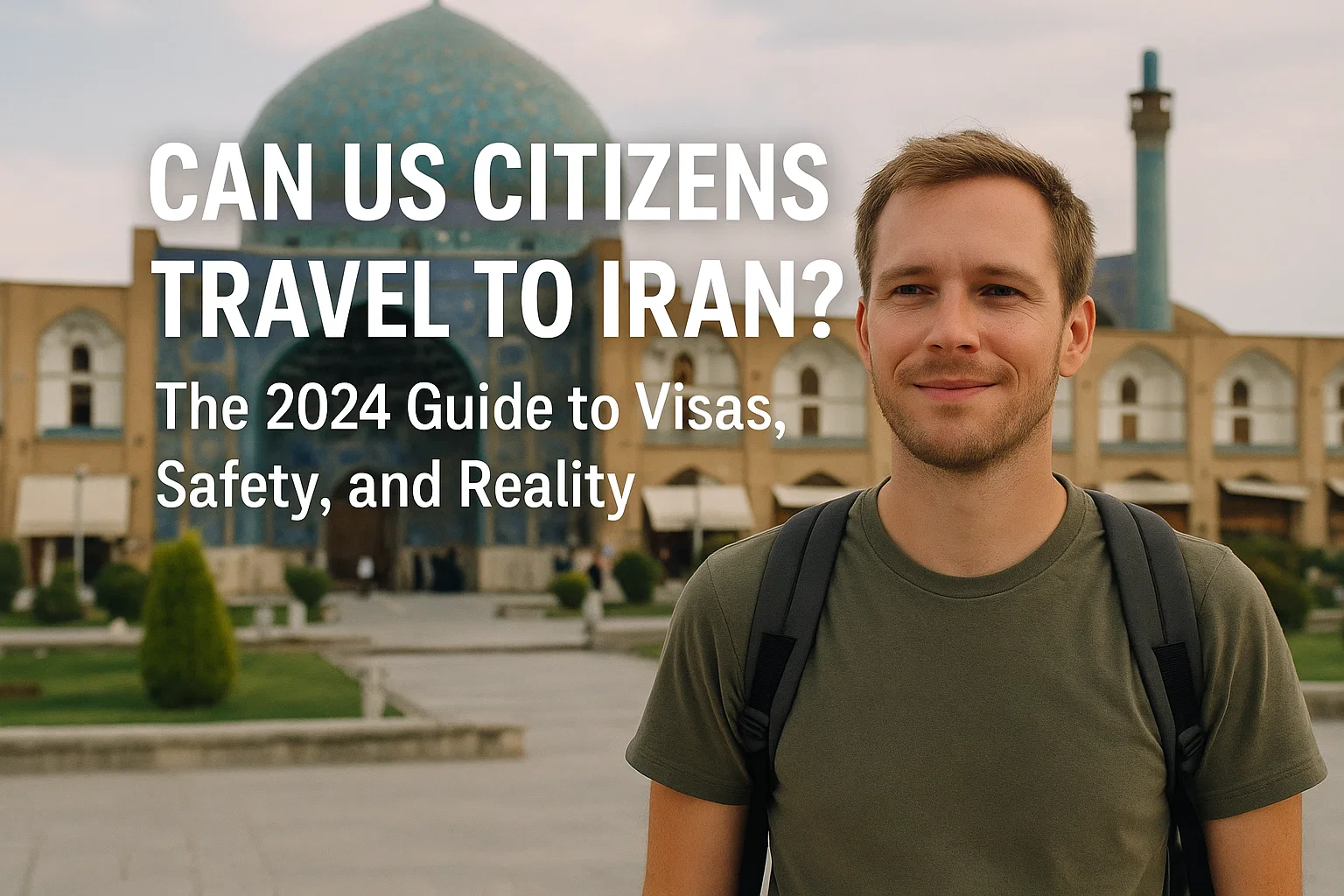
Can US Citizens Travel to Iran? Unpacking the Reality for American Tourists
The question, “Can US citizens travel to Iran?” is one of the most complex and frequently asked in the world of adventure travel. The simple, technical answer is yes, but the real answer is layered with critical requirements, profound geopolitical nuances, and a travel experience unlike any other on Earth. For American passport holders, Iran is not a destination you simply book on a whim. It requires meticulous planning, official oversight, and a deep understanding of the rules that govern your presence there. This comprehensive guide is designed to be your authoritative resource, moving beyond the basic “yes” or “no” to explore the intricate process, the profound cultural rewards, and the essential realities every US traveler must understand before considering a journey to the heart of Persia.
The Legal Framework and Entry Requirements
The most pivotal requirement for any American wishing to visit Iran is the mandatory guided tour. Independent travel for US citizens is not permitted by Iranian regulations. You must be part of a pre-arranged, government-approved itinerary organized by a licensed Iranian tour operator. This operator acts as your sponsor, securing your necessary travel permits and providing a licensed guide who will accompany you for the entirety of your stay. This structure is non-negotiable and forms the backbone of any legitimate travel plan.
Furthermore, US citizens must obtain a visa prior to arrival; visas on arrival are not an option. The process is initiated by your chosen Iranian tour operator, who applies on your behalf to the Iranian Ministry of Foreign Affairs. Once approved, you will receive an authorization number, which you then take, along with your passport and application forms, to an Iranian Interest Section at the Pakistani Embassy in Washington, D.C., or another designated diplomatic mission to physically receive the visa sticker. This process can take several months, so advanced planning is paramount.
Navigating the US Government’s Travel Advisory
It is impossible to discuss travel to Iran without addressing the US Department of State’s travel advisory, which has consistently classified Iran as a Level 4: “Do Not Travel” country. This is the highest warning level, citing risks of wrongful detention, kidnapping, and the arbitrary arrest and detention of US nationals. The advisory is a serious legal and security document, not a suggestion. Travelers must acknowledge that by going to Iran, they are entering a country with no formal diplomatic relations with the US, meaning emergency consular services are extremely limited.
Understanding this advisory is a crucial part of your risk assessment. While tens of thousands of tourists from other nations visit Iran safely each year, the US government explicitly states that the risk to its citizens is unacceptably high. Potential travelers should thoroughly read the advisory, register with the Smart Traveler Enrollment Program (STEP), and seriously consider purchasing specialized evacuation insurance, as standard policies often void coverage for destinations under a Level 4 warning.
The Visa Process: A Step-by-Step Breakdown for Americans
The Iranian visa process for Americans is a detailed dance between you, your tour operator, and the Iranian government. Your first and most important step is selecting a reputable, experienced tour company that specializes in handling US passport holders. They will request your personal details, passport scan, and a professional resume or CV—a requirement that often surprises applicants but is standard for US citizens. This dossier is submitted for government approval.
Once the visa authorization number, known as a “Visa Grant Notice,” is issued, the physical stamping phase begins. You must send your actual passport, the visa forms, photos, and fees to the processing embassy, typically in Washington D.C. Your passport will then receive the visa sticker, which is valid for entry within a specific window, usually 30 days from the issue date. It is critical to note that having an Iranian visa stamp in your passport may subject you to additional questioning when entering certain other countries, notably Israel, and can complicate future applications for Global Entry or other trusted traveler programs.
Security Considerations and Personal Safety
Personal security in Iran for tourists, particularly Americans, involves a blend of practical awareness and understanding the political landscape. On a day-to-day level, Iran is statistically very safe from common street crime like theft or violent assault; the cultural emphasis on hospitality and the presence of significant police forces make cities feel secure. However, the primary risk is not criminal but political. US citizens are advised to be hyper-vigilant about social media activity, avoid all political demonstrations or sensitive discussions, and never attempt to photograph military or government installations.
The risk of being detained on dubious charges of espionage or “anti-state propaganda” is the core of the US government’s warning. To mitigate this, travelers must maintain a low and respectful profile. This means strictly adhering to the country’s laws, including Islamic codes of conduct, and ensuring your guided itinerary does not stray into unauthorized areas. Your guide is not just a cultural interpreter but also your minder; developing a good, transparent relationship with them is a key component of your safety strategy while on the ground.
Cultural Etiquette and Social Norms
Respecting Iranian cultural and Islamic norms is not just a matter of courtesy but a legal requirement. For all travelers, this means mandatory hijab (head covering) for women from the moment of arrival at the airport, wearing long, loose-fitting clothing that covers arms and legs, and avoiding public displays of affection. For men, shorts are generally not acceptable in public. During the holy month of Ramadan, eating, drinking, or smoking in public during daylight hours is prohibited, even for non-Muslims.
Beyond dress codes, social interactions are governed by a nuanced formality and profound hospitality, known as taarof. Iranians are famously warm and inquisitive towards foreign guests, and you may be invited for tea or a meal. Understanding taarof—the ritual of polite refusal and insistence—is helpful. More importantly, conversations should steer clear of politically charged topics. Discussions about religion, the government, or Iran’s international relations should be approached with extreme caution, if at all. The safest and most rewarding topics are Persian culture, art, history, and family.
Financial Logistics and Access to Money
One of the most significant practical challenges for US citizens in Iran is accessing money. Due to comprehensive US primary sanctions, American credit cards, debit cards, and ATM cards are utterly useless within Iran. The entire international banking system is severed. Consequently, you must bring all the money you will need for your entire trip in cash, in pristine US dollars or euros. This cash is then exchanged for Iranian rials at the fluctuating open-market rate, which is far more favorable than the official government rate.
Managing this large amount of cash requires planning. You will need a secure means of carrying it and a strategy for safekeeping in hotel safes. All transactions with your tour operator—for hotels, transport, guides, and most meals—are typically arranged and paid for in advance as part of your package. Your cash fund is for souvenirs, additional meals, tips, and personal incidentals. It’s also wise to keep your exchange receipts, as you may need to convert leftover rials back to hard currency at the airport before departure, and proof of legal exchange can be requested.
Itinerary Planning and Must-See Destinations
A typical tour itinerary for a US citizen will follow a well-trodden but stunningly beautiful cultural path, focusing on Iran’s ancient and Islamic heritage. The classic route includes the modern capital of Tehran, with its magnificent crown jewels and archaeological museums; the poetic city of Shiraz, home to the ethereal Pink Mosque (Nasir al-Molk) and the nearby ruins of Persepolis; the dazzling ancient capital of Isfahan with its iconic Naqsh-e Jahan Square; and the desert oasis of Yazd, a center of Zoroastrian culture. These destinations are the uncontested highlights and form the core of most approved tours.
While these cities are approved for tourist visits, it is crucial to understand that your movement is not entirely free. Your guide and tour operator are responsible for your itinerary, and deviations are not permitted. Wandering off alone to explore back alleys or visiting cities not on your pre-approved schedule is a violation of the terms of your visa and can lead to serious complications. The experience, therefore, is one of deep cultural immersion within a structured framework, allowing you to witness Iran’s grandeur while operating within the legal boundaries set for American visitors.
Communication and Digital Access
Staying connected in Iran presents its own set of challenges. Most common Western social media platforms (Facebook, Twitter, YouTube, Telegram) and many news websites are blocked by the Iranian government’s internet firewall. To access these, you will need a reliable Virtual Private Network (VPN) installed and tested on your devices before you arrive. However, be aware that the use of VPNs is technically illegal in Iran, though widely tolerated. It’s a gray area that requires discretion.
For local communication, purchasing a local SIM card for your unlocked phone is inexpensive and highly recommended for data and calls. This will allow you to use Iranian apps and stay in touch with your guide. Importantly, be cautious about digital footprints. Assume all digital communications within Iran could be monitored. Avoid sensitive discussions on messaging apps, and be mindful of what you post on social media during your trip, as even a seemingly innocent photo could be misinterpreted.
Health and Practical Travel Considerations
From a health perspective, travel to Iran requires standard precautions. Ensure your routine vaccinations are up to date, and consider shots for Hepatitis A and Typhoid. Tap water is not safe to drink in most cities; rely on bottled water, which is ubiquitous and cheap. Traveler’s diarrhea is a common minor ailment, so bringing appropriate medication is wise. Quality medical care is available in major cities, but it may not meet Western standards, and payment is typically required upfront in cash, underscoring the need for comprehensive travel insurance that includes medical evacuation.
Other practicalities include the need for electrical adapters (Iran uses 220V/50Hz with European-style Type C and F plugs). The weekend in Iran is Friday, with many businesses closed or operating on limited hours. Also, be prepared for the emotional experience of “tourist price” versus “local price,” a common practice where foreigners are quoted higher rates in bazaars. This is not usually malicious but part of the commercial landscape. Having your guide assist with major purchases can help ensure fairness.
25 Unusual Facts About Cuba: From Coffin Phones to Communist Cookies
The Realities of Being an American in Iran
The on-the-ground experience for an American in Iran is often one of overwhelming hospitality juxtaposed with underlying political tension. Many Iranians are masterful at separating people from politics. You will likely encounter countless warm greetings, invitations for tea, and expressions of “Welcome to Iran” from ordinary citizens eager to show that their country is more than the headlines. These genuine interactions are, for many travelers, the most memorable part of the journey. As one experienced travel journalist noted, “The dichotomy between Iran’s political posture and the profound warmth of its people is the single most defining characteristic of a visit there.”
However, this warmth exists within a controlled environment. You may sense a subtle awareness from your guides or hotel staff regarding your movements. It is not uncommon to feel that you are being observed, because in a very real sense, you are. Your guide reports to the tour operator, who is accountable to the government. This is not meant to be paranoid but realistic. The key for American travelers is to embrace the incredible cultural and historical access while remaining consciously within the guardrails of the system that permits it.
A Detailed Comparison: US Citizen vs. Other Passport Holders Traveling to Iran
| Requirement or Consideration | US Citizens (and UK/Canada Passport Holders) | Most Other Nationalities (e.g., EU, Australia, NZ) |
|---|---|---|
| Travel Style | Mandatory guided tour for entire stay. Independent travel strictly prohibited. | Can travel independently or with a guide. No mandatory escort requirement. |
| Visa Process | Lengthy pre-approval via tour operator. Requires in-person submission at Interest Section. Often requires CV/Resume. | Can often obtain visa on arrival (VOA) at major airports, or simpler e-visa/tourist authorization. |
| US Government Advisory | Subject to Level 4: “Do Not Travel” warning, with specific risks of wrongful detention outlined. | Typically subject to lower-level advisories (Level 3 or below), focusing on regional risks. |
| Financial Access | No banking access. Must bring all funds in cash (USD/EUR). | May have limited ATM access for non-US banks, though cash is still strongly recommended. |
| Itinerary Freedom | Itinerary fixed and pre-approved. No deviation without sponsor approval. | Free to change plans, travel routes, and destinations at will within the validity of their visa. |
| Perception & Interactions | May attract more curiosity or cautious hospitality. Political topics are high-risk. | Viewed as standard tourists. Conversations may be more open, though caution is still advised. |
Conclusion: Weighing the Decision Carefully
So, can US citizens travel to Iran? Technically and logistically, the answer remains yes, but it is a qualified yes that demands sober reflection. This journey is not a casual holiday; it is an expedition into a deeply complex nation, undertaken within a strict regulatory framework and against the explicit advice of your own government. The rewards are unparalleled: standing in the majestic ruins of Persepolis, losing yourself in the mirror-work of Isfahan’s palaces, and experiencing the legendary Persian hospitality firsthand. These are travel moments of the highest order.
The decision ultimately rests on a personal calculus of risk versus reward. It requires accepting a loss of independence, navigating significant logistical hurdles, and acknowledging a tangible, though statistically small, risk of severe political complications. For the informed, adaptable, and culturally sensitive traveler who understands and accepts these terms, Iran offers a profoundly moving and perspective-altering experience. For others, the challenges may outweigh the allure. If you choose to go, do so with your eyes wide open, armed with knowledge, respect, and the understanding that you are a guest in a system that operates by its own, non-negotiable rules.
Frequently Asked Questions (FAQ)
Is it illegal for a US citizen to travel to Iran?
No, it is not illegal. The US government does not ban its citizens from traveling to Iran. However, it strongly advises against it with a Level 4 “Do Not Travel” warning. The Iranian government, conversely, permits and has a structured process for US tourists, requiring them to be on a guided tour. The legality involves adhering to Iranian entry rules while understanding the severe risks and lack of consular support highlighted by the US State Department.
How long does the Iranian visa process take for Americans?
The entire process for a US citizen to obtain an Iranian visa typically takes a minimum of two to three months, but it can be longer. It involves your tour operator securing government approval in Iran (3-8 weeks), followed by the physical visa stamping at the Iranian Interest Section in Washington D.C. (2-4 weeks for mail-in processing). Applying well in advance of your intended travel dates is absolutely critical.
Can I travel to Iran alone as an American citizen?
No, absolutely not. Independent travel for US passport holders is prohibited by Iranian regulations. You must be part of a pre-arranged, government-approved tour with a licensed guide accompanying you for the entire duration of your stay. This is the single most important and non-negotiable rule for Americans wishing to visit the country.
Will an Iranian visa in my passport cause problems later?
It can. While US authorities do not penalize you for it, having an Iranian visa stamp may lead to additional questioning when entering other countries, particularly Israel. You may also face more scrutiny during future US visa renewal interviews or applications for programs like Global Entry. Some travelers with space in their passports use a second passport (if eligible) for the Iran visa to avoid this issue.
What is the single biggest mistake Americans make when planning travel to Iran?
The biggest mistake is underestimating the lead time and complexity of the process, or attempting to circumvent the guided tour requirement. Trying to travel independently, even with a visa obtained through a third country, is a serious violation that can lead to detention, deportation, and a permanent ban. Success for US citizens traveling to Iran hinges on working through a reputable tour operator, planning many months ahead, and fully committing to the structured experience they provide.