The Complete Guide to Antarctica Travel: Planning Your Expedition to the Seventh Continent
This guide explains everything a prospective traveler needs to know about undertaking a journey to Antarctica. From the initial spark of inspiration to the practicalities of booking an expedition and the profound experience of setting foot on the ice, this resource helps readers navigate the complexities of planning the trip of a lifetime. We’ll cover the strategic decisions, the onboard realities, the environmental ethics, and the sheer awe of connecting with the planet’s most pristine and powerful wilderness. Antarctica travel is not a simple vacation; it is a transformative expedition that demands careful consideration and rewards the curious with unparalleled beauty and perspective.
Introduction: The Call of the White Continent
The very name evokes a sense of absolute remoteness, a pristine kingdom of ice at the bottom of the world. Antarctica is the coldest, driest, windiest, and highest continent on average, a place of extreme contradictions where vast, silent deserts of ice meet teeming coastal wildlife spectacles. For centuries, it existed only in the imaginations of explorers and cartographers, a Terra Australis Incognita. Today, while still fiercely protected and inaccessible to mass tourism, it is within reach for those drawn to its profound isolation and raw natural power.
Traveling to Antarctica means stepping into a narrative of heroic exploration—the stories of Scott, Amundsen, and Shackleton are etched into its glaciers. It means witnessing ecosystems that operate on a scale and with a fragility found nowhere else. This journey is an exercise in humility, a lesson in planetary science, and an encounter with the sublime. This guide is designed to be your comprehensive manual, moving from dream to reality, ensuring your approach to Antarctica travel is informed, responsible, and perfectly aligned with the unique experience you seek.
Understanding the Antarctic Travel Landscape
Antarctica travel exists in a specific niche defined by international treaty, extreme environment, and a strong ethos of conservation. The Antarctic Treaty System, signed by numerous nations, designates the continent as a natural reserve devoted to peace and science. Tourism is not a right but a privilege, managed through the International Association of Antarctica Tour Operators (IAATO), which sets stringent guidelines to minimize human impact.
Practically, this means all commercial travel is expeditionary in nature. There are no hotels, no resorts, and no independent travel. Your journey will be aboard a purpose-built or retrofitted expedition vessel, and your time on the continent is carefully managed by expert guides. The industry has evolved from hardy, no-frills adventures to include a range of options, from rugged, activity-focused voyages to more comfortable, education-centric journeys. Understanding this framework is the first step in aligning your expectations with the realities of a polar expedition.
The core of Antarctic tourism is structured, guided, and deeply regulated to prioritize the protection of the very environment visitors come to see.
Defining Your Expedition: Ship Types, Routes, and Seasons
The single most important decision in planning your Antarctica travel is selecting your vessel and itinerary. This choice dictates your comfort, your access to the continent, your daily activities, and ultimately, your overall experience.
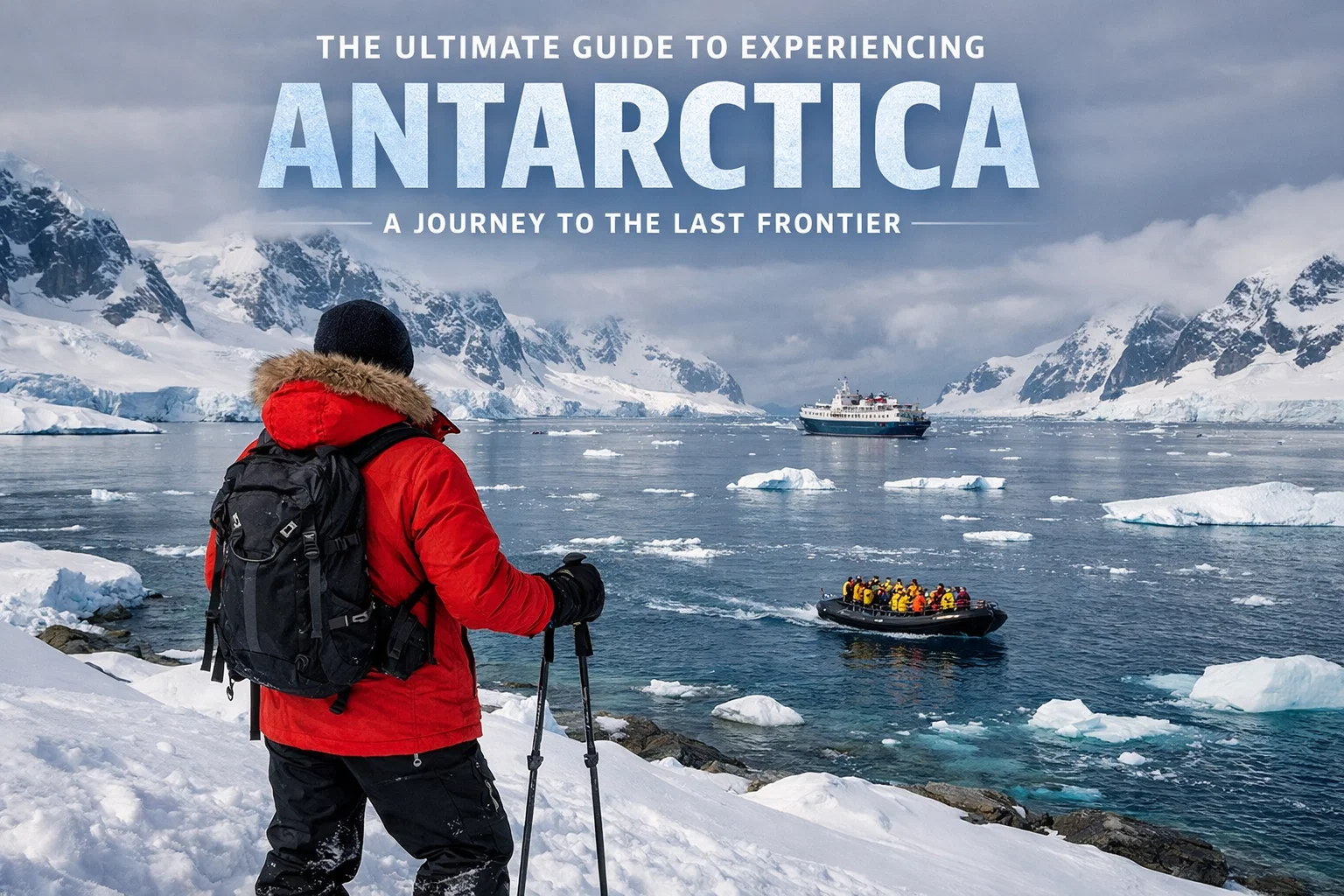
Expedition Ships are the workhorses of Antarctic travel. Typically carrying between 50 and 200 passengers, these ice-strengthened vessels are designed for exploration. They feature Zodiac landing craft for shore excursions, dedicated observation lounges, and teams of expert naturalists, historians, and guides. The ambiance is informal and focused on immersion. The smaller the ship (sub-100 passengers), the more flexibility it has for landings, as IAATO rules allow only 100 people ashore at any one site at a time.
Cruise-Style Vessels are larger ships, sometimes carrying 500 or more passengers. They offer more traditional cruise amenities—multiple restaurants, spacious cabins, entertainment. However, their size prohibits most landings; they primarily offer “scenic cruising” through channels like the Drake Passage and along the Antarctic Peninsula. This is a viewing-only experience, not an expedition with active exploration.
Itineraries primarily focus on the Antarctic Peninsula, the most accessible region reaching north toward South America. Classic 10-12 day voyages from Ushuaia, Argentina, cross the infamous Drake Passage, spend 4-5 days exploring the Peninsula’s wonders, and return. Longer voyages may include the South Shetland Islands, push further south to the Antarctic Circle, or incorporate sub-Antarctic gems like the Falkland Islands and South Georgia. The latter, often called the “Serengeti of the Southern Ocean,” is a wildlife paradise requiring a longer, more expensive expedition of 18-23 days.
Seasons are short and distinct. The “Summer Season” runs from November to March. November-December offers pristine snow, dramatic icebergs, and peak penguin courtship and nesting. January-February brings the warmest temperatures (relatively speaking), active penguin chicks, and the best opportunities for whale watching. March sees fewer vessels, more sea ice forming, and excellent whale activity.
| Decision Factor | Expedition Ship (Small, <200 pax) | Larger Cruise / Scenic Vessel | Consider This If… |
|---|---|---|---|
| Primary Goal | Active exploration, Zodiac landings, on-continent immersion. | Scenic viewing from the ship, comfort-focused travel. | You must set foot on the continent versus viewing it from a distance. |
| Landing Access | Multiple daily landings/Zodiac cruises (weather permitting). | Very limited or no landings; “cruise-by” only. | Hands-on experience is non-negotiable. |
| Onboard Vibe | Casual, educational, expedition-focused, communal. | More formal, traditional cruise atmosphere with varied amenities. | You prioritize learning and adventure over luxury entertainment. |
| Cost & Duration | Generally higher cost per day, standard 10-23 day trips. | Can be lower cost, often shorter itineraries. | Your budget aligns with an all-inclusive expedition experience. |
| Best For | Adventurous travelers, photographers, wildlife enthusiasts. | Those with mobility issues, or who prefer stable, comfortable viewing. | You are physically able to embark/disembark Zodiacs in cold conditions. |
Key Takeaway: Your choice of vessel and itinerary is the foundational decision for your trip, directly determining the depth of your Antarctic experience, from passive viewing to active, hands-on exploration.
The Realities of Preparation: Confronting Common Traveler Problems
Antarctica travel presents unique challenges that can derail an unprepared traveler. Addressing these proactively is crucial for a successful journey.
Problem 1: Underestimating the Physical and Mental Demands. Many envision a cruise-like ease, but even the smoothest Drake Passage crossing involves motion. Landings require agility to climb in and out of Zodiacs, often in swell, while wearing bulky gear. Days are long, packed with activities, and weather can change plans instantly, requiring patience and flexibility.
Solution & Outcome: Honest self-assessment is key. Engage in moderate fitness preparation focusing on balance and core strength. Invest in seasickness mitigation strategies (medications, patches, acupressure bands) and view the Drake as a rite of passage. Mentally, adopt an expedition mindset: you are on their schedule (the weather’s and the wildlife’s), not your own. This shift in perspective turns potential frustrations into part of the adventure.
Problem 2: Misunderstanding the True Cost and Inclusions. The sticker price of an expedition can be daunting, but the greater risk is hidden costs or unclear expectations about what is included.
Solution & Outcome: Scrutinize what your fare covers. Most reputable expedition operators include all meals, accommodations, guided excursions, and educational lectures. It typically excludes international airfare to the embarkation port (usually Buenos Aires then Ushuaia), premium alcoholic beverages, gratuities for crew and staff, and mandatory travel insurance (with emergency evacuation coverage, which is critical). Also, budget for high-quality gear you may need to purchase or rent, like waterproof pants, insulated boots, or binoculars. A fully understood budget prevents stress and allows you to focus on the experience.
Problem 3: Inadequate Gear Leading to Discomfort. The difference between a magical experience and a miserable one can be the quality of your gloves. The polar environment is unforgiving; cotton clothing becomes cold and dangerous when wet, and inadequate layering can cut short your time enjoying the scenery.
Solution & Outcome: Follow your operator’s gear list meticulously. The mantra is layering. A moisture-wicking base layer, an insulating mid-layer (like fleece or down), and a waterproof/windproof outer shell are essential. Do not skimp on extremities: invest in the best waterproof gloves, warm socks, and a hat you can find. Most operators provide heavy parkas and boots, but your personal base and mid-layers are your responsibility. Proper gear ensures you can comfortably spend hours on deck or on shore, fully immersed in the moment.
Key Takeaway: Proactively preparing for the physical, financial, and gear-related realities of an Antarctic expedition is non-negotiable for transforming potential challenges into manageable parts of an unforgettable adventure.
The Onboard Experience: Life During an Antarctic Expedition
A day in the life on an expedition ship is a vibrant blend of adventure, education, and community. There is no typical day, as the captain and expedition leader constantly adjust schedules based on weather, ice conditions, and wildlife sightings. A general rhythm, however, emerges.
Mornings often begin with an announcement over the ship’s intercom: “Good morning, ladies and gentlemen, we have arrived in Paradise Harbour…” After a hearty breakfast, you’ll attend a briefing outlining the morning’s plan—perhaps a Zodiac cruise among icebergs, followed by a landing at a Gentoo penguin colony. You’ll don your gear, assemble your dry bag (with camera, water, extra layers), and head to the mudroom to pull on your provided boots before embarking on your Zodiac.
Afternoons might hold another landing or a focused lecture from a marine biologist on whale identification, a historian on the Heroic Age of Exploration, or a glaciologist explaining the science of calving glaciers. These talks enrich the sights you’re seeing, providing deep context.
Evenings are for recap sessions, sharing stories over dinner, and perhaps watching the endless twilight from the observation lounge. The sense of camaraderie is palpable; you’re sharing a profound journey with like-minded individuals from around the world.
As one veteran expedition leader notes, “The greatest moments in Antarctica often aren’t on the schedule. It’s the humpback whale that surfaces beside your Zodiac, the leopard seal lazily draped on an ice floe that decides to make eye contact, or the sheer silence that descends when the engines stop in a sheltered bay. Our job is to put you in the right place, at the right time, and then step back so you can have your own personal conversation with the continent.”
Key Takeaway: The expedition ship is your mobile basecamp, classroom, and community center, where a structured-yet-flexible daily rhythm of exploration, education, and reflection brings the Antarctic experience to life.
Environmental Stewardship and the IAATO Framework
To travel to Antarctica is to accept the mantle of ambassador. The continent’s pristine state is maintained only through rigorous, collective discipline. Every traveler must understand and commit to the principles of environmental protection.
The International Association of Antarctica Tour Operators (IAATO) establishes and enforces the rules that govern all responsible tourism. These are not suggestions; they are mandatory protocols followed by all member operators. Key tenets include:
- Wildlife Distancing: Maintaining a minimum distance (usually 5 meters, more for seals and birds) from all animals. You must not block their access to the sea or alter their behavior.
- Biosecurity: Thorough cleaning of boots and gear before and after every landing to prevent the transfer of non-native species. Vacuuming pockets and velcro is a standard pre-landing ritual.
- Site-Specific Guidelines: Limiting numbers, staying on established paths to protect fragile vegetation (like moss and lichen), and never leaving anything behind.
- No Trace: Absolutely everything comes back to the ship—even a lost hair tie or piece of lint.
What is IAATO’s role in Antarctica travel?
IAATO, the International Association of Antarctica Tour Operators, is the self-regulating body that establishes and enforces strict operational and environmental protocols for all responsible tourism in the Antarctic region. Its framework ensures that travel activities, from ship emissions to wildlife interactions, are conducted with the highest standards of safety and environmental stewardship, minimizing human impact on the fragile ecosystem. Choosing an IAATO-member operator is the first step in traveling ethically.
In practice, this means your guides will be vigilant educators, constantly reminding guests of the rules. This matters most when you’re tempted to get just a little closer for that perfect photo. The ethic is clear: the welfare of the environment comes before any human desire. Your participation in this system is a critical part of the journey, transforming you from a passive tourist into an active, informed steward.
Key Takeaway: Responsible Antarctica travel is defined by a strict, non-negotiable ethic of conservation, where every traveler plays a vital role in protecting the continent’s fragile ecosystem through adherence to IAATO guidelines.
Beyond the Peninsula: Exploring Deeper Antarctic Itineraries
While the Antarctic Peninsula offers a spectacular introduction, longer expeditions venture to regions that amplify the sense of discovery and wildlife density exponentially.
South Georgia Island is often described as the crown jewel of polar travel. A British Overseas Territory, it is a rugged, mountainous island steeped in Shackleton lore (his final resting place) and home to staggering wildlife congregations. Imagine beaches blanketed by hundreds of thousands of king penguins, their colorful plumage creating a living, chattering tapestry. Elephant seals, some males weighing over 4 tons, duel on the shores, while fur seals carpet the tussock grass. A visit here is a deeply moving, sensory-overload experience that adds a significant layer of historical and biological depth to an Antarctic journey.
The Falkland Islands (Islas Malvinas) offer a different, sub-Antarctic charm. With a distinct British cultural flavor and a milder climate, they are a birdwatcher’s paradise. Here, you can observe rockhopper, Magellanic, and gentoo penguins, alongside majestic black-browed albatross colonies perched on seaside cliffs, all from surprisingly close proximity.
Crossing the Antarctic Circle is a geographical milestone, offering bragging rights and a sense of venturing into truly remote territory. Expeditions that push this far south (approximately 66°33’ South) typically do so in the peak of summer when ice conditions allow. The landscape feels more severe, the ice more imposing, and the sense of achievement upon crossing the invisible line is profound.
These extended itineraries command a higher price and require more time (often 18-23 days), but for those seeking the most comprehensive Southern Ocean experience, they are unparalleled. If you’re deciding between a classic Peninsula voyage and one that includes South Georgia, ask yourself: is your goal to see Antarctica, or to immerse yourself in the full epic of Antarctic and sub-Antarctic exploration and ecology?
Key Takeaway: For travelers seeking the ultimate Southern Ocean experience, extended itineraries that include South Georgia, the Falklands, or a crossing of the Antarctic Circle offer exponentially richer historical, geographical, and wildlife encounters, justifying the additional time and investment.
Photography and Documentation in the Polar Realm
Capturing the essence of Antarctica is a primary goal for most travelers. The light, scale, and wildlife present both extraordinary opportunities and unique challenges.
Gear Considerations: Bring the best camera you are comfortable using. A DSLR or mirrorless camera with a versatile zoom lens (e.g., 24-200mm) is ideal. A second body or a super-telephoto lens (100-400mm) is excellent for wildlife but can be heavy. Crucially, bring more memory cards and batteries than you think you’ll need; cold drains battery life rapidly. Keep spare batteries warm in an inner pocket. A sturdy, weather-resistant bag is essential, and lens cloths for wiping spray are a must.
Composition and Challenge: The sheer scale of Antarctica is difficult to convey. Include a Zodiac or a person in the frame to provide a sense of monumental scale against an iceberg or mountain. Patience is key for wildlife; observe without disturbing, and let behavior unfold. The “golden hour” can last much longer in polar latitudes, offering prolonged periods of sublime, soft light.
A Real-World Case Insight: A common mistake photographers make is spending the entire Zodiac cruise looking through their viewfinder. One expedition photographer’s advice: “Shoot deliberately for 10-15 minutes, then put the camera down in its dry bag and just be there. Watch the light on the berg, listen to the crackle of brash ice, smell the cold, salty air. Your most powerful memories will be formed by your senses, not your sensor. Capture what you can, but never let the camera become a barrier between you and the experience.”
Key Takeaway: While technical preparation and the right gear are vital for polar photography, the most impactful images—and memories—come from balancing deliberate shooting with mindful, camera-free immersion in the environment.
The Historical Context: Walking in the Footsteps of Explorers
Antarctica is a landscape haunted by history. Your journey will traverse the same waters and gaze upon the same peaks that tested the limits of human endurance during the Heroic Age of Exploration (late 19th/early 20th century). Understanding this context adds a profound layer of respect to the scenery.
You might visit Port Lockroy, a former British research station turned museum and post office, buzzing with the echoes of mid-century science. Or sail past Elephant Island, where Shackleton’s men survived for months under upturned lifeboats. Your guides will recount these tales, making the connection between the cozy warmth of your ship’s lounge and the desperate, frozen struggles of a century past.
This historical lens matters. It transforms a glacier from simply a beautiful ice formation into a dynamic, living feature that Scott’s party man-hauled sledges across. It turns a storm in the Drake Passage from an inconvenience into a visceral connection to what those early explorers faced in wooden ships. This narrative thread is a core part of the expedition curriculum, ensuring your journey is one of both external discovery and internal reflection on human ambition and resilience.
Key Takeaway: Engaging with Antarctica’s rich exploration history is not an academic sidebar; it is essential context that deepens the modern traveler’s appreciation for the continent’s majesty and the sheer audacity of those who first sought to conquer it.
The Modern Scientific Imperative
Today, Antarctica is a continent dedicated to science. It is Earth’s largest natural laboratory, where researchers from around the globe collaborate in peace to study climate change, astrophysics, marine biology, and geology. Your voyage will almost certainly interact with this modern reality.
You may visit an active research station, where scientists might give a tour of their facilities. Your ship’s navigation bridge often shares data with research vessels. Lectures will cover current scientific findings, such as the alarming retreat of glaciers or the impact of krill fishing on the food web.
This exposure is a critical component of contemporary Antarctica travel. It moves the narrative from past heroism to present-day urgency. You become a witness to frontline climate science, seeing the melting ice shelves and shifting wildlife patterns that are often abstract in news reports. This firsthand perspective is perhaps the most powerful takeaway for many travelers—a direct, emotional understanding of the planet’s interconnected fragility.
Key Takeaway: Modern Antarctic expeditions serve as a vital bridge between the public and frontline scientific research, transforming travelers into informed eyewitnesses to the realities of climate change and global ecosystem health.
Practical Planning: Booking, Insurance, and Final Steps
Once you’ve decided on the what, the how requires careful attention to detail.
Booking Timeline: For the best cabin selection and potential early-booking discounts, plan 12-18 months in advance, especially for peak season (December-February) or sought-after small-ship expeditions. Last-minute deals can exist but are unpredictable and limit choice.
Travel Insurance: This is non-negotiable. You require a policy that includes emergency medical evacuation, specifically from remote polar regions, which can cost well over $100,000. Standard travel insurance often excludes “adventure travel” or evacuation from Antarctica. Read the fine print and purchase a policy designed for expedition travel.
Health and Fitness: Consult your doctor, particularly if you have pre-existing conditions. While medical facilities exist on ships, they are not full hospitals. Ensure your vaccinations are up to date. Dental issues should be resolved before departure, as there are no dentists aboard!
Packing Final Check: Use your operator’s checklist. Key items often forgotten: a high-quality, reusable water bottle, lip balm with SPF, high-SPF sunscreen (the ozone hole is real here), seasickness medication, a power strip for the cabin (often only one outlet), and a waterproof dry bag for your camera gear during Zodiac transits.
Key Takeaway: Meticulous practical planning—especially regarding booking lead times and securing comprehensive, evacuation-inclusive travel insurance—is the final, critical step in ensuring a safe, smooth, and stress-free expedition.
The Unspoken Impact: Antarctica’s Transformational Effect
Beyond the checklists and photographs lies the intangible core of the journey: its transformative effect. Many travelers report a shift in perspective, often called “White Continent Syndrome.” The overwhelming scale, the raw power of nature, and the stark simplicity of the landscape have a way of recalibrating one’s sense of place in the world.
The constant, curated stimulation of modern life falls away, replaced by the fundamental rhythms of ice, water, and light. This enforced disconnect—there is no cell service, only limited satellite internet—is a gift. It creates space for reflection, for deep conversations with fellow travelers, and for a quiet mindfulness that is increasingly rare.
You return not just with memories of penguins and icebergs, but with a refined understanding of resilience, a heightened awareness of environmental interconnectedness, and often, a renewed sense of purpose or simplicity. This personal transformation is the true, lasting souvenir of Antarctica travel.
Key Takeaway: The most profound souvenir from Antarctica is not a physical object, but a shifted perspective—a deep-seated sense of planetary connection, environmental responsibility, and personal humility forged in the continent’s immense and silent spaces.
Final Pre-Departure Checklist for the Antarctic Traveler
Before you set sail for the bottom of the world, use this actionable list to ensure you are fully prepared:
- [ ] Documents: Passport (valid for 6+ months post-trip), visas for embarkation country (e.g., Argentina), printed trip documents, and travel insurance policy with evacuation coverage.
- [ ] Health: Doctor’s consultation, adequate supply of personal medications, seasickness prevention strategy, and dental check-up.
- [ ] Gear: Full layering system (base, mid, shell), waterproof pants, warm hat/gloves/neck gaiter, high-quality sunglasses, and broken-in, warm socks. All gear tested before packing.
- [ ] Photography: Camera body(s), lenses, ample memory cards, batteries (twice as many as you think), chargers, and a sturdy, waterproof bag.
- [ ] Financial: Notified bank of travel, secured local currency for port city, budgeted for gratuities, and confirmed payment method onboard.
- [ ] Mindset: Adopted flexible “expedition attitude,” researched history and wildlife, and set an intention to be a mindful, low-impact visitor.
- [ ] Packing Extras: Reusable water bottle, high-SPF sunscreen and lip balm, power strip/adapter, books/journal, and a small backpack for daily excursions.
Conclusion: Answering the Call
Antarctica travel is the definitive journey for our time. It is an adventure that challenges the body, enriches the mind, and touches the spirit. It connects us to a legacy of human exploration while charging us with the responsibility of protecting Earth’s last great wilderness. From the thunderous calving of a glacier to the comedic waddle of a penguin chick, from the harrowing tales of historic survival to the urgent messages of modern science, an expedition to the White Continent is a multifaceted, deeply personal odyssey.
This guide has walked you through the strategic choices, practical realities, and profound implications of such a journey. The path is clear, the community of responsible operators is ready, and the continent awaits—not as a destination to be conquered, but as a experience to be received with humility, curiosity, and care. Your journey to the end of the Earth begins with a single, deliberate step: the decision to go.
Frequently Asked Questions About Antarctica Travel
H3: What is the best time of year to travel to Antarctica?
The Antarctic travel season runs from November to March. November and early December offer pristine ice and active penguin courtship. Mid-December to February brings warmer temperatures, penguin chicks, and peak whale watching. March features fewer ships, beautiful light, and increasing sea ice. The “best” time depends on whether you prioritize snowscapes, wildlife activity, or potential discounts.
H3: How rough is the Drake Passage crossing really?
The Drake Passage, between South America and the Antarctic Peninsula, is infamous for its potential roughness. It can be a placid “Drake Lake” or a turbulent “Drake Shake.” Modern expedition ships are stabilized and handle the conditions well. Being prepared with seasickness medication, staying hydrated, and focusing on the horizon can mitigate discomfort. Most travelers find it a manageable and memorable rite of passage.
H3: Can I travel to Antarctica if I have mobility issues?
Possibly, but it requires careful planning. Landings require agility to embark/disembark moving Zodiacs on a sometimes rocky shore. Many ships have elevators, but the expedition experience is physically active. Some operators offer “cruise-only” voyages on larger vessels with scenic viewing but no landings. It’s essential to discuss your specific needs with operators to find a suitable trip.
H3: Is Antarctica travel ethical given climate concerns?
This is a vital question. Responsible tourism, governed by IAATO, operates under strict environmental protocols. It prioritizes education and advocacy; travelers become eyewitnesses to climate impacts and powerful ambassadors for protection. The carbon footprint is offset by many operators, and the industry funds conservation research. The ethical imperative is to choose an IAATO member and travel with a mindset of stewardship, not consumption.
H3: How do I choose between all the different Antarctica travel operators?
Focus on your priorities: ship size (for landing flexibility), itinerary (Peninsula-only vs. including South Georgia), onboard expertise (lecturer quality), included activities (kayaking, camping), and overall travel philosophy. Read detailed reviews, speak to past passengers, and ensure the operator is a full member of IAATO. A reputable operator will be transparent and help you match their offering to your goals.