Executive Summary
Madagascar represents one of the most ecologically diverse and culturally rich destinations on Earth. This guide provides an exhaustive exploration of the island, covering its unique biodiversity, logistical navigation, and cultural nuances. From the towering Avenue of the Baobabs to the elusive lemurs of the rainforest, we provide the strategic and practical insights necessary for a transformative journey.
Introduction
Choosing to travel Madagascar is an invitation to step into a world that exists nowhere else. Often referred to as the “Eighth Continent,” roughly 90% of the island’s flora and fauna are endemic, meaning they cannot be found in the wild anywhere else on the planet. This resource helps readers navigate the complexities of planning a trip to this vast Indian Ocean nation, offering a bridge between aspirational dreaming and grounded, practical execution. This guide explains the essential geographic regions, seasonal shifts, and cultural protocols required for a successful expedition.
Navigating the Logistics of Island Transit
One of the primary hurdles travelers face is the sheer scale and infrastructure of the country. Unlike many compact island destinations, Madagascar is the fourth largest island in the world. In practice, moving between regions often requires a combination of domestic flights, private 4×4 vehicles, and occasionally river boats. The road network, primarily consisting of “Routes Nationales,” varies significantly in quality. While the RN7 is paved and relatively reliable, many other tracks become impassable during the rainy season.
The solution to transit frustration is twofold: building “buffer days” into your itinerary and prioritizing specific regions rather than attempting to see the entire island in one visit. If you are deciding between a northern circuit and a southern trek, consider that the south offers more classic “National Park” accessibility via the RN7, whereas the north is better suited for those seeking a mix of tropical islands and unique karst landscapes. Travelers often benefit from hiring a professional driver-guide, which mitigates the stress of navigating unmarked roads and provides an essential layer of local expertise.
Key Takeaway: Successful transit in Madagascar requires a slow-travel mindset and a flexible itinerary that accounts for the country’s developing infrastructure and vast distances.
Understanding the Biodiversity of Madagascar
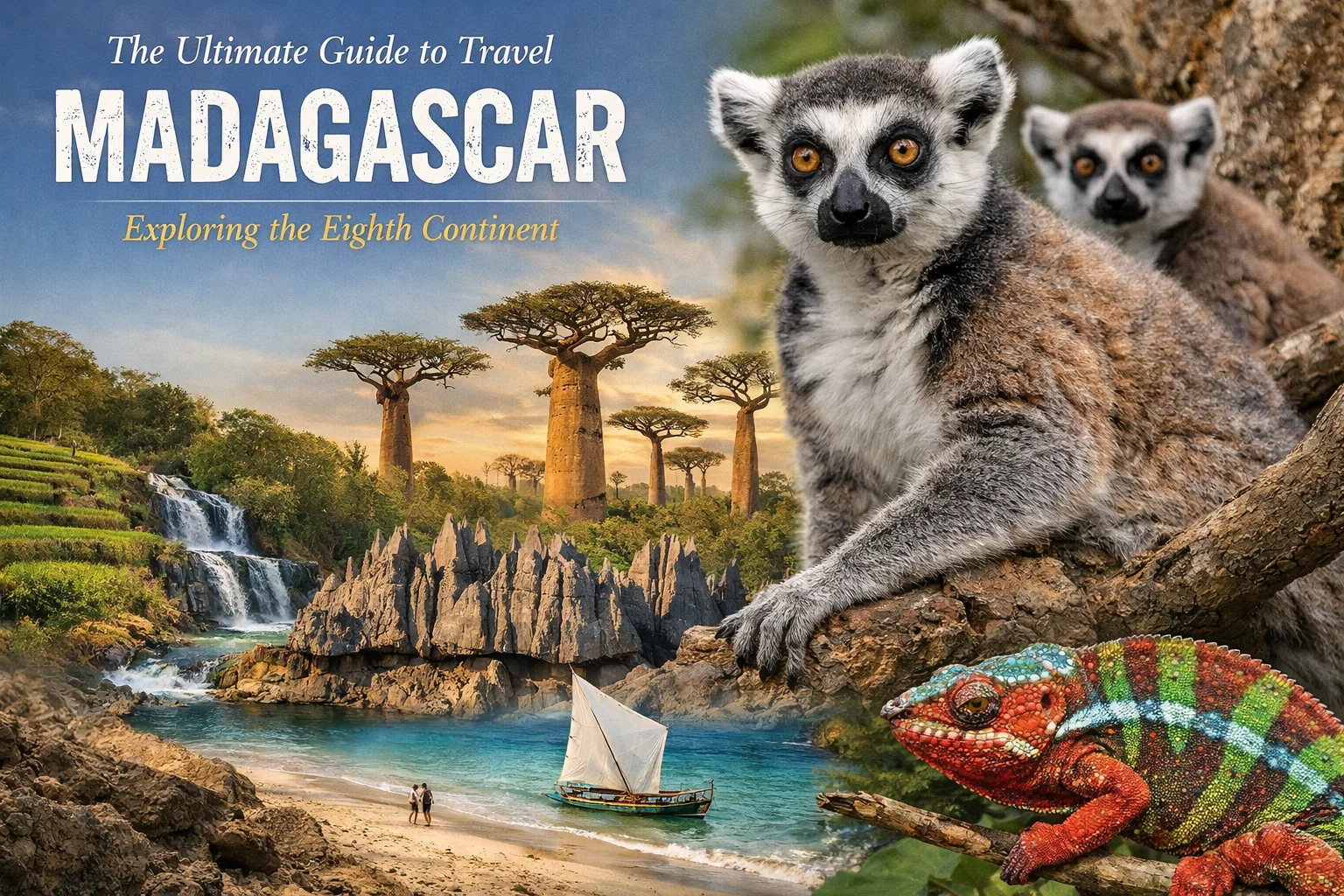
What makes the decision to travel Madagascar so compelling is its status as a “biodiversity hotspot.” The island’s isolation for over 88 million years allowed evolution to take a distinct path. This has resulted in the existence of over 100 species of lemurs, the world’s smallest chameleon (Brookesia nana), and the iconic, bulbous Baobab trees. Understanding the ecological zones—from the humid eastern rainforests to the dry western deciduous forests and the southern spiny thickets—is crucial for setting expectations.
What are the primary wildlife attractions in Madagascar?
The primary wildlife attractions in Madagascar include various species of lemurs, such as the Ring-tailed lemur and the Indri-indri, alongside rare reptiles like the Leaf-tailed gecko. The island is also home to the Fossa, a unique carnivore, and hundreds of endemic bird species, making it a premier destination for naturalists and wildlife photographers seeking rare, non-human encounters.
Key Takeaway: Madagascar’s ecological value lies in its high rate of endemism, making every forest walk a potential encounter with species found nowhere else on the planet.
Solving the Seasonal Weather Dilemma
A common problem for those planning to travel Madagascar is the confusion surrounding the “best” time to visit. Because the island is so large, it possesses multiple microclimates. The eastern coast is tropical and humid year-round, while the west is dry and the central highlands can be surprisingly cold. The primary challenge is avoiding the cyclone season, which typically runs from January to March, causing significant damage to roads and disrupting flight schedules.
To solve this, aim for the “shoulder” months of April to June or September to November. During these windows, the weather is generally stable across most regions, and the flora is vibrant. In practice, the winter months (July and August) are excellent for whale watching on the east coast, but they also coincide with peak European holiday crowds. By aligning your specific interests—such as seeing baby lemurs in October or avoiding the heat of the western plains—with the regional climate data, you can maximize your comfort and visibility.
Key Takeaway: Timing your visit involves balancing the dry season’s accessibility with the specific biological cycles of the wildlife you wish to observe.
Strategic Regional Breakdown
To effectively travel Madagascar, one must view the island through its distinct geographic sectors. The Central Highlands, characterized by terraced rice paddies and red-clay houses, serve as the cultural and administrative hub. The East Coast is a lush, rain-drenched corridor home to the Masoala Peninsula and the pirate history of Île Sainte-Marie. The West is defined by the dramatic Tsingy de Bemaraha—a “forest” of limestone needles—and the dry forests near Morondava. Finally, the South features the “Spiny Forest,” a landscape dominated by Didiereaceae and ancient Baobabs.
Regional Comparison Table
| Region | Primary Landscape | Signature Experience | Best For |
| Eastern Coast | Rainforest & Islands | Whale watching & Indri calls | Nature & Relaxation |
| Western Plains | Dry Deciduous Forest | Avenue of the Baobabs | Landscapes & Photography |
| Central Highlands | Terraced Mountains | Artisanal workshops in Ambositra | Culture & History |
| Southern Spiny Forest | Arid Bushland | Ring-tailed lemur tracking | Adventure & Arid Ecology |
| Northern Peninsula | Karst & Reefs | Tsingy d’Ankarana & Nosy Be | Luxury & Diving |
Key Takeaway: Choosing a region should be based on a combination of your physical activity preference and the specific habitats you wish to explore.
Overcoming the Language and Communication Gap
While Malagasy is the national language and French is widely used in administration and tourism, English is not spoken extensively outside of major hotels and guides. This can create a sense of isolation or difficulty in rural markets. However, the Malagasy people are famously hospitable and patient. From hands-on use of basic phrases, we have found that learning even five or ten Malagasy words completely changes the dynamic of an interaction, moving it from a transaction to a connection.
The solution is to utilize a local guide not just for wildlife spotting, but as a cultural translator. They bridge the gap between “Vazaha” (foreigners) and the local communities, ensuring that you respect “Fady” (local taboos) which are deeply integrated into daily life. This matters most when visiting sacred sites or burial grounds, where specific behaviors are required to maintain harmony with the ancestors.
Key Takeaway: Cultural immersion is facilitated by local guides who navigate the complex social landscape of “Fady” and language barriers on behalf of the traveler.
The Practicalities of Health and Safety
A major concern for anyone looking to travel Madagascar is health and safety, particularly regarding tropical diseases and the availability of medical care. Malaria is present throughout the island, and the healthcare infrastructure is limited outside of the capital, Antananarivo. This creates a perceived barrier to entry for many adventure-seekers.
Addressing this requires a proactive technical approach to preparation. Consult a travel clinic for the appropriate prophylaxis and ensure your vaccinations are up to date. In terms of physical safety, the most common issues are petty theft in crowded urban areas or road accidents due to nighttime driving. The solution is simple: avoid travel after dark and use reputable tour operators who prioritize vehicle maintenance. By taking these standard precautions, the actual risks are significantly mitigated, allowing for a focus on the experience itself.
Key Takeaway: Professional medical advice and a “daylight only” travel policy are the most effective ways to ensure a safe journey through the interior.
The Historical and Cultural Tapestry
Madagascar’s history is a unique blend of Austronesian, African, and European influences. This “melting pot” is evident in everything from the architecture of the Imerina Kingdom to the culinary staples. Rice is the center of the Malagasy universe, often eaten three times a day. The concept of “Fihavanana”—a social bond emphasizing kinship and collective well-being—is the glue that holds the society together.
Historically, the island was a collection of sovereign kingdoms before French colonization. Today, the influence of the ancestors remains the most powerful force in Malagasy life. This is best seen in the “Famadihana” (the turning of the bones) ceremony, where families exhume their ancestors to wrap them in fresh silk and celebrate their memory. While these are private family events, their existence underscores the deep spiritual connection the people have with the land you are visiting.
Key Takeaway: Madagascar’s culture is an inseparable blend of ancestral veneration and a diverse heritage that informs every aspect of modern life.
Sustainable and Ethical Travel Practices
As tourism grows, the impact on Madagascar’s fragile ecosystems becomes a critical consideration. Deforestation remains the island’s greatest environmental challenge, driven by “tavy” (slash-and-burn agriculture) and charcoal production. When you travel Madagascar, your presence can either exacerbate these issues or provide an economic alternative to habitat destruction.
Supporting community-managed reserves is one of the most effective ways to contribute. Places like Anja Community Reserve demonstrate how local villages can thrive by protecting lemur habitats rather than clearing them. “In practice, we see that when travelers pay entrance fees and hire local village guides, that money goes directly into schools and clinics, creating a tangible incentive for conservation,” says a local conservation specialist. Choosing eco-lodges that utilize solar power and employ local staff ensures that your travel footprint supports the long-term survival of the island’s unique species.
Key Takeaway: Ethical travel in Madagascar involves prioritizing community-led conservation projects and minimizing environmental impact through conscious lodging choices.
The Modern Face of Malagasy Tourism
Modern travel in Madagascar is evolving away from the “rough-and-ready” backpacker style toward more sophisticated, comfort-oriented options. While you can still find basic bush-taxis and communal huts, there is a growing sector of high-end lodges in places like Nosy Ankao and the private reserves of the south. These establishments offer world-class luxury while maintaining a deep commitment to the environment.
This shift in user behavior shows that travelers are looking for deeper engagement rather than just “checking off” a list of animals. There is an increasing interest in “citizen science” and philanthropic travel, where visitors spend time with researchers or contribute to reforestation efforts. Consider exploring the less-visited western corridor or the sapphire-rich regions around Ilakaka for a more contemporary look at the island’s socio-economic landscape.
Key Takeaway: The modernization of Malagasy tourism allows for a broader range of comfort levels while fostering deeper connections between visitors and local conservationists.
Gastronomy: A Taste of the Island
The food in Madagascar is a surprising highlight for many visitors. The “national dish,” Romazava, is a meat and leafy green stew that reflects the heart of Malagasy home cooking. Along the coasts, seafood is abundant—fresh lobster, crab, and various fish prepared with coconut milk and ginger are staples. The French influence remains in the ubiquitous and high-quality baguettes and pastries found in highland towns.
Vanilla, of which Madagascar is the world’s leading producer, finds its way into many dishes, including savory sauces for poultry. However, the real soul of the cuisine is found in the “Hotely” (small local eateries) along the roadside. Here, travelers can enjoy a bowl of “Vary sosoa” (rice porridge) or “Mofo gasy” (Malagasy bread) with a cup of local coffee. This matters most when you are on a long drive; these stops are not just for refueling, but for experiencing the rhythm of local life.
Key Takeaway: Malagasy cuisine is a flavorful fusion of indigenous ingredients and international techniques, with rice serving as the fundamental base of every meal.
Expert Tips for Photography and Observation
Capturing the essence of Madagascar requires more than just a good camera; it requires patience and specific technical knowledge. The rainforests are often dark, requiring lenses with wide apertures or cameras that handle high ISO settings well. Furthermore, many lemurs are nocturnal, meaning you will need a guide who knows how to spot “eye-shine” and how to photograph in low-light conditions without distressing the animals.
From a practical perspective, always carry extra batteries and moisture-proof bags. The humidity in the east can be brutal on electronics. For landscape photography, the “Golden Hour” at the Avenue of the Baobabs is iconic for a reason, but consider arriving two hours early to capture the changing light and the local traffic of zebu carts, which adds a human element to the scale of the trees.
Key Takeaway: Technical preparation for low-light environments and moisture protection is essential for successfully documenting the wildlife and landscapes of Madagascar.
Choosing Your Coastal Escape: Nosy Be vs. Sainte-Marie
Many who travel Madagascar end their trip with a coastal stay. The two most popular choices are Nosy Be in the northwest and Île Sainte-Marie in the east. Nosy Be is more developed, offering large resorts, vibrant nightlife, and easy access to smaller islets like Nosy Komba and Nosy Tanikely. It is the premier spot for scuba diving and snorkeling with sea turtles and whale sharks.
In contrast, Île Sainte-Marie (Nosy Boraha) offers a more laid-back, authentic feel. It is a narrow granite island where life moves at the pace of a bicycle. It is historically significant as a pirate stronghold and is the best place in the country for humpback whale watching between July and September. If you’re deciding between the two, choose Nosy Be for luxury and variety, and Sainte-Marie for tranquility and history.
Key Takeaway: Selecting a coastal destination depends on whether you prefer the amenities and activity of a major hub or the quiet, historic charm of a smaller island.
Essential Packing and Gear for the Eighth Continent
Packing for Madagascar is a technical challenge because you may experience 30°C on a beach and 5°C in the highlands within the same week. Layering is the only viable strategy. Lightweight, long-sleeved clothing is essential for both sun protection and to guard against mosquitoes in the evenings. Sturdy, broken-in hiking boots are non-negotiable for the rocky terrain of the Tsingy or the slippery trails of the rainforest.
What are the essential items for a Madagascar packing list?
The essential items for a Madagascar packing list include high-quality insect repellent, a powerful headlamp for night walks, a universal power adapter, and a personal first-aid kit containing rehydration salts and broad-spectrum antibiotics. Durable rain gear is necessary for the eastern parks, while a wide-brimmed hat and high-SPF sunscreen are vital for the exposed western and southern plains.
Key Takeaway: A technical approach to packing, focusing on versatility and environmental protection, ensures comfort across the island’s diverse climatic zones.
Checklist for Planning Your Journey
- [ ] Secure a passport with at least six months validity and two blank pages.
- [ ] Consult a travel doctor for malaria prophylaxis and yellow fever advice.
- [ ] Book domestic flights well in advance as they often sell out or change.
- [ ] Hire a reputable 4×4 and driver for overland segments.
- [ ] Purchase comprehensive travel insurance that includes medical evacuation.
- [ ] Pack a “power bank” for charging devices in remote areas with limited electricity.
- [ ] Learn basic Malagasy greetings (Manao ahoana, Veloma, Misaotra).
- [ ] Withdraw enough cash (Ariary) in major cities, as ATMs are rare in the bush.
- [ ] Verify the current “Fady” for the specific regions you are visiting.
- [ ] Pack a high-quality torch/flashlight for essential nocturnal wildlife spotting.
Frequently Asked Questions
Is it safe to travel Madagascar?
Madagascar is generally safe for travelers who take standard precautions. Most visits are trouble-free, provided you avoid driving at night, stay aware of your surroundings in busy urban markets, and follow the guidance of local experts. Political stability has improved significantly, but it is always wise to monitor current events before departure.
Do I need a visa to visit Madagascar?
Yes, most nationalities require a visa to enter Madagascar. These can typically be obtained upon arrival at the airport for stays up to 30 or 60 days, though many travelers now prefer the convenience of the e-visa system available online. Always double-check the latest requirements with your local consulate.
What is the currency used in Madagascar?
The official currency is the Malagasy Ariary (MGA). While some high-end hotels and tour operators accept Euros or US Dollars, the Ariary is essential for daily transactions, markets, and small restaurants. It is a cash-heavy economy, and credit cards are only accepted in major establishments.
Can I see lemurs everywhere in Madagascar?
While lemurs are found in most forested areas, they are not roaming freely in cities or open farmland. You will need to visit National Parks or private reserves to see them in their natural habitat. Different species are confined to specific regions, so research which lemurs you want to see before choosing your destination.
What is the internet connectivity like?
Internet access is widely available in Antananarivo and major tourist hubs like Nosy Be, often through 4G mobile networks or hotel Wi-Fi. However, in remote parks and rural areas, connectivity can be non-existent. It is best to purchase a local SIM card upon arrival for the most reliable and cost-effective data access.
Conclusion
To travel Madagascar is to accept a challenge and receive a reward that few other destinations can match. It is a place where the infrastructure requires patience, but the biological and cultural riches are unparalleled. By understanding the logistical landscape, respecting the local customs, and timing your visit to the island’s unique rhythms, you can experience a world that feels truly apart from the rest of the globe. Whether you are standing beneath an ancient Baobab or listening to the haunting call of the Indri, Madagascar leaves an indelible mark on the soul of the traveler.