The Definitive Guide to Your Passport Travel Wallet: Beyond a Simple Pouch
This guide explains the critical, often underestimated role of a high-quality passport travel wallet in modern travel. It is not merely an accessory but a fundamental tool for organization, security, and peace of mind. This resource helps readers navigate the overwhelming market, understand the nuanced features that matter most for their travel style, and learn the practical strategies that transform a simple holder into a central command center for any journey, domestic or international. We will move beyond basic descriptions to explore material science, tactical design, and user psychology, providing you with the expertise to make an informed, lasting choice.
Executive Summary
A passport travel wallet is the cornerstone of an organized traveler’s kit. This comprehensive guide dissects the passport wallet from every angle: strategic importance, technical design, material considerations, and practical application. We address core user problems like disorganization at critical moments, vulnerability to theft or loss, and the physical degradation of vital documents. You will learn how to evaluate RFID security, assess genuine leather versus performance synthetics, and understand organizational layouts that match specific trip types—from minimalist weekenders to full-scale expedition gear. The article includes a detailed comparison table, real-world usage insights, and an actionable checklist to conclude your search confidently. The goal is to equip you with the knowledge to select a wallet that doesn’t just hold your passport but actively enhances your travel experience.
Introduction: The Traveler’s Command Center
For the unprepared traveler, the moment at the immigration counter or airline check-in can be a fumble of loose papers—boarding passes peeking from a coat pocket, a passport peeking from a backpack’s abyss, a crumpled customs form, and a frantic search for a pen. This chaotic scramble is more than an embarrassment; it’s a vulnerability and a stressor that marks the beginning of a journey with anxiety. The modern, savvy traveler eliminates this friction point with a single, purposeful tool: the dedicated passport travel wallet.
This is not the flimsy, complimentary sleeve from your last embassy visit. A proper passport travel wallet is a thoughtfully engineered system designed for the fluid, often high-pressure environment of transit hubs. It consolidates your most critical travel documents—passport, boarding passes, immigration forms, vital cards, and local currency—into one secure, accessible, and organized unit. It transforms a collection of disparate items into a cohesive travel kit. In the following sections, we will deconstruct this essential item, providing you with an expert-level understanding of its features, benefits, and the strategic thinking behind its use. Whether you’re a frequent business flyer or an annual vacationer, mastering your passport wallet is a non-negotiable step toward seamless travel.
Understanding the Core Function: More Than a Holder
At its most basic, a passport travel wallet is a protective case for your passport. However, this definition barely scratches the surface of its true function. Think of it instead as a mobile command center for your identity and itinerary in a foreign or regulated space. Its primary role is consolidation. By bringing together your passport, boarding passes, credit cards, travel insurance information, and emergency contacts, it performs a critical cognitive function: it reduces mental load. You have one place to check, one place to store, and one place to secure. This matters most when you are tired, jet-lagged, or navigating a busy terminal in a language you don’t understand.
The second core function is protection. This operates on multiple levels. Physically, it guards your passport’s fragile biographic page from creases, spills, and the general wear and tear of travel. Digitally, with the prevalence of RFID-blocking technology, it shields the chips in your passport and credit cards from unauthorized skimming attempts. Operationally, it protects you from loss; when all essential items are together, you are less likely to leave a critical document on a counter or in a seatback pocket. A well-designed passport travel wallet addresses the universal user problem of document scatter and the associated risk of loss at the worst possible moment.
Key Takeaway: A premium passport travel wallet functions as a consolidated, protective command center for your travel identity, drastically reducing mental clutter and physical vulnerability.
The Critical Evolution: From Sleeve to Security Hub
The history of the passport wallet mirrors the evolution of travel itself. Decades ago, a simple leather folio or even a plastic zip-lock bag sufficed. Travel was less frequent, security concerns were different, and the number of required documents was smaller. The modern catalyst for change was the global adoption of the biometric, chip-enabled passport. While a boon for security and efficiency, these chips introduced a new vulnerability: the potential for digital eavesdropping via RFID (Radio-Frequency Identification) readers.
This technological shift created the dominant user problem of digital theft, leading directly to the integration of RFID-blocking materials as a standard, expected feature in quality travel wallets. Simultaneously, travel became more complex—with printed boarding passes, QR codes for visas, multiple loyalty cards, and various currencies. The market responded by evolving from a simple sleeve to a multi-compartment organizational hub. Today’s best passport travel wallets are the result of this evolution, incorporating lessons from user experience, security technology, and material science. They are designed not for the travel of the past, but for the realities of modern, digital, and often stressful transit.
Deconstructing Design: Anatomy of a Superior Travel Wallet
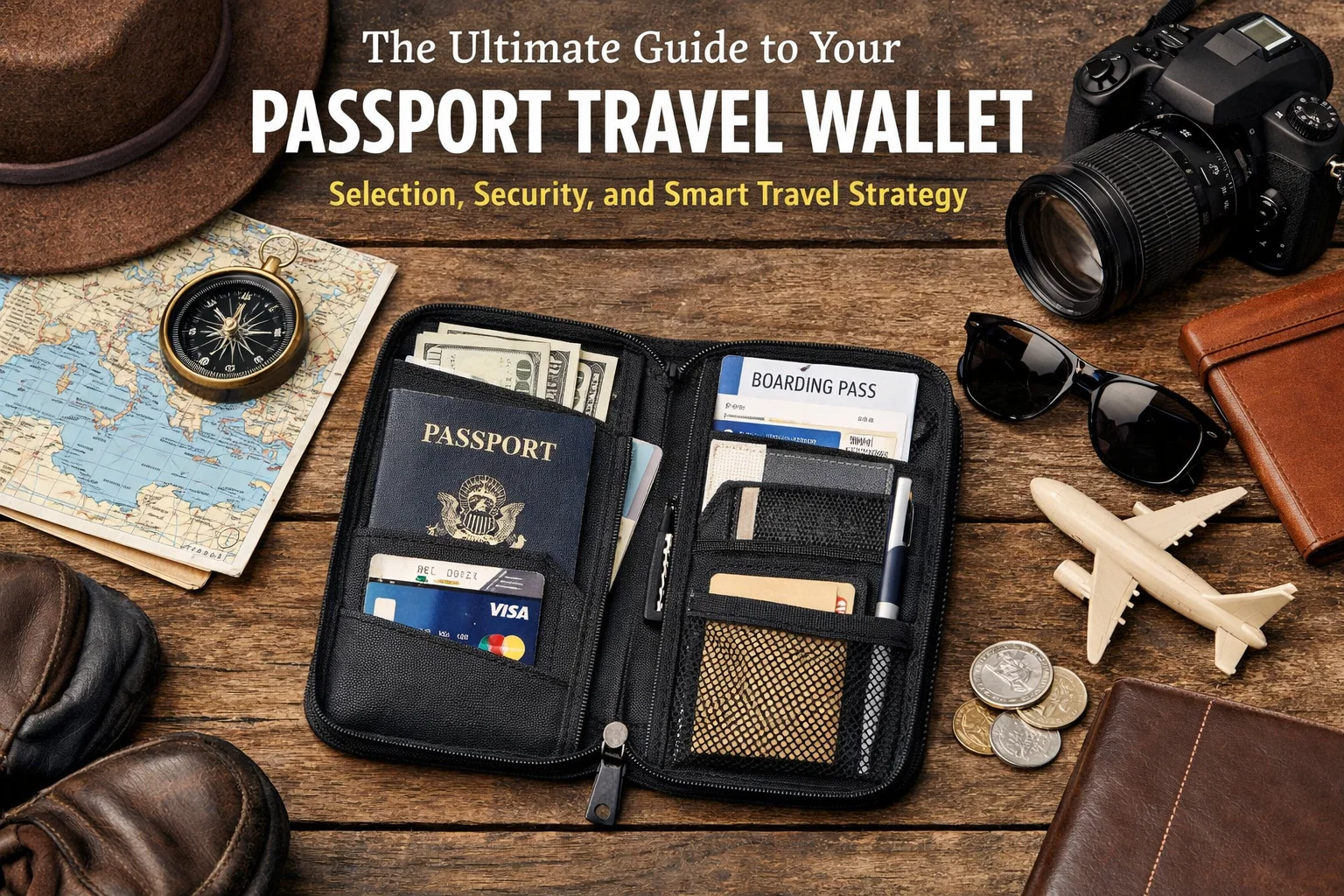
To choose wisely, you must understand what you’re looking at. A high-performance passport travel wallet is a sum of its parts, each serving a deliberate purpose. Let’s dissect the anatomy:
The Main Compartment: This is the non-negotiable core. It must fit your passport snugly without forcing it, preventing slippage. Look for a full-gusset design that allows the compartment to expand gently as the passport is inserted, avoiding undue stress on the spine. Some designs feature a clear window on the inside cover, perfect for tucking an arrival card or itinerary summary for quick reference.
Card and Slot Organization: This is where layouts diverge based on user need. Common configurations include:
- Vertical card slots (best for quick thumb-access).
- Horizontal slip pockets (ideal for boarding passes, train tickets, or currency).
- Dedicated ID windows (for a driver’s license or access card).
- Deep, zippered or snap-closure pockets for bulkier items like multiple currencies or receipts.
The Closure Mechanism: This is a primary security feature. Options range from a simple elastic band (minimalist, quick) to a magnetic snap (secure, one-handed) to a full zipper enclosure (maximum security, dust/rain protection). The choice here directly impacts accessibility versus security—a key trade-off.
External Features: A pen loop is a profoundly underrated addition, as it guarantees a writing instrument for those ubiquitous forms. A detachable wristlet or lanyard can provide hands-free carrying or an extra layer of security when attached to a bag. Some designs even incorporate a dedicated pocket for a portable phone battery or charging cable, acknowledging the modern traveler’s digital needs.
Key Takeaway: Every feature on a passport wallet, from the passport compartment gusset to the type of closure, serves a specific functional purpose that balances accessibility, organization, and security.
The Material World: Leather, Fabric, and Synthetic Innovation
The material of your passport travel wallet dictates its longevity, feel, security, and environmental impact. It’s a choice between tradition, performance, and ethics.
Genuine Leather: This classic choice offers unrivaled aesthetics and a patina that develops with use, telling the story of your journeys. Full-grain or top-grain leather is exceptionally durable. However, not all leather is created equal. Thin, poorly finished “genuine leather” can crack and wear poorly. From hands-on use, a quality leather wallet provides excellent RFID blocking naturally due to its density, but always verify this feature. The trade-off is weight, maintenance, and cost.
Technical Synthetics (Nylon, Polyester, Tarpaulin): Brands have perfected high-performance fabrics that are lightweight, water-resistant, and incredibly durable. They often feature precise stitching, vibrant colors, and easy-clean surfaces. Many incorporate RFID-blocking layers seamlessly. These are ideal for adventure travel, wet climates, or for travelers who prioritize minimal weight and maximal toughness. A common misconception is that synthetic means low-quality; in reality, fabrics like ballistic nylon often outlast leather in abrasive conditions.
Sustainable and Novel Materials: The market is seeing a rise in wallets made from recycled plastics, cork, apple leather, and other eco-conscious materials. These offer a unique look and a lower environmental footprint. Performance can vary widely, so research specific brands known for quality construction with these materials.
What is RFID-Blocking Technology?
RFID-blocking technology is a material layer, typically a metal mesh or composite, integrated into a passport travel wallet to prevent unauthorized wireless scanning of the RFID chips embedded in modern passports, credit cards, and driver’s licenses. This layer creates a Faraday cage effect, blocking the radio waves that would otherwise allow a skimming device to read your card’s data from a short distance. While the risk of such theft is often debated, the inclusion of this feature has become a standard, low-cost security measure for peace of mind.
Key Takeaway: Your material choice is a balance of aesthetics, durability, weight, and ethics, with both traditional leather and advanced synthetics offering legitimate, high-performance options for different traveler profiles.
Matching Your Wallet to Your Travel Personality
No single passport travel wallet is perfect for everyone. The best choice aligns with your dominant travel style. Let’s explore three archetypes and their ideal wallet specs.
The Minimalist / Urban Traveler: This traveler packs light, moves fast, and values sleek, unobtrusive gear. For them, a bulky wallet is a burden.
- Ideal Wallet: A slim, card-style wallet with a dedicated passport slot. Think of a design that resembles a large credit card holder, perhaps with an elastic band closure. It should hold 2-3 essential cards, some folded cash, and the passport, disappearing into a jacket pocket or small bag.
- Key Features: Ultra-slim profile, premium feel (maybe aluminum or slim leather), essential slots only.
The Frequent Business Flyer / Organized Planner: This traveler’s journey is a sequence of appointments, lounges, and receipts. Organization and professional presentation are paramount.
- Ideal Wallet: A structured folio or booklet-style wallet. It should have designated slots for multiple credit cards, a boarding pass pocket, a pen, a SIM card ejector tool, and a section for receipts and business cards.
- Key Features: Professional aesthetics (e.g., calfskin leather), robust internal organization, a secure closure (zipper or strong snap), and perhaps a detachable card case for use away from the passport.
The Adventure / Expedition Traveler: This traveler faces mud, rain, dust, and physical activity. Durability and security are non-negotiable.
- Ideal Wallet: A zippered, clamshell-style wallet made from high-denier ballistic nylon or waterproof tarpaulin. It should be brightly colored for easy identification.
- Key Features: Full perimeter zipper, water-resistant or waterproof materials, MOLLE webbing or a carabiner loop for attachment, and plenty of internal organization for permits, foreign currency, and documents.
Key Takeaway: Your travel habits should dictate your wallet’s form factor; forcing a minimalist design on a trip requiring multiple documents creates the very frustration the wallet is meant to solve.
The Strategic Comparison: Making an Informed Decision
To crystallize the differences, the table below offers a structured comparison of wallet types based on core traveler needs. Use this as a guide to narrow your focus.
| Feature / Traveler Profile | Minimalist / Urban | Frequent Flyer / Planner | Adventure / Expedition |
|---|---|---|---|
| Primary Design Goal | Discreet, pocketable carry | Comprehensive organization & professional look | Maximum durability & element protection |
| Ideal Material | Slim leather, microfibre, metal | Full-grain leather, structured synthetics | Ballistic nylon, Cordura, waterproof tarpaulin |
| Closure Type | Elastic band, magnetic snap | Magnetic snap, flap with snap, zipper | Full-perimeter zipper |
| Key Organization | Passport slot, 2-4 card slots | Multi-card slots, boarding pass pocket, pen loop, receipt section | Zippered compartments, multiple slip pockets, attachment points |
| RFID Security | Often integrated | Standard, sometimes in specific card slots | Standard, built into fabric |
| Best For | Weekend trips, city breaks, light packers | Business travel, complex itineraries, receipt-keepers | Hiking, backpacking, wet climates, rough handling |
| Trade-Off | Limited capacity | Can be bulky/heavy | Less formal appearance |
The Art of Practical Deployment: A Real-World Scenario
Theory is one thing; practice is another. Let’s walk through a hands-on example of deploying your passport travel wallet effectively for an international departure, a moment of peak need.
You arrive at the airport. Your main luggage is checked. In your personal item or pocket is your passport travel wallet. As you approach the security line, you unzip the main compartment and remove your passport and boarding pass, holding them ready. Your wallet remains otherwise closed. After security, you replace the documents. At the gate, you do the same. Once airborne, the wallet goes into your seat-back pocket or a secure bag pouch—it’s not left loose. Upon arrival for immigration, you have your passport, completed landing card (stored in the clear window), and declaration form (if needed) all in one unified presentation. The immigration officer appreciates the lack of fumbling. After clearing customs, you transfer a local SIM card, a primary credit card, and some local currency to your everyday wallet, leaving the passport, backup cards, and other documents securely in the travel wallet, which is then stored in your hotel safe. This systematic flow, enabled by the wallet’s design, turns potential chaos into a smooth, confident sequence.
A veteran travel consultant once noted, “The difference between a stressful transit and a smooth one often comes down to ten seconds of organization. A great passport wallet buys you those ten seconds, every single time.” This quote underscores the practical, psychological benefit of the tool.
Advanced Features and Modern Considerations
Beyond the basics, several features and considerations mark the difference between a good wallet and a great one for the discerning traveler.
Currency Management: Modern designs are moving away from simple billfold slots. Some feature dual-currency compartments, or a dedicated, larger pocket for a wad of foreign bills that won’t fit standard U.S. folds. This is a subtle but hugely practical touch for international travelers.
Integrated Technology: The frontier of passport wallet design includes minimalist integration with our digital lives. This doesn’t mean built-in batteries (which cause airline headaches), but rather dedicated, padded slots for slim portable battery packs or specific cable organizers. Some designs now include a removable “tech kit” pod that can be detached from the main wallet.
The “Personal Item” Strategy: With airlines strictly enforcing carry-on limits, many travelers maximize their allowance with a personal item like a sling or tote. A passport travel wallet is the perfect core for this kit. It can hold your in-flight essentials—passport, headphones, tablet, charger, lip balm—and be instantly transferred between your main travel backpack and your under-seat bag, keeping critical items always at hand.
Evolving Best Practice: The Digital Backup. While the wallet organizes physical items, the modern best practice is to maintain a digital backup. Before you leave, take clear photos of your passport biographic page, visa pages, credit cards (front and back), and travel insurance policy. Store these in a secure, password-protured cloud service (not just on your phone). Your passport wallet is your physical fortress; this is your digital fail-safe.
Key Takeaway: Leading-edge wallet designs address nuanced needs like multi-currency organization and tech-carry, while the ultimate modern strategy pairs the physical wallet with secure digital backups of all critical documents.
Maintenance, Care, and Longevity
A quality passport travel wallet is an investment. Proper care ensures it lasts for years and countless journeys.
Leather Care: Condition leather wallets periodically with a product appropriate for the finish (e.g., cream for matte, polish for smooth). Keep it away from extreme heat and prolonged moisture. If it gets wet, let it dry naturally, away from direct heat.
Fabric/Synthetic Care: Most can be spot-cleaned with a damp cloth and mild soap. For deeper cleans, check the manufacturer’s label. Avoid harsh chemicals that can degrade RFID shielding or waterproof coatings.
General Upkeep: Regularly empty all pockets to prevent over-stuffing, which can strain seams and deform the shape. Check closure mechanisms (zippers, snaps) for smooth operation. Use a soft brush to remove dust and debris from corners and stitching.
If you’re deciding between a potentially higher-maintenance but beautiful leather and a wipe-clean synthetic, honestly assess your willingness to care for the item. A neglected leather wallet will look worse than a well-used synthetic one.
Navigating Common Pitfalls and Misconceptions
Even with a great wallet, users can fall into common traps. Let’s dispel myths and highlight pitfalls.
Myth 1: “RFID Blocking is Just a Marketing Gimmick.” While the widespread, systemic risk of digital skimming may be overstated, the technology is real and effective. For the minimal cost and zero downside of its inclusion, it provides a legitimate layer of security against a potential threat. It’s prudent, not paranoid.
Pitfall 1: Overstuffing. The cardinal sin. Forcing extra cards, thick wads of cash, and receipts into a designed space warps the wallet, puts pressure on your passport’s spine, and makes it difficult to retrieve items smoothly. It defeats the purpose of organization.
Myth 2: “Bigger is Always Better.” A massive, over-organized wallet filled with empty slots is dead weight. Choose capacity that matches your typical carry, with just a little room for expansion.
Pitfall 2: Using it as an Everyday Wallet. Once you reach your destination, your passport should be secured in a safe. Your passport travel wallet, now holding backup cards and documents, can remain in the safe. Switch to your everyday, smaller wallet for daily outings. Carrying your passport and all cards with you every day increases the risk of total loss.
Myth 3: “All Leather is Equally Durable.” As mentioned, “genuine leather” is a broad category that includes low-quality splits. Look for terms like “full-grain,” “top-grain,” or specific tannage mentions from reputable brands. The price often reflects this quality tier.
The Future of Document Carrying: Trends and Projections
While the physical passport is unlikely to disappear soon, how we carry and verify our identity is evolving. We are already seeing early integrations of digital passports and vaccine records in airline apps. The passport travel wallet of the future may become a hybrid digital-physical vault.
We might see designs with dedicated, secure slots for physical backup drives or SIM-sized security keys used for two-factor authentication. Materials may evolve to include biometric features, like fingerprint-locked zippers synced to your phone. The core function—consolidation and security—will remain, but the items being consolidated may shift. The wallet may hold a primary physical passport, a secondary digital access device, and perhaps a globally-accepted health credential card. The adaptable, modular wallet designs we see today are already laying the groundwork for this flexible future. Consider exploring designs that offer removable card sleeves or modular pouches, as these are most likely to adapt to changing travel document formats.
Your Actionable Passport Travel Wallet Selection Checklist
Before you make a purchase, run through this final checklist to ensure your choice meets all strategic and practical needs:
- [ ] Fit: Does it hold your passport snugly without forcing the cover or spine?
- [ ] Capacity: Does it have enough slots/pockets for your typical travel documents (boarding passes, 2-4 cards, some cash), but not so many that it encourages overstuffing?
- [ ] Closure: Is the closure mechanism (snap, zip, band) secure and easy for you to operate with one hand if needed?
- [ ] Material & Durability: Does the material (leather, nylon, etc.) suit your travel environment and personal care willingness?
- [ ] RFID Protection: Is full RFID-blocking coverage confirmed for all card and passport slots?
- [ ] Additional Features: Does it have the specific features you value (pen loop, detachable strap, ID window, etc.)?
- [ ] Size & Feel: When loaded, does it fit comfortably in your intended carry spot (jacket pocket, sling bag compartment)?
- [ ] Quality Check: Are the stitching, edges, and hardware (zips, snaps) of high quality with no obvious flaws?
- [ ] Backup Plan: Have you established your digital backup protocol for all documents within the wallet?
Conclusion: The Foundation of Confident Travel
Your journey begins long before you reach your destination; it begins the moment you start to prepare. In that preparation, the choice of your passport travel wallet is a foundational decision. It is a small item that plays an outsized role in the experience of travel itself. By selecting a wallet that aligns with your travel identity—whether minimalist, organized, or adventurous—you are not just buying an accessory. You are investing in a system that will reduce stress, enhance security, and project competence at every checkpoint.
This guide has moved beyond superficial feature lists to provide a deep, strategic understanding of materials, design psychology, and practical deployment. You now possess the knowledge to scrutinize a product page, assess the true value of a feature, and understand the trade-offs inherent in every design. The goal is a seamless, confident travel experience where your documents are a managed resource, not a source of anxiety. Your passport travel wallet, chosen wisely and used strategically, becomes a trusted companion, ensuring that from departure lounge to arrival gate, you are in command.
Frequently Asked Questions
What is the most important feature to look for in a passport travel wallet?
Beyond the essential perfect fit for your passport, the most critical feature is an organizational layout that matches your actual travel habits. A wallet with 10 card slots is useless if you only carry two cards, just as a minimalist sleeve will frustrate you if you need to carry multiple currencies and papers. The design must solve your specific consolidation problem.
Can a passport wallet damage my passport?
A poorly designed wallet can. Avoid wallets that are too tight, forcing you to bend the passport cover sharply to insert or remove it. Also, beware of cheap materials or dyes that might transfer onto the passport cover. A quality wallet with a full-gusset, slightly oversized compartment will protect your passport from external damage like spills and creases.
Is a zipper or a magnetic closure better?
This is a classic trade-off between maximum security and maximum accessibility. A full zipper offers the best protection against items falling out and from dust/rain. A magnetic snap or elastic band allows for much quicker, often one-handed access. Your choice should depend on your environment (zipper for adventurous travel) and your priority (speed for frequent airport transits).
Do I really need RFID blocking?
While the probability of being targeted by a digital skimmer in an airport is relatively low, the consequence of having your passport or credit card data cloned is high. Since RFID-blocking adds negligible cost and weight, it is considered a prudent, standard layer of protection. It’s a simple safeguard for a potentially serious vulnerability.
How many cards and how much cash should I keep in my travel wallet?
Adopt a minimalist approach. Carry only the cards you will absolutely need in transit: one primary credit card, one backup, and perhaps an ATM card. Carry a small amount of local currency for immediate expenses upon arrival. Your passport wallet is for critical in-transit items, not your entire financial life. Store backups and additional cash separately.