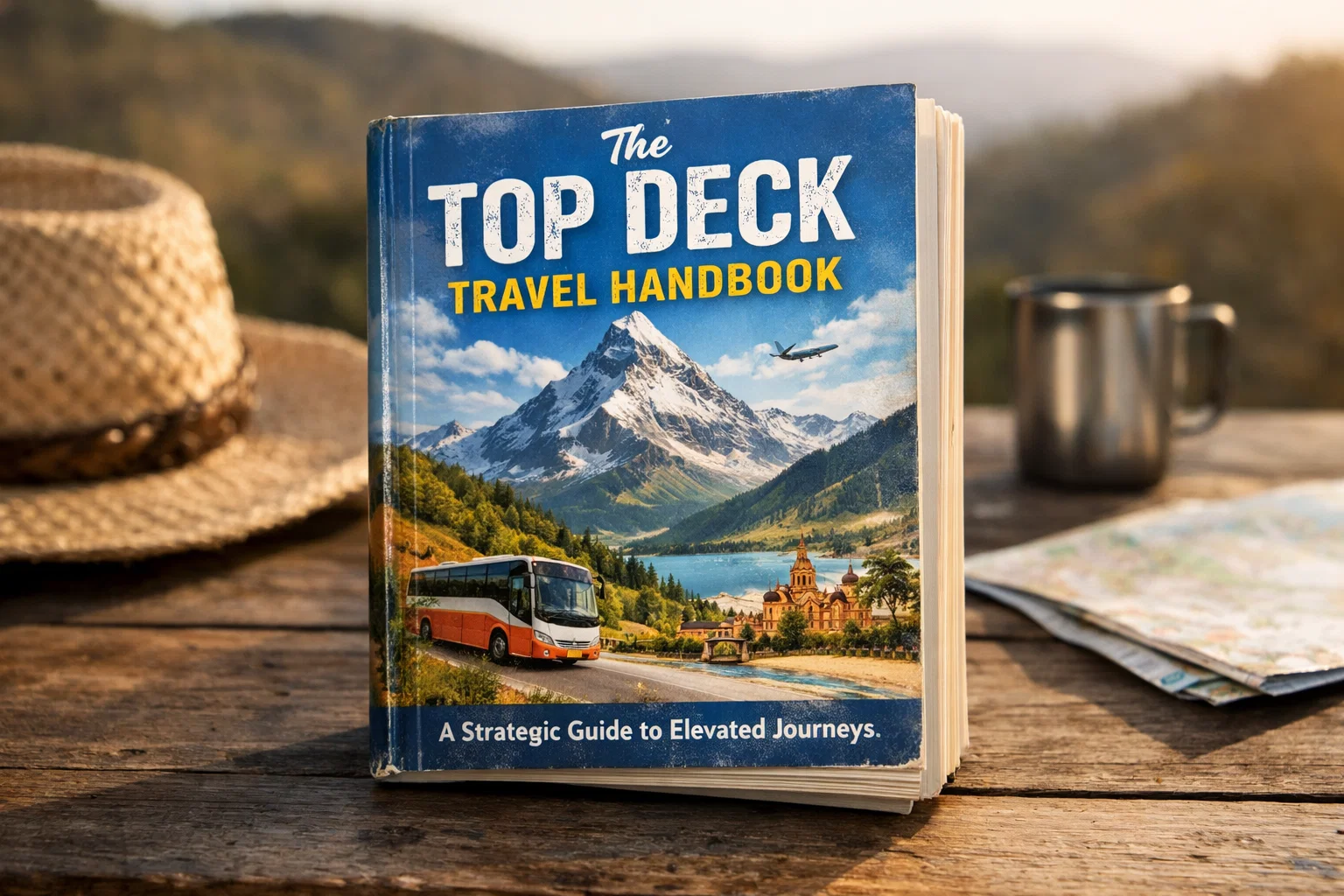
The Ultimate Guide to Top Deck Travel: Redefining the Journey Itself
For the discerning traveler, the destination is only part of the story. The journey holds its own magic, a series of unfolding vistas and sensory experiences that can define a trip. This is the realm of top deck travel—a conscious choice to seek out the highest vantage point, whether on a double-decker bus winding through Alpine passes, a ferry cutting across a sun-dappled sea, or an open-air observation car on a historic railway. This guide explains the strategic, practical, and experiential nuances of prioritizing the view from the top. It is a comprehensive resource for anyone looking to transform transit from a mere logistical step into a central, unforgettable pillar of their adventure.
Executive Summary
Top deck travel is a philosophy that prioritizes perspective, engagement, and sensory immersion during transit. This authoritative guide moves beyond simple recommendations to provide a deep, practical framework for mastering this mode of exploration. We will dissect the core reasons for choosing top deck experiences, from photographic advantages to a profound connection with landscapes. The article provides actionable strategies for selecting the right journeys, planning effectively, packing smartly, and navigating common challenges. By addressing real user problems—such as weather concerns, value assessment, and comfort—this resource helps readers make informed decisions and execute flawless top deck itineraries. Ultimately, this guide positions top deck travel not as a casual option, but as a deliberate and rewarding travel methodology.
Understanding the Allure of the Upper Deck
At its heart, top deck travel is about reclaiming the journey. In an age where efficiency often trumps experience, choosing the upper level is a vote for slowness, observation, and a direct dialogue with the environment. It’s a return to a classic style of travel where the panorama was the primary entertainment. The benefits are tangible and multifaceted.
From a purely practical standpoint, the elevated view is unparalleled. It eliminates visual obstructions like roadside barriers or interior fixtures, offering a clean, sweeping perspective essential for photography and videography. It provides a broader contextual understanding of a region’s geography—seeing how villages nestle in valleys, how rivers carve through landscapes, and how the light changes over distant hills. Furthermore, the top deck, especially in open-air formats, engages all the senses: the smell of salt spray on a ferry, the feel of mountain air, the uninterrupted sound of a train’s whistle echoing off canyon walls.
This matters most when the route itself is the attraction. Not all transit legs deserve a top deck priority. The value is exponentially higher on scenic corridors, coastal highways, mountain passes, or historic urban centers. The choice reflects an intentional shift from being a passive passenger to an active observer. It turns hours of transit into a curated sightseeing tour, often at a fraction of the cost of a dedicated tour operator. The real-world outcome is a richer, more memorable travel narrative, where the stories begin the moment you depart, not just when you arrive.
The core appeal of top deck travel lies in its unique synthesis of unobstructed views, sensory immersion, and a conscious pace, transforming mundane transit into a destination-worthy experience.
Navigating the Common Challenges of Open-Air and Elevated Transit
Choosing the top deck is not without its trade-offs. Acknowledging and strategically planning for these challenges is what separates a frustrating ordeal from a sublime experience. Three real user problems consistently arise: exposure to the elements, concerns about comfort and accessibility, and perceived issues of safety and security.
First, weather is the most variable factor. An open top deck under a blazing sun or in a sudden downpour can quickly undermine the pleasure. The solution is not avoidance, but preparation. This involves researching seasonal and micro-climates of your route, understanding the availability of cover (partial roofs, retractable awnings), and adopting a layered, adaptable packing strategy. Modern operators often equip top decks with improved shelter without completely sacrificing the open-air feel.
Second, comfort and accessibility are legitimate concerns. Older vehicles or vessels may have steep, narrow staircases, making them unsuitable for those with mobility issues or heavy luggage. Seating can be basic, and amenities like tables or refreshments may be limited to the lower deck. The practical solution is thorough pre-booking research—examining photos of the vehicle, contacting operators directly with specific questions, and selecting services known for modern, well-maintained fleets. The outcome is confident booking, knowing the physical parameters align with your needs.
Third, a subtle unease about safety or the security of belongings can linger. On a crowded, open deck, how does one safely manage a camera or daypack? The hands-on approach involves using anti-theft bags, keeping valuables secured and within sight, and employing common sense during stops or in crowded conditions. Reputable transport companies design their top decks with safety rails and clear guidelines. The peace of mind comes from combining operator trust with personal vigilance.
Successfully navigating top deck travel requires proactive planning for weather, honest assessment of comfort needs, and sensible security practices, turning potential drawbacks into manageable aspects of the adventure.
Selecting Your Journey: A Framework for Scenic Transit
Not all top decks are created equal. Applying a strategic framework to select your journey ensures that the experience matches the expectation. The decision should be guided by a balance of route scenery, vehicle type, and overall travel ethos.
Begin by analyzing the route itself. Is it famously scenic, like Scotland’s North Coast 500 by bus, Norway’s fjord ferries, or Sri Lanka’s Kandy to Ella train journey? Or is it a functional urban commute where the primary benefit is cityscape views, like London’s RV1 bus route or the Hong Kong Star Ferry? The scenic density—the frequency of noteworthy vistas—directly correlates to the value of the top deck ticket. Long, monotonous stretches are better suited for the comfort of the lower cabin.
Next, consider the vehicle or vessel type. Each offers a distinct experience.
- Double-Decker Buses & Coaches: Ideal for road-based scenery. Front-row seats on the upper deck provide a cinematic, forward-looking view. Look for operators with large windows or open-top variants.
- Trains with Observation Decks: Often found on scenic or heritage railways. These can range from luxurious glass-domed cars to rustic open-air “gondolas.” They offer stability and space to move around.
- Ferries & Boats: Provide a unique, 360-degree perspective of coastlines and waterways. Open decks are standard, but positioning (bow, stern, port, starboard) matters based on the direction of travel and key sights.
- Trams & Historic Streetcars: Perfect for immersive urban exploration at a slow pace, revealing architectural details and street life.
Finally, align the choice with your travel style. Is this a point-to-point A-to-B trip, or a dedicated scenic loop? For the former, factor in luggage and duration. For the latter, you can prioritize view above all else. Research the best side of the vehicle for specific highlights (e.g., the right side heading north on the Bernina Express for glacier views).
Selecting the ideal top deck journey involves a deliberate evaluation of route scenery, vehicle characteristics, and personal travel priorities to ensure the experience delivers maximum visual and sensory reward.
The Strategic Art of Planning and Booking
Securing the best possible top deck travel experience is won or lost in the planning phase. This process extends beyond simply purchasing a ticket; it involves tactical timing, strategic seating, and understanding the operational nuances of your chosen service.
Booking in advance is non-negotiable for popular scenic routes. The best seats—front row, right side for a specific view—sell out quickly, sometimes months ahead. This is particularly true for premium scenic trains and sought-after ferry crossings in peak season. Use operator websites directly for the most accurate seating charts and real-time availability. Be aware that some railways or bus companies release tickets on a specific schedule (e.g., 60 or 90 days in advance).
Timing your journey is a critical artistic decision. The golden hours—shortly after sunrise and before sunset—offer transformative light, long shadows, and softer colors that dramatically enhance the landscape. A mid-day journey under a harsh sun can flatten scenery and cause discomfort. Conversely, traveling in the shoulder seasons (spring or autumn) often means fewer crowds, clearer air, and the dynamic colors of changing foliage or spring blooms, adding a layer of seasonal spectacle.
Consider the direction of travel. A northbound trip may offer different lighting on the landscape than a southbound one. On coastal routes, determine if the primary scenery is on the east or west side. A short, practical example: On the ferry from Athens to the Cycladic islands, an evening departure westbound offers a legendary sunset over the Saronic Gulf from the top deck, turning the transit into a nightly ritual.
Visual Suggestion: A comparative table here would help travelers evaluate different booking strategies.
| Planning Factor | Primary Consideration | Pro Tip & Outcome |
|---|---|---|
| Booking Window | Route popularity & seasonality. | For iconic journeys, set a calendar reminder for the exact ticket release date. Outcome: Securing premium seats. |
| Time of Day | Lighting quality and crowd levels. | Prioritize early morning or late afternoon departures. Outcome: Photogenic conditions and a more serene atmosphere. |
| Direction of Travel | Sun position and primary scenery alignment. | Research which side of the vehicle faces the key landmarks. Outcome: Optimized viewing without glare. |
| Season | Weather patterns and scenic value. | Weigh the stability of summer against the dramatic beauty (and unpredictability) of fall or spring. Outcome: A journey that matches your comfort and photographic goals. |
Meticulous planning focused on booking lead times, diurnal and seasonal timing, and travel direction is the essential foundation for a truly exceptional top deck experience.
The Expert Packing List for Elevated Journeys
Packing for top deck travel is a specialized discipline. It moves beyond general vacation packing to address the unique micro-climate and practical demands of an exposed, moving vantage point. The goal is to be prepared for rapid environmental changes without being burdened by excessive gear.
The cornerstone is a layered clothing system. This typically includes a moisture-wicking base layer, an insulating mid-layer (like a fleece or lightweight down jacket), and a waterproof, windproof outer shell. This combination allows you to adapt seamlessly as temperatures fluctuate with altitude, speed, or weather fronts. Never underestimate the chill factor generated by wind on a moving vehicle.
Footwear should prioritize grip and stability, as decks can be slippery from spray or weather, and you may be navigating stairs while in motion. A compact, high-quality pair of binoculars is a force multiplier, bringing distant details—wildlife, architecture, geological formations—into clear view, deeply enriching the narrative of the landscape.
From hands-on use, a dedicated small bag for the top deck is crucial. It should contain:
- Sun Protection: High-SPF sunscreen, lip balm with SPF, and polarized sunglasses (to reduce glare from water or windows).
- Weather Defense: A compact, packable rain poncho or umbrella.
- Comfort Items: A lightweight blanket or large scarf, and a reusable water bottle.
- Gear Security: Lens cloth for cameras, zip-top bags for electronics during unexpected showers, and a portable power bank.
As one seasoned travel photographer noted, “My top deck kit is as carefully curated as my camera bag. The right layer at the right moment means staying on deck for that perfect shot when others have retreated inside.” This philosophy underscores that preparedness directly translates to opportunity.
Strategic packing for top deck travel focuses on adaptable layers, essential accessories for engagement and comfort, and a dedicated day kit to handle the variable conditions of an exposed environment.
Capturing the Journey: Photography and Storytelling from Above
The top deck is a dynamic, moving photographer’s studio. Capturing its essence requires techniques different from static landscape photography. The challenge—and the thrill—lies in balancing composition with the constant motion of your platform.
First, manage your gear practically. A zoom lens (e.g., 24-105mm) offers immense flexibility to switch between wide vistas and tighter details. A polarizing filter is invaluable for cutting reflections and enhancing sky and water contrast. Use a strap or harness to secure your camera at all times; a sudden lurch can be costly. To counteract motion blur, use a faster shutter speed (1/500sec or higher). Increase your ISO if needed to maintain this speed, accepting some digital noise for the sake of sharpness. Image stabilization in lenses or camera bodies is a significant advantage.
Compositionally, use elements of the vehicle itself—a curved railing, the sweep of a window frame—to create foreground interest and a sense of place. Don’t just shoot the distant view; include the human element—a fellow traveler gazing out, hands on the rail—to convey scale and emotion. Try shooting video clips to capture the immersive sensation of movement, the sound of the engine, and the wind.
This is also an opportunity for mindful storytelling. Put the camera down periodically. Instead of viewing the entire landscape through a viewfinder, absorb it with your full perception. Make notes on the smells, the temperature shifts, the snippets of conversation. These details will inform your captions and travel narratives later, creating a richer story than imagery alone.
Mastering top deck photography involves technical adjustments for motion, creative use of composition, and a balanced approach that values mindful experience as much as photographic capture.
Beyond the Obvious: Discovering Hidden Top Deck Gems
While iconic journeys deserve their fame, part of the expert’s skill is uncovering less-trodden paths that offer exceptional top deck travel potential. These hidden gems often provide more authentic interactions and unexpected beauty without the premium price tag or crowds.
Look beyond the dedicated tourist services. Local commuter ferries in places like Istanbul, Vancouver, or New Zealand’s Bay of Islands offer the same waterways at a fraction of the cost. Regional bus lines traversing mountain passes in the Alps, the Andes, or the Himalayas are often populated by locals and reveal daily life alongside stunning topography. Historic tram lines in cities like Lisbon, Milan, or San Francisco are moving heritage sites with upper-level views.
Another emerging trend is the growth of experiential tourism on wheels or water—small-group mini-coach tours with bespoke open-top vehicles, or sailing trips on traditional vessels where the entire boat is an engaging, hands-on environment. These niche operators build their ethos around immersion, making the top deck experience central rather than incidental.
Research these opportunities by delving into regional travel forums, studying local transit maps for scenic-looking routes, and consulting travel literature that focuses on slow travel or offbeat itineraries. The discovery process itself becomes part of the adventure.
The most rewarding top deck experiences can often be found on local transit routes and with niche experiential operators, offering unparalleled authenticity and value away from the well-trodden tourist path.
The Historical Roots and Modern Evolution of Elevated Travel
The concept of seeking the best view during transit is not new. It has evolved from a privilege of class to a democratic pursuit of experience. In the 19th century, the upper decks of horse-drawn omnibuses and early trams were often open-air and cheaper, exposed to the elements, while the enclosed lower deck was more expensive. On steamships, the upper promenade decks were the domain of first-class passengers, a clear spatial indicator of social stratification.
The advent of the railway and the purposeful design of observation cars in the early 20th century, particularly in North America, formalized the scenic journey. These cars, with their vast windows and later glass domes, were engineered specifically for experiencing monumental landscapes like the Canadian Rockies or the American Southwest. They represented a shift where the journey through spectacular geography became a marketed product in itself.
In the modern era, top deck travel has been democratized. The double-decker Airbus, the hop-on-hop-off open-top bus tour, and the proliferation of fast ferries with expansive outer decks have made the elevated view accessible to all. The current evolution focuses on enhancing comfort and sustainability—better shelter designs, quieter electric engines for a more peaceful experience, and the integration of digital guides accessible via smartphone that augment the passing landscape with historical and cultural context.
Top deck travel has evolved from a marker of social status to a widely accessible travel philosophy, with its modern form focusing on enhanced comfort, seamless information, and sustainable operation.
Final Checklist for Mastering Top Deck Travel
Before you embark, use this actionable checklist to ensure your journey is optimized for success:
- [ ] Route Research Verified: Confirmed the scenic highlights align with the chosen side of travel and time of day.
- [ ] Tickets Secured: Booked well in advance, with specific seats selected if possible (front row, scenic side).
- [ ] Weather Preparedness Checked: Reviewed forecasts and packed the core layered system: base, insulation, shell.
- [ ] Top Deck Day Bag Packed: Contains sun protection, weather defense, water, snacks, binoculars, and camera gear.
- [ ] Footwear Assessed: Wearing stable, closed-toe shoes with good grip.
- [ ] Local Logistics Planned: Understood connection times, luggage storage options, and boarding procedures.
- [ ] Mindset Primed: Ready to engage fully with the journey, balancing photography with mindful observation.
Conclusion
Top deck travel represents a deliberate and deeply rewarding approach to seeing the world. It is a practice that demands more from the traveler—more planning, more adaptability, more engagement—but in return, it gives exponentially more: perspective, connection, and stories that begin with the first mile. This guide has provided the strategic framework, practical tools, and inspirational context to elevate your journeys from the mundane to the magnificent. By mastering the principles of selection, preparation, and presence, you unlock a timeless form of travel where the path is as significant as the place. The world looks different from the top deck; it is broader, more vivid, and endlessly surprising. Your next journey awaits, not just at the destination, but from the moment you ascend the stairs and the horizon opens up before you.
Frequently Asked Questions About Top Deck Travel
What exactly defines “top deck travel”?
Top deck travel is the intentional selection of elevated, often open-air vantage points during transit to maximize scenic immersion, photographic opportunity, and sensory engagement with the environment. It applies to buses, trains, ferries, and trams where the upper level offers a superior and unobstructed view of the passing landscape, transforming the journey itself into a central experience.
Is top deck travel suitable for families with young children?
It can be, with careful planning. Key considerations are safety railings, access to restrooms (often on the lower deck), and weather protection. Choose services with partially enclosed top decks, bring ample activities and snacks, and always maintain close supervision. Shorter, scenic urban routes can be an excellent introduction for families.
How do I manage luggage on top deck journeys?
Most operators require larger luggage to be stored in designated compartments on the lower level. Always travel with a small, versatile daypack that contains all essentials for the journey (layers, camera, water). Confirm luggage policies with the operator when booking, especially on buses or trains where space may be limited.
Are top deck tickets significantly more expensive?
Pricing models vary. On many city buses and ferries, access to the top deck is included in the standard fare. For specialized scenic trains or tour buses, a premium may be charged for upper-level or observation car seats. This premium is often justified by the enhanced experience and high demand.
What is the single most important tip for a first-time top deck traveler?
Prioritize the front-row seat. The forward-facing, unobstructed view it provides is the quintessential top deck travel experience, offering a cinematic, immersive perspective that seats further back cannot match. Book early to secure this spot, as it is always the first to be reserved.