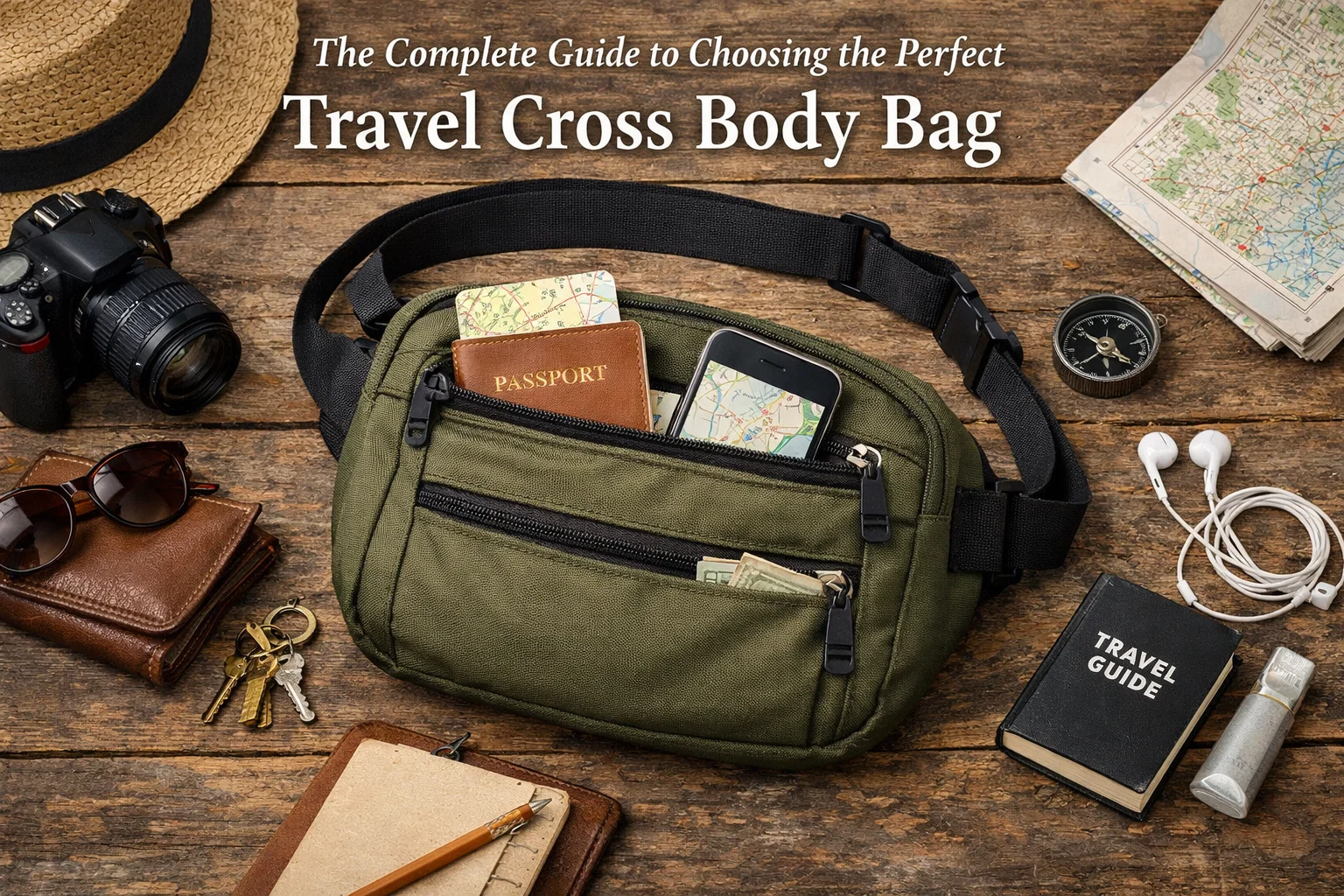
For the savvy traveler, whether navigating a bustling foreign market, exploring a museum, or rushing through an airport terminal, the right bag isn’tt an accessory—it’s an essential piece of gear. At the heart of this travel kit, the travel cross body bag stands out as a champion of security, comfort, and practical style. This comprehensive resource helps readers understand why this specific bag style has become a non-negotiable for modern travelers and provides a deep, expert-level framework for selecting, using, and maximizing a bag that will serve as a trusted companion on countless journeys. We’ll move beyond basic reviews to explore the strategic, practical, and technical considerations that transform a simple purchase into a long-term travel asset.
Introduction: Why the Travel Cross Body Bag is a Modern Essential
Travel has evolved. The era of lugging oversized totes or constantly adjusting a heavy backpack for city exploration is giving way to a philosophy of lightweight, secure, and intelligent carrying. The travel cross body bag sits at the intersection of this evolution. It answers a fundamental need: the desire to keep belongings organized, immediately accessible, and, most critically, securely attached to your body in dynamic environments. Unlike a hand-held tote or a bulky backpack, a well-designed cross body bag distributes weight comfortably across your chest and back, leaves your hands completely free, and positions the main compartment in front of you or at your side, within your line of sight and physical control. This guide explains the nuances of materials, design, and features that separate a good bag from a great one, addresses common pain points travelers face, and provides the practical knowledge needed to make an informed, confident choice that aligns with your personal travel style.
The Anatomy of an Ideal Travel Cross Body Bag
To choose wisely, you must first understand what you’re evaluating. A travel cross body bag is more than a pouch with a strap; it’s a system of components working in harmony. Each element, from the fabric to the zipper pull, contributes to the bag’s overall performance, durability, and security.
Let’s start with materials. High-performance nylon, such as ballistic or ripstop varieties, offers exceptional durability, water resistance, and lightweight properties. It’s commonly seen in real projects designed for hard use. Leather, whether full-grain or vegetable-tanned, provides a classic, elegant look that develops a unique patina over time, but it requires more care and can be heavier and less water-resistant. For the eco-conscious traveler, recycled materials and innovative fabrics like XTAC or CORDURA® offer robust, sustainable options. The lining matters, too—a bright, smooth lining (like YKK-coated nylon) makes it easy to find small items in a dark bag.
The strap is the critical interface between you and the bag. A wide, padded strap (at least 1.5 inches) is essential for comfort, especially when the bag is loaded. Look for adjustable, non-slip strap materials. The hardware—the buckles, sliders, and D-rings—should be solid, not hollow. Brands that use YKK zippers and AustriAlpin or Duraflex hardware are signaling a commitment to quality that prevents failures at the worst possible moment.
Internally, organization is key. A main compartment should be spacious enough for your core essentials. Beyond that, strategic pockets define a bag’s utility. A dedicated, padded laptop or tablet sleeve (ideally suspended off the bottom) protects your tech. RFID-blocking pockets for passports and cards are a valuable security feature in today’s digital world. Quick-access pockets on the strap or the bag’s exterior are perfect for transit passes or a phone. The best designs offer a balance of dedicated organization and flexible space, avoiding the pitfall of being over-pocketed, which can actually make it harder to find things.
Key takeaway: The ideal travel cross body bag is built from high-quality, purpose-driven materials, features a comfortable and adjustable strap with robust hardware, and offers intelligent internal organization without sacrificing flexible space.
Solving Core Traveler Problems with the Right Cross Body Bag
Many travelers purchase a bag based on aesthetics alone, only to encounter frustration on the road. By focusing on specific, common problems, we can identify the bag features that provide genuine solutions. Here are three critical user problems and how the right cross body bag addresses them.
Problem 1: The Fear of Theft and Pickpocketing. This is perhaps the most significant anxiety for travelers in crowded urban centers, tourist hotspots, or on public transit. A standard backpack or a loosely held handbag makes you a prime target.
Solution: Security-First Design. A travel cross body bag inherently improves security by keeping the bag in front of you. Enhanced designs take this further. Look for locking zippers—zipper pulls that can be secured to a fixed point or to each other with a small lock. Slash-resistant materials integrated into the strap and body panel deter cut-and-run theft. A hidden pocket against the wearer’s back provides a secure vault for cash, a backup credit card, or a passport copy. From hands-on use, the simple act of wearing the bag cross body, with the main compartment facing forward and your hand resting casually on it in a crowd, is a powerful deterrent. It signals awareness and control.
Problem 2: Physical Discomfort and Fatigue. A bag that digs into your shoulder, causes neck strain, or bounces awkwardly when you walk can turn a day of exploration into an ordeal. This is often a result of poor weight distribution and an inadequate strap.
Solution: Ergonomic Engineering. The solution lies in strap design and weight management. A wide, padded strap distributes pressure over a larger area. Some bags feature ventilated mesh padding on the strap-back to reduce sweat and increase comfort. The bag’s dimensions and how it sits against your body also matter; a bag that’s too long or too square can swing and cause imbalance. A stabilizer strap—a secondary strap that clips from the bottom of the bag to the main strap—is a game-changer for active travel, minimizing bounce during brisk walking or climbing stairs. This matters most when your itinerary involves all-day wear.
Problem 3: Organizational Chaos and Inefficient Access. Fumbling for your passport at check-in, missing a phone call because your device is buried, or spilling the entire contents of your bag to find a pen reflects poor internal design. Time wasted searching is time lost from your experience.
Solution: Logical, Layered Compartmentalization. The best bags act as a portable command center. The organization should mirror your access needs. Items you need instantly—phone, transit card, lip balm—should have dedicated, external quick-access pockets. Critical documents (passport, boarding pass) should reside in secure, flat pockets, often with RFID protection. Your main compartment should hold your larger essentials (water bottle, light layer, camera) in an orderly fashion, sometimes aided by modular inserts or key clips. In practice, a well-organized bag allows you to navigate travel transitions—airport security, hotel check-in, museum entry—with calm efficiency, everything in its known place.
Key takeaway: A purpose-chosen travel cross body bag directly solves the top traveler pain points of security, comfort, and organization through targeted design features like locking zippers, ergonomic straps, and intelligent pocket layouts.
Defining Your Travel Style: Matching the Bag to the Journey
Not all travel is the same, and neither should your bag be. The “perfect” travel cross body bag is contingent on your primary travel style. A bag perfect for a digital nomad’s co-working cafe hop will differ from one suited for a mountain hiking day trip. Let’s explore key travel personas and their ideal bag profiles.
The Urban Explorer: This traveler is navigating cities—using metros, visiting museums, dining in cafes, and walking miles of pavement. Their bag needs to be stylish yet discreet, secure, and capable of carrying a day’s worth of essentials: a compact camera, guidebook (or tablet), water bottle, sunglasses, wallet, and a light scarf or hat. A medium-sized bag in a neutral, versatile color (charcoal, olive, black, tan) works best. Materials should be durable and weather-resistant. Quick-access pockets are a must for transit cards. A sleek, minimalist design often blends better in cosmopolitan settings than a technical, tactical look.
The Adventure & Outdoor Traveler: For those whose journeys involve hiking, kayaking, or exploring rugged landscapes, the bag must be a tool. Durability and functionality trump style. Water resistance becomes a critical feature, with some bags offering full waterproof roll-tops. The strap system must be exceptionally robust and comfortable for all-day wear over different layers of clothing. Attachment points (MOLLE webbing or gear loops) for carabiners to hold a water bottle, gloves, or hiking poles are highly useful. Capacity might be slightly larger to accommodate a packable jacket, first-aid kit, and snacks. Abrasion-resistant materials like high-denier ballistic nylon are ideal.
The Digital Nomad & Business Traveler: This user’s core requirement is safe, padded tech carriage. The bag must have a dedicated, suspended laptop sleeve (for 13-15” devices) and separate compartments for a tablet, cables, power banks, and peripherals. Organization for business cards, passports, and notebooks is key. The aesthetic often leans toward “tech-smart” or professional, suitable for walking into a client meeting or a coffee shop. A luggage pass-through sleeve on the back is a hugely valuable feature, allowing the bag to slide over a rolling suitcase handle for seamless airport transit.
Key takeaway: Your dominant travel persona—Urban Explorer, Adventure Traveler, or Digital Nomad—should dictate the size, material, feature set, and aesthetic of your ideal travel cross body bag, ensuring it aligns with your practical needs on the ground.
Key Features Decoded: From RFD Blocking to Luggage Sleeves
The product descriptions for travel bags are filled with specialized terms. Understanding what these features actually offer in real-world use is crucial for cutting through marketing speak.
What is RFID Blocking and Do You Need It?
RFID (Radio-Frequency Identification) blocking is a security feature woven into specific pockets of a bag or wallet. It creates a Faraday cage that blocks electromagnetic signals, preventing unauthorized scanning and digital theft of information from RFID-chipped cards (like some modern passports and credit cards). While the widespread risk is sometimes debated, the feature adds negligible cost and weight. For the security-conscious traveler, it provides a worthwhile layer of digital protection, especially in crowded international transit hubs.
The Critical Role of the Luggage Pass-Through Sleeve
A luggage pass-through sleeve is a vertical sleeve or strap on the back panel of a travel cross body bag. Its function is simple yet transformative: it allows you to slide the bag onto the extended handle of your rolling suitcase, securing it neatly in place. This frees up your hands and shoulders while navigating airports, train stations, and hotel lobbies, merging two bags into one manageable unit. It’s a feature whose value is only fully appreciated during a hectic travel day.
Water Resistance vs. Waterproof: A Vital Distinction
Most quality travel bags offer water resistance. This means the fabric has a durable water-repellent (DWR) coating or a inherent construction that causes water to bead up and roll off during light rain or brief exposure. Waterproof is a higher standard, implying the bag can be submerged or exposed to heavy, prolonged rain without water ingress, often through sealed seams and waterproof zippers. For the vast majority of travelers, high water resistance is sufficient. Waterproofing is essential for specific activities like boating, monsoon travel, or alpine hiking.
Stabilizer Straps and Adjustability
As mentioned, a stabilizer strap is a secondary strap that connects the bottom of the bag to the main shoulder strap. It pulls the bag tight against your body, drastically reducing swing and bounce. This is a non-negotiable feature for anyone who walks briskly, hikes, or cycles while wearing their bag. Combined with a fully adjustable main strap, it allows for a truly customized, secure fit for torsos of all sizes.
Key takeaway: Prioritize features that solve your specific travel friction points—a luggage sleeve for seamless transit, RFID for digital security, and a stabilizer strap for active movement—and understand the practical difference between water resistance and waterproofing.
Material Mastery: From Technical Nylon to Full-Grain Leather
The choice of material defines the bag’s character, weight, maintenance, and lifespan. Here’s a comparative look at the dominant categories.
| Material | Key Characteristics | Ideal For | Considerations |
|---|---|---|---|
| Ballistic Nylon | Extremely durable, abrasion-resistant, high tear strength, often has a distinctive weave pattern. Excellent water resistance. | Adventure travel, urban exploration, everyday hard use. Prioritizes longevity and performance. | Can have a more “technical” or utilitarian aesthetic. May be stiffer initially but softens with wear. |
| CORDURA® Fabrics | A brand of high-performance fabrics known for exceptional durability, tear and scuff resistance. Often used in blends. | Similar to ballistic nylon; chosen by brands for its proven performance pedigree. | Look for the CORDURA® label to ensure authenticity. Performs reliably across demanding conditions. |
| Waxed Canvas | Cotton canvas treated with a paraffin or beeswax blend. Develops a unique patina, is highly water-resistant (not waterproof), and has a classic, rugged look. | Heritage-style travel, urban exploration, travelers who value a “lived-in” aesthetic that improves with age. | Requires occasional re-waxing to maintain water resistance. Heavier than technical nylon. |
| Full-Grain Leather | The highest quality leather, using the full hide. Extremely durable, develops a beautiful patina uniquely shaped by the user’s travels. | Business travel, style-focused urban exploration, travelers seeking a lifetime investment piece. | Requires regular conditioning. Heaviest option. Can be damaged by excessive water. Highest cost. |
| Recycled & Sustainable Materials | Includes RPET (recycled plastic bottles), recycled nylon, and organic cotton. Performance varies by specific fabric construction. | Eco-conscious travelers who want to minimize environmental impact without sacrificing (all) performance. | Research the brand’s specific fabric claims. Durability can rival virgin materials when engineered well. |
Key takeaway: Your material choice is a balance of priorities: ultimate durability and weather resistance (technical nylon), classic evolving character (waxed canvas or leather), or environmental impact (recycled materials).
Capacity and Packing Strategy: The Art of the Day Bag
A travel cross body bag is, by definition, a day bag. Its purpose is not to replace your main luggage but to hold what you need for daily excursions. Choosing the right capacity—measured in liters—is fundamental to avoiding both under-packing and the temptation to overpack, which defeats the bag’s purpose.
Small bags (2-6 liters) are perfect for minimalist outings: phone, wallet, keys, sunglasses. They’re ideal for a dinner out or a short walk when you need just the bare essentials. Medium bags (6-12 liters) are the sweet spot for most day travel. This capacity comfortably fits a small water bottle, a compact camera, a light packable jacket, phone, wallet, passport, and a small tech pouch. Large cross body bags (12-20+ liters) blur the line with small backpacks. They can carry a tablet or small laptop, a larger water bottle, and more layers, but be cautious—the increased weight carried on one shoulder can lead to fatigue.
Packing strategy is paramount. Use every pocket for its intended purpose. Employ small pouches or organizers for cables, medicines, or first-aid items to prevent a “black hole” effect in the main compartment. The core principle is to pack for your day, not for every contingency. A reusable shopping bag that folds into its own pouch can be a lifesaver for unplanned purchases, keeping your main bag lean.
As a seasoned traveler and gear reviewer once noted: “The mark of a good travel system isn’t how much you can carry, but how little you need. Your cross body bag should enforce that discipline, carrying only the tools that actively serve your experience, not the ‘just in case’ items that only weigh you down.”
Key takeaway: Select a capacity (typically 6-12 liters) that forces smart, minimal packing for a day’s adventure, and use organizational pouches to maintain order and accessibility within the bag.
The Security Mindset: Proactive Practices Beyond Hardware
While security features on the bag are vital, the traveler’s habits are equally important. A bag with locking zippers is only secure if you use them. Adopting a proactive security mindset turns your travel cross body bag into a true fortress.
Always wear the bag cross body, with the compartment in front of you in crowded spaces. In a crowded subway or market, rest your hand casually on the bag’s flap or main zipper. This is both a physical block and a signal to potential pickpockets. Use the locking zippers with a small TSA-approved luggage lock in high-risk areas. Engage the stabilizer strap to keep the bag snug and prevent it from being easily grabbed or cut.
Inside the bag, practice layered security. Keep only daily spending cash and one credit card in your easily accessible wallet. Store the bulk of your cash, backup cards, and your actual passport (if you don’t need to carry it that day) in the most secure, hidden pocket, or better yet, leave them in your hotel safe. Use the RFID-blocking slots for your essential cards. Be particularly vigilant in classic distraction scenarios: someone bumping into you, a commotion, or someone asking for directions while a partner may attempt to access your bag.
Key takeaway: The most secure travel cross body bag is one used by a mindful traveler who combines its physical security features with proactive wearing habits and intelligent internal storage of valuables.
A Real-World Scenario: Museum Hopping in a Major City
Let’s ground this in a practical, detailed example. Imagine a day of museum hopping in a city like Paris or London. Your itinerary involves the metro, walking between sites, security checks at each museum, and a cafe lunch.
You’ve chosen a 10-liter cross body bag in dark ballistic nylon with a luggage sleeve, a locking main zipper, and a quick-access top pocket. You pack: phone and metro pass in the quick-access pocket; passport copy, one credit card, and €50 in cash in the RFID-backed hidden pocket; a collapsible water bottle and a packable windbreaker in the main compartment; a small tech pouch with a power bank and cable; and sunglasses in a hard case.
The luggage sleeve allowed you to seamlessly attach it to your roller bag from the train to the hotel. On the metro, you wear it cross body, hand on the main zipper. At the museum, the quick-access pocket lets you grab your ticket/phone without opening the main bag. The water-resistant fabric handles a surprise light shower. The stabilizer strap prevents bounce during your walks. At security, the organized interior means you can quickly remove your tech pouch if asked, without a frantic dig. The bag’s neutral color and clean lines don’t draw undue attention. By the end of the day, your essentials were secure, accessible, and your shoulders aren’t aching—a successful test of the system.
Key takeaway: A well-chosen and thoughtfully packed travel cross body bag streamlines every step of a complex urban exploration day, from transit to security to comfort, proving its worth as a fundamental travel tool.
Maintenance and Longevity: Caring for Your Travel Partner
A quality travel cross body bag is an investment. Proper care extends its lifespan for years of reliable service. Maintenance varies significantly by material.
For technical nylon and polyester bags, care is generally simple. Wipe clean with a damp cloth. For deeper cleaning, use a mild soap and lukewarm water, then air dry thoroughly—never put it in a dryer. Reapply a DWR (durable water repellent) spray once a year or when you notice water no longer beading on the surface.
Waxed canvas requires specific care. Brush off dirt. For stains, use a damp cloth. To maintain water resistance, you’ll need to re-wax the fabric periodically (every year or so, depending on use) with a brand-specific wax product, using a hair dryer to melt and evenly distribute the wax.
Leather demands the most attention. Condition it every few months with a quality leather conditioner to prevent drying and cracking. Keep it away from excessive heat and water. If it gets wet, let it dry naturally, away from direct heat. Over time, scratches and scuffs become part of its unique story.
For all bags, empty them fully after each trip. Check zippers and straps for any debris or wear. Store the bag in a cool, dry place, preferably unstuffed to maintain its shape.
Key takeaway: Regular, material-appropriate maintenance—from re-waxing canvas to conditioning leather—protects your investment and ensures your trusted travel cross body bag remains functional and handsome for countless journeys.
Beyond the Basics: Specialty and Evolving Trends
The market for travel cross body bags continues to innovate, addressing niche needs and evolving traveler behaviors. Exploring these areas can help you find a perfect match if your needs are specific.
Modular and Customizable Systems: Some brands offer a core bag shell with removable, interchangeable pouches and organizers via MOLLE or hook-and-loop panels. This allows you to reconfigure your bag for different activities—adding a camera insert for a photo day, or a tech pouch for a work session.
Anti-Theft Focused Designs: Beyond basic features, some bags are engineered purely for security. These often include fully lockable compartments, complex slash-resistant layering throughout the entire bag (straps and body), and discreet, hidden access points that are unintuitive to a thief.
Ultra-Minimalist and Packable Designs: For the ultra-light traveler, a new breed of cross body bags exists that are incredibly lightweight and can be packed into their own pouch. These are perfect as a secondary bag or for travelers who want the option only when needed.
Sustainability as a Core Principle: The trend toward recycled materials is accelerating. Look for brands that are transparent about their supply chain, use bluesign® approved fabrics, and offer repair programs to combat the disposable culture. This reflects a shift in user behavior toward conscious consumption.
Key takeaway: The travel cross body bag category is dynamic, with innovations in modularity, hyper-security, minimalist design, and sustainable materials offering specialized solutions for discerning travelers with specific priorities.
Actionable Checklist for Your Purchase Decision
Before you make your final choice, use this checklist to ensure your selected bag meets the comprehensive criteria outlined in this guide.
- [ ] Style & Purpose: The bag’s aesthetic and feature set align with my dominant travel persona (Urban, Adventure, Business).
- [ ] Capacity: The liter capacity (likely 6-12L) is suitable for my daily carry needs without encouraging overpacking.
- [ ] Materials: The primary material (nylon, leather, canvas, recycled) matches my durability, weight, and ethical priorities.
- [ ] Strap & Comfort: The strap is wide, padded, and fully adjustable. A stabilizer strap is present (highly preferred).
- [ ] Security Features: The bag has at least two of: locking zippers, RFID pockets, hidden compartments, slash-resistant construction.
- [ ] Organization: The pocket layout matches my logic (quick-access, tech, document, main) without being overly rigid.
- [ ] Hardware: Zippers are YKK or equivalent quality; buckles and D-rings are solid, not hollow.
- [ ] Special Features: It includes my required special features (e.g., luggage pass-through, waterproof rating, modular attachments).
- [ ] Fit & Feel: I have tested the fit (or checked detailed dimensions) to ensure it sits comfortably on my torso without excessive swing.
- [ ] Long-Term Value: The brand reputation, warranty, and maintenance requirements suggest this is a durable, long-term investment.
Conclusion: Your Journey, Secured and Streamlined
The search for the perfect travel cross body bag is, in essence, the search for a tool that enhances freedom. It’s about liberating yourself from worry, discomfort, and disorganization. By approaching the selection process with the strategic, feature-aware mindset outlined in this guide, you move beyond a simple accessory purchase. You are curating a piece of gear that will become an extension of yourself on the road—a secure vault for your essentials, an organized hub for your daily plans, and a comfortable, reliable partner from dawn until dusk.
The right bag won’t just hold your belongings; it will hold your confidence, allowing you to engage fully with the rich tapestry of travel, knowing that the practicalities are handled. It becomes a small but significant foundation for better, smoother, and more immersive experiences. As you embark on your next adventure, let your chosen cross body bag be a testament to smart, prepared travel, carrying not just your items, but your peace of mind.
Frequently Asked Questions (FAQs)
What size travel cross body bag is best for avoiding overpacking?
For most travelers, a capacity between 6 and 12 liters is the ideal sweet spot. This size forces you to make conscious choices about daily essentials—a water bottle, light layer, tech, wallet, and passport—without the space for unnecessary “just in case” items that add weight and bulk. It’s large enough to be functional but small enough to enforce packing discipline.
Can a travel cross body bag be used as a personal item on a flight?
Absolutely. In fact, its compact size and ability to be worn cross body make it an excellent personal item. It fits easily under the seat in front of you. Choose one with a luggage pass-through sleeve to slide it over your carry-on suitcase handle, and use its organized pockets to keep your in-flight essentials (headphones, tablet, passport) easily accessible during the journey.
Is a cross body bag or a backpack better for travel?
This depends on your activity and priority. A cross body bag offers superior front-facing security and quicker access to contents without taking it off. A backpack offers better weight distribution for heavier loads and is often more comfortable for all-day walking or hiking. Many seasoned travelers actually carry both: a small backpack for longer treks or carrying more gear, and a cross body bag for daily urban exploration and evenings out.
How do I keep my cross body bag from swinging or bouncing when I walk?
The primary solution is a stabilizer strap (also called a leash or kickstand strap). This secondary strap connects the bottom of the bag to the main shoulder strap, pulling the bag tight against your torso. Additionally, ensure your main strap is adjusted snugly, not leaving excessive slack. Packing the bag evenly, without a heavy weight at the bottom, also helps minimize pendulum-like motion.
Are expensive travel cross body bags worth the investment?
In most cases, yes, if you travel frequently. The higher cost typically reflects superior materials (e.g., CORDURA® fabric, full-grain leather), robust hardware (YKK zippers, AustriAlpin buckles), thoughtful design, and better craftsmanship. These factors translate to greater durability, enhanced security features, and more comfort over long-term use. A well-made bag can last a decade or more, making the cost-per-use very low, whereas a cheap bag may fail at a critical moment.