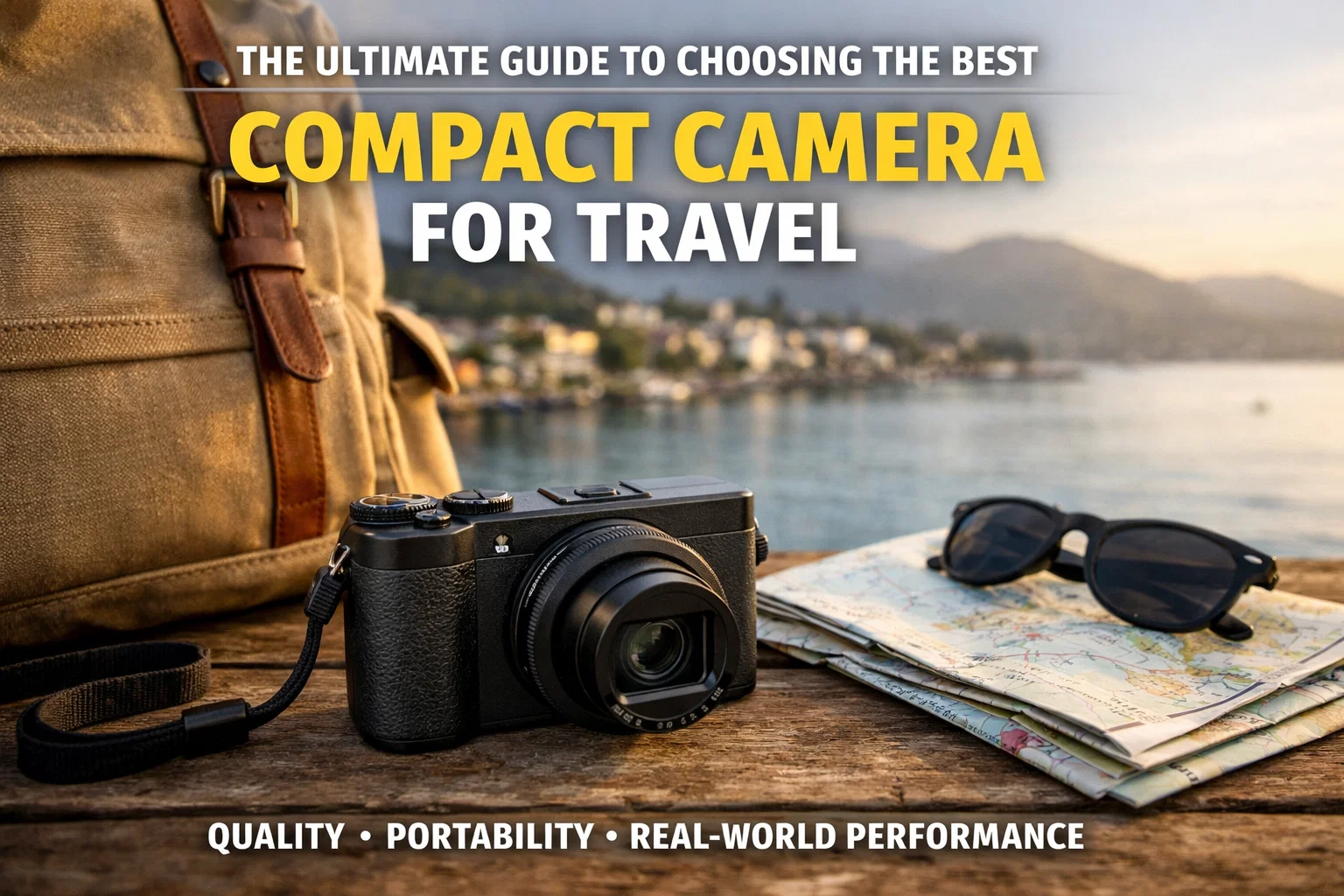
The Traveler’s Essential Guide to Finding the Best Compact Camera
Executive Summary: Choosing the best compact camera for travel is a nuanced decision that balances image quality, portability, and practical functionality. This comprehensive guide cuts through the marketing noise to examine the core technologies—sensor size, lens design, and processing engines—that differentiate premium compacts. We move beyond basic specifications to explore how these cameras perform in real-world travel scenarios, from bustling street markets to serene landscapes. By understanding the intersection of technical capability and human-centric design, you can select a tool that not only fits in your pocket but also elevates your travel photography, ensuring you return with images as vivid as your memories.
Introduction
For the discerning traveler, the camera is more than a device; it’s a portal to memory. The quest for the best compact camera for travel is driven by a universal desire: to capture the essence of our journeys with fidelity and artistry, without being anchored by heavy, complicated gear. This pursuit sits at the intersection of advanced optical engineering and the pure, unadulterated joy of exploration. The modern premium compact represents a remarkable convergence of technologies, offering image quality that rivals bulkier systems in a form factor that promises liberation. But with a myriad of options boasting similar specs, the true differentiators lie in nuanced performance, handling, and how the camera feels as an extension of your vision on a long day of discovery. This guide delves deep into those details, providing the expert insights needed to make a confident, personalized choice.
Understanding the Compact Camera Renaissance
The narrative of compact cameras has evolved dramatically. Once seen as simple point-and-shoots, the category has been revitalized by a wave of premium models designed for the knowledgeable photographer. This renaissance is fueled by travelers and documentarians who refuse to compromise. They demand large sensors for beautiful background blur and low-light clarity, fast lenses for creative flexibility, and robust construction that can withstand the rigors of the road—all packaged with intuitive, direct controls.
This shift represents a fundamental change in design philosophy. Manufacturers are now building compacts not as lesser alternatives to interchangeable-lens cameras, but as definitive, all-in-one photographic instruments. The focus is on creating a seamless, distraction-free shooting experience. For the traveler, this means more time engaging with a scene and less time fumbling with menus. The very best models achieve a kind of symbiotic relationship with the photographer, where the tool feels transparent, allowing creative intent to flow directly into the image.
Key Takeaway: Today’s premium compacts are sophisticated tools engineered for the knowledgeable photographer, blending large-sensor image quality with intuitive, portable designs that prioritize the shooting experience over mere convenience.
Sensor Size: The Heart of Image Quality
At the core of every camera is the sensor, and its size is the single most critical determinant of image quality. In compact cameras, you’ll primarily encounter three tiers. One-inch sensors are common in high-end pocket zooms, offering a significant leap over smartphone photography with better dynamic range and noise control. The APS-C sensor is a powerhouse format found in several flagship fixed-lens compacts, providing image quality on par with many professional DSLRs and mirrorless cameras. Finally, full-frame sensors represent the apex, housed in a select few models that deliver unparalleled depth and detail.
A larger sensor captures more light, which translates to finer detail, richer colors, and superior performance in low-light conditions. It also enables a shallower depth of field, allowing you to isolate subjects with creamy, artistic blur. However, a larger sensor typically requires a larger, more complex lens design, influencing the camera’s overall size and cost. For travel, the choice often centers on the APS-C sensor, which presents an ideal equilibrium of stunning quality and relative portability, making it a cornerstone feature for the best compact camera for travel for many enthusiasts.
For a Featured Snippet: A camera sensor is a silicon chip that converts light into a digital image. Larger sensors, like APS-C or full-frame, capture more light and detail than smaller ones, resulting in superior image quality with less noise, wider dynamic range, and greater control over depth of field. This is why sensor size is a primary consideration in premium compact cameras.
Key Takeaway: The sensor is the camera’s digital film; a larger APS-C or full-frame sensor provides dramatically better image quality, low-light performance, and creative control, forming the non-negotiable foundation for a serious travel compact.
The Lens: Your Window to the World
If the sensor is the heart, the lens is the eye. Its specifications define your creative boundaries. Focal length, expressed in millimeters, determines your angle of view. A wider lens (e.g., 28mm) is perfect for vast landscapes and tight interiors, while a longer lens (e.g., 70mm or more) is ideal for portraits and pulling in distant details. Aperture, expressed as an f-number (e.g., f/2.8), is equally vital. A “fast” lens with a wide maximum aperture (like f/1.8 or f/2) performs brilliantly in low light and allows for that desirable subject-isolating blur.
Travel compacts generally fall into two optical camps: fixed focal length (prime) and zoom. A fast prime lens, often paired with a large APS-C sensor, offers exceptional optical purity and speed in a smaller package, favoring image quality and low-light performance over flexibility. A zoom lens provides invaluable versatility, allowing you to adapt to changing scenes instantly—from a wide-angle cityscape to a tighter shot of architectural detail. The best travel zoom compact camera balances a useful zoom range with a reasonably fast, constant aperture to maintain performance across its focal length.
Key Takeaway: A fast, sharp lens is just as important as a large sensor; your choice between a versatile zoom and a high-performance prime lens will fundamentally shape your photographic approach while traveling.
The Handling and Design Imperative
Technical specifications are meaningless if a camera is a chore to use. Ergonomics and handling are where the theoretical meets the practical. A well-designed compact should feel secure and responsive in your hand. Key physical controls—dedicated aperture and exposure compensation dials, for instance—allow for quick adjustments without taking your eye from the viewfinder. This tactile feedback is crucial for maintaining flow and creativity.
Durability is a non-negotiable for travel. Weather-sealing, which provides resistance to dust and moisture, transforms a camera from a fair-weather friend into a reliable travel companion capable of handling a sudden mountain drizzle or dusty desert wind. Furthermore, the quality of the electronic viewfinder (EVF) and rear screen greatly impacts the experience. A bright, high-resolution EVF is essential for composing shots in glaring sunlight, while a tilting touchscreen facilitates shooting from high or low angles with ease. These elements combine to create a tool that feels less like a piece of electronics and more like a trusted instrument.
Key Takeaway: Superior handling—through dedicated controls, robust build quality, and a clear viewfinder—is what transforms a capable camera into a joy to use, encouraging you to shoot more and capture better travel photographs.
Beyond the Still Image: Video and Hybrid Features
The modern travel storyteller often works in both still and motion. Therefore, a compelling best compact camera for travel must be a competent hybrid. Look for 4K video recording at a minimum, with clean, detailed footage. Advanced features like high frame rate recording for smooth slow-motion, in-body image stabilization (IBIS) to steady handheld shots, and microphone inputs for improved audio quality are strong indicators of serious video capability.
Hybrid autofocus systems are also critical. Technologies like phase-detection and eye-autofocus (for both humans and animals) ensure your subject remains sharply in focus, whether you’re filming a bustling market scene or capturing a portrait. These features were once the exclusive domain of dedicated cinema cameras but are now expected in premium compacts. For the traveler documenting a journey, this convergence means carrying one master device instead of two, simplifying your kit without sacrificing creative potential.
Key Takeaway: Robust hybrid video features, including 4K quality, effective stabilization, and professional autofocus, make a modern compact camera a complete visual storytelling tool for the multimedia traveler.
Connectivity and the Modern Workflow
In the era of instant sharing, a camera’s connectivity suite is a core feature, not an afterthought. Reliable built-in Wi-Fi and Bluetooth are essential for seamlessly transferring images to your smartphone or tablet for quick editing and posting. This capability allows you to share moments in near real-time while maintaining the superior image quality of a dedicated camera over a smartphone shot.
Some models take this further, offering cloud connectivity for automatic backup or sophisticated mobile apps that allow for remote camera control. This integration streamlines the travel photography workflow, bridging the gap between capture and distribution. When evaluating options, consider the reliability and speed of this wireless transfer process, as a clunky, slow connection can become a significant frustration on the road, defeating the purpose of a connected device.
Key Takeaway: Seamless, reliable wireless connectivity for image transfer and remote control is a crucial modern feature, enabling efficient sharing and backup while traveling without the need for a computer.
Navigating the Key Trade-Offs: A Comparative Lens
The choice for the best pocket camera for travel invariably involves balancing competing priorities. To visualize the core compromises between the dominant premium compact categories, the following table outlines the fundamental trade-offs.
Comparison of Premium Compact Camera Archetypes for Travel
| Camera Archetype | Core Strength | Primary Compromise | Ideal Traveler Profile |
|---|---|---|---|
| Large-Sensor Prime Compact | Exceptional image quality, superb low-light performance, shallow depth of field, often superior build. | Fixed focal length (no zoom); requires “zooming with your feet.” | The purist who prioritizes ultimate image quality and loves working within a single, classic focal length. |
| Advanced Zoom Compact | Outstanding versatility with a wide zoom range; all-in-one convenience. | Smaller sensor (typically 1-inch) or slower variable aperture; image quality, especially in low light, can trail larger-sensor primes. | The pragmatic traveler who values flexibility above all and wants one camera for every scenario. |
| Full-Frame Compact | The absolute pinnacle of image quality and dynamic range in a compact form. | Significant cost; often larger/heavier; lens options are fixed and limited. | The professional or dedicated enthusiast who refuses to compromise on quality and views the camera as a long-term investment. |
Key Takeaway: Selecting a travel compact is an exercise in understanding trade-offs; prioritizing ultimate image quality often means sacrificing zoom flexibility, while seeking maximum versatility may require accepting a smaller sensor.
The Street Photography Specialist
For many, travel photography is synonymous with street photography—the art of capturing candid moments and the rhythm of daily life in unfamiliar places. Here, specific camera traits become paramount. Discreetness is power. A small, quiet, and unobtrusive camera allows you to photograph without drawing attention, preserving the authenticity of the moment. A fast, wide-to-midrange prime lens (like a 35mm equivalent) is the classic tool, providing a natural perspective and enabling quick, instinctive shooting.
Autofocus performance is critical. The system must be swift, silent, and accurate, with reliable face and eye detection. Many photographers also prefer a rangefinder-style design with an offset viewfinder, allowing them to keep both eyes open—one on the viewfinder, one on the evolving scene around them. This situational awareness is invaluable. As noted documentary photographer Susan Meiselas once observed, “Still photography is a subliminal kind of observation. It’s about finding the moment, not forcing it.” The right compact becomes an extension of that observational instinct.
Key Takeaway: For street and candid travel photography, a compact’s discreet size, silent operation, fast autofocus, and intuitive handling are more valuable than any spec sheet, enabling you to observe and capture moments authentically.
The Landscape and Nature Adventurer
When your travels lead to grand vistas and natural wonders, your camera’s demands shift. Dynamic range—the ability to capture detail in both bright highlights and deep shadows—becomes essential for sunrises, sunsets, and high-contrast scenes. A camera with robust RAW file processing is key here. Resolution is also a consideration; a higher-megapixel sensor allows for more detailed prints and greater flexibility to crop into a scene while retaining clarity.
While prime lenses are excellent, a zoom lens with a wide-angle capability (24mm or 28mm equivalent) is incredibly useful for landscapes, allowing you to compose precisely. Weather-sealing is arguably more critical here than in any other travel context, protecting your gear from sea spray, sand, rain, and humidity. Furthermore, a camera with reliable battery life and efficient power management ensures you won’t miss a shot at the golden hour because of a depleted battery in a remote location.
Key Takeaway: For landscapes and adventure, prioritize sensors with wide dynamic range, weather-sealed bodies, and lenses that offer wide-angle perspectives to capture the full scope of majestic environments.
Real-World Case: A Day in Kyoto’s Arashiyama District
Consider a day spent in Kyoto’s Arashiyama bamboo grove and surrounding temples. The light is dappled and low. The scenes shift rapidly: the tight, towering corridors of bamboo require a wide lens, while capturing the intricate carving on a distant temple gate demands a telephoto reach. A quiet, respectful shutter is mandatory in the serene temple grounds. By afternoon, a sudden rain shower sweeps through.
In this single scenario, the strengths of a versatile, weather-sealed zoom compact are fully displayed. You can shift focal lengths instantly, work quietly, and continue shooting confidently in the rain. Later, transferring a few standout images via Wi-Fi to your phone lets you share the moment while resting at a café. This practical, fluid experience underscores how the right tool doesn’t just capture images—it enhances the entire day by adapting seamlessly to a multitude of challenges.
Key Takeaway: A single day of diverse travel photography highlights the need for a versatile, durable, and connected camera that can adapt to changing light, subjects, and conditions without interrupting the flow of your journey.
The Smartphone Challenge: Understanding the Difference
It’s a valid question: with smartphones producing increasingly impressive images, why carry a separate camera? The answer lies in physics and creative control. Even the best smartphones use tiny sensors, relying on computational photography—multiple frames and AI processing—to create a single image. This often results in a processed, sometimes artificial look, especially in low light, with aggressive noise reduction smearing fine detail.
A premium compact with a larger sensor and lens captures more true optical information from the start. This provides finer natural detail, more realistic color transitions, genuine shallow depth of field, and far greater latitude for professional editing. The physical controls of a dedicated camera also foster a more intentional, creative process. While smartphones excel at computational convenience, a dedicated compact delivers superior image fidelity and photographic intentionality.
For a Featured Snippet: Computational photography uses software and AI to combine multiple images and enhance photos, common in smartphones. Optical photography, central to dedicated cameras, uses larger physical sensors and lenses to capture superior light, detail, and depth of field in a single exposure, providing a more natural, editable file with greater creative control for serious photography.
Key Takeaway: While smartphones offer convenience, a premium compact camera provides superior optical performance, authentic image quality, and tangible creative control that computational processing cannot authentically replicate.
Investment and Value Over Time
A premium compact camera is an investment. Moving beyond initial cost, consider its value as a long-term travel companion. A well-built model with a classic focal length and robust sensor will remain relevant for years, its image quality timeless. The durability of weather-sealing protects that investment. Furthermore, the joy of using a finely-tuned instrument—the tactile dials, the responsive autofocus, the clarity of the viewfinder—has an intangible value that enhances every trip.
Contrast this with the rapid, planned obsolescence of smartphones. A camera dedicated to a single purpose often enjoys a longer useful lifespan and retains more residual value. When you frame the purchase not as a gadget upgrade but as an acquisition of a lasting creative tool, the perspective shifts. It becomes about choosing a partner for your future adventures, making the decision one of passion and practicality intertwined.
Key Takeaway: View a premium compact as a long-term investment in your craft and memories; a well-chosen model offers enduring performance, durability, and satisfaction that far outlasts the upgrade cycle of consumer electronics.
Final Checklist Before You Buy
Use this actionable list to evaluate your options and align them with your personal travel style:
- Sensor & Lens Combo: Have I prioritized the right balance (e.g., APS-C prime for quality, 1-inch zoom for flexibility)?
- Handling: Does it feel secure and intuitive in my hand, with key controls accessible without menus?
- Durability: Does it have weather-sealing for my planned adventures?
- Focal Length: Does the lens’s range (fixed or zoom) match my dominant shooting subjects?
- Hybrid Use: Does it meet my video quality and stabilization needs?
- Connectivity: Is the wireless transfer to my phone/tablet reliable and straightforward?
- Real-World Use: Have I read hands-on reviews focusing on battery life, autofocus in low light, and menu logic, not just specs?
Key Takeaway: This checklist moves you beyond specifications to practical, hands-on criteria that determine how a camera will truly perform as your travel companion.
Conclusion
The journey to find the best compact camera for travel is, fittingly, a voyage of personal discovery. It requires honestly assessing your photographic goals, travel habits, and what brings you joy in the process of making images. The ideal camera is the one that you want to carry everywhere, that feels natural in your hands, and that disappears as a tool so your vision can emerge. It is a fusion of precision engineering and human-centric design, capable of rendering the profound beauty of a distant landscape and the fleeting intimacy of a street corner moment with equal grace.
In a world of constant digital noise, a great travel compact encourages a more focused, present, and artistic way of seeing. It is an invitation to engage more deeply with the world around you. By making an informed choice rooted in both technical understanding and personal workflow, you equip yourself not just with a camera, but with a key to unlock richer, more vivid memories—frames of your journey that will resonate for a lifetime. Consider exploring our deeper guides on specific camera models to see how these principles apply to the latest gear on the market.
Frequently Asked Questions (FAQ)
What is the best all-around compact camera for travel?
The best all-around model balances a versatile zoom lens (like a 24-70mm equivalent), a larger sensor (APS-C is ideal), and robust build quality. This combination offers great image quality, flexibility for different scenes, and durability, making it a true go-anywhere tool. Look for strong autofocus and weather-sealing to complete the package.
Is a zoom or prime lens better for travel photography?
It depends on your style. A zoom lens offers unmatched versatility, allowing you to adapt to wide landscapes or distant details instantly—a major advantage for dynamic trips. A prime lens typically offers better image quality, superior low-light performance, and a smaller size, encouraging a more deliberate, creative approach. Many find a zoom to be the more practical best compact camera for travel.
How important is weather-sealing in a travel camera?
Extremely important if your travels involve unpredictable environments—beaches, mountains, rainforests, or even just urban exploration in changeable weather. Weather-sealing protects against dust and moisture, giving you the confidence to keep shooting when conditions turn, ensuring you never miss a shot due to caution over your gear’s safety.
Can a premium compact really replace a DSLR or mirrorless camera for travel?
For most travelers, absolutely. A premium compact with a large sensor and fast lens matches the image quality of bulkier systems in a fraction of the size and weight. While it doesn’t offer the lens interchangeability of those systems, its all-in-one design is often a liberating advantage, making it the best professional compact camera for travel for those prioritizing portability.
What’s the main advantage of a compact camera over my latest smartphone?
The main advantages are superior optical performance and creative control. A larger sensor and lens system capture more light and detail, producing more natural images with genuine background blur. You also gain full manual controls, a physical viewfinder, and a dedicated device that fosters a more intentional photographic process, leading to better final images, especially in challenging light.