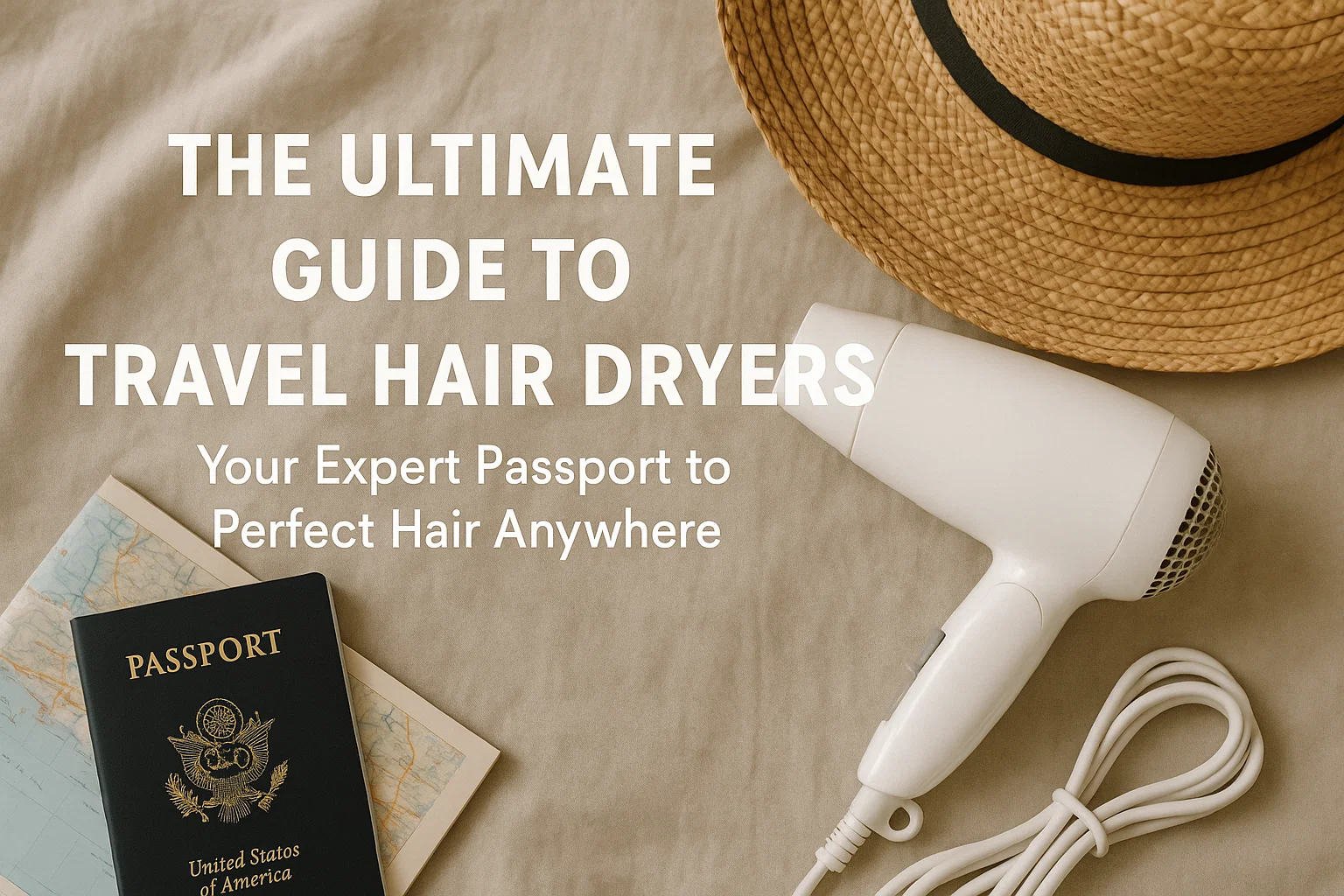
The Ultimate Guide to the Travel Hair Dryer: Your Passport to Perfect Hair Anywhere
Packing for a trip often involves a delicate dance between necessity and practicality. For many, the ritual of styling hair is non-negotiable, a cornerstone of looking and feeling confident while exploring new places. Yet, the bulky, powerful dryer you rely on at home is a notorious space-hogger and often a logistical nightmare with foreign electrical systems. This is where the specialized travel hair dryer becomes an indispensable companion. Far more than a mere miniaturized version of your home appliance, a true travel dryer is an engineered solution to a globe-trotter’s problem, balancing performance, portability, and universal compatibility. This comprehensive guide will navigate the intricate world of travel-friendly hair styling tools, transforming you from a frustrated packer into a savvy, salon-worthy traveler. We’ll delve into the critical specifications, innovative technologies, and strategic packing insights that make a travel hair dryer a worthy investment for anyone who refuses to compromise on their personal care routine, no matter their destination.
Understanding the Core Technology Behind Travel Dryers
The heart of any effective travel hair dryer lies in its motor and heating element. Traditional dryers use bulky AC motors, which are powerful but heavy. Most quality travel models utilize advanced DC motors. These are significantly lighter and more compact, directly contributing to the reduced weight and size in your luggage. However, this shift in motor technology is what necessitates a closer look at wattage, as DC motors often operate at lower power ratings without a direct sacrifice in airflow efficiency.
This brings us to the most critical specification: wattage. While a powerful 2000W dryer at home is glorious, it’s impractical for travel. The sweet spot for a capable travel hair dryer typically falls between 1300 and 1800 watts. Within this range, you’ll find models that offer a compelling balance. They provide enough airflow and heat for efficient drying on most hair types without overwhelming circuits or your suitcase. The key is understanding that wattage alone isn’t the full story; it’s the combination of motor efficiency, airflow design, and heat concentration that dictates real-world performance.
The Non-Negotiable Feature: Dual Voltage Capability
The single most important feature for international travel is dual-voltage capability. Electrical systems vary globally, with most countries operating on 220-240 volts, while North America and a few others use 110-120 volts. Plugging a single-voltage dryer into the wrong outlet can result in, at best, a faint, useless trickle of air or, at worst, a fried motor and a dangerous safety hazard. A proper travel hair dryer will have a switch or an automatic sensor that allows it to safely function on both 120V and 240V systems.
This dual-voltage functionality is what truly liberates you as a traveler. It means you can confidently style your hair in a Parisian apartment, a Tokyo hotel, or a Brazilian pousada without a second thought, provided you have the correct plug adapter. Never confuse a simple plug adapter with a voltage converter; the adapter only changes the shape of the plug, while the dual-voltage switch changes the appliance’s internal electrical acceptance. For true peace of mind, always verify this feature before purchase.
Portability and Design: More Than Just Size
When we think of a travel hair dryer, compact folding handles immediately come to mind, and for good reason. A foldable handle can reduce the dryer’s packed length by 30-50%, making it a sleek rectangle that tucks easily into a suitcase corner or carry-on toiletry kit. This design innovation is the most visible differentiator from a home dryer and is essential for maximizing space. Some models take it further with detachable concentrator nozzles that store neatly within the body of the dryer itself.
Beyond folding, the overall build quality and materials matter immensely. A good travel dryer should feel robust enough to withstand the jostles of luggage, not flimsy like a disposable toy. Weight is also a paramount concern. The best models use advanced polymers and materials to keep the weight under 1.5 pounds. Every ounce saved in your toiletry bag is an ounce you can use for another souvenir or simply enjoy a lighter bag. The ideal design feels substantial in the hand during use but disappears in your luggage when not needed.
Performance and Styling Capabilities on the Go
It’s a common misconception that a travel hair dryer must mean subpar performance. While you are trading some raw power for portability, modern high-end travel dryers are remarkably effective. Technologies like ceramic, tourmaline, and ionic conditioning have trickled down into the travel category. Ionic dryers emit negative ions that break down water molecules faster, reducing drying time and minimizing frizz and static—a boon for humid climates. Ceramic and tourmaline components provide far-infrared heat that is gentler and more even, protecting hair from extreme heat damage.
The availability of heat and speed settings is crucial for styling versatility. A simple one-speed, one-heat dryer is rarely sufficient. Look for a model offering at least two heat and two speed settings. This allows you to switch to a lower heat for delicate finishing work or fine hair, and a high-speed, cool shot button is essential for setting styles and adding shine. A concentrator nozzle, even a compact one, is non-negotiable for targeted drying and smoothing, transforming the dryer from a simple drying tool into a legitimate styling instrument.
Navigating the World of Wattage and Power
Wattage is the primary unit of power measurement for hair dryers, but its interpretation for travel requires nuance. As mentioned, 1300-1800W is the functional zone. A 1600W dual-voltage travel hair dryer will often outperform a cheap 1875W hotel dryer because of superior motor and airflow engineering. The key metric to consider is Air Velocity, often measured in feet per minute or meters per second. A well-designed dryer moves a high volume of air efficiently, which is what actually dries the hair, not just the heat alone.
It’s also vital to understand the relationship between wattage and voltage. A dryer rated at 1600W will draw different amounts of current (amps) depending on the voltage. On 120V, it draws about 13.3 amps. On 240V, it draws only about 6.7 amps. This is why dual-voltage operation is safe; the dryer is engineered to adjust its electrical draw accordingly. Knowing this can also help you avoid tripping breakers in older hotels, as staying under 1500W is often a wise precaution on circuits shared with other appliances like kettles or irons.
Comparing Travel Dryers to Hotel Dryers and Home Models
The ubiquitous hotel wall-mounted dryer is often the benchmark of hair-drying frustration. They are typically low-wattage (around 1000W), poorly designed, and tethered to the bathroom wall by a short, inconvenient cord. Investing in your own travel hair dryer provides a consistent, familiar, and far more powerful styling experience wherever you go. You control the settings, you have the attachments you need, and you’re not wrestling with a awkwardly placed unit. The time saved and the quality of the result justify the space in your bag for all but the most minimalist packers.
Compared to your primary home dryer, the travel version is a study in compromise and specialization. Your home dryer is likely a powerhouse, featuring advanced moisture sensors, multiple magnetic attachments, and intense wattage. The travel dryer’s mission is different: to deliver 80-90% of the performance in 50% of the size and weight. It won’t have every bell and whistle, but the best ones capture the core functionality—effective drying, frizz reduction, and basic styling—in a portable package. As one industry expert puts it, “The ideal travel hair dryer isn’t just a smaller version of your home dryer; it’s a purpose-built tool that redefines what’s possible from a compact form factor, ensuring you never have to choose between great hair and smart packing.”
Key Features Checklist for Your Purchase Decision
When evaluating specific models, use a systematic checklist to separate the contenders from the pretenders. First, confirm dual-voltage capability (automatic switching or a manual switch). Second, assess the wattage and ensure it falls within the 1300-1800W range for a good power-to-portability ratio. Third, examine the physical design: Does it have a folding handle? Is it lightweight yet sturdy? Does it come with a concentrator and a diffuser if you need one? Fourth, review the feature set: Are there multiple heat/speed settings? A cold shot button? Ionic or ceramic technology?
Finally, consider the accessories and practicalities. A long, tangle-free cord (at least 6 feet) is a huge quality-of-life improvement. A travel pouch or case is invaluable for keeping the dryer and its attachments together and protecting your clothes from snags. Some high-end models even offer a voltage-specific pouch or a worldwide plug adapter kit. The presence of these thoughtful extras often signals a product designed with the genuine traveler in mind, not just a cheaply made mini dryer.
The Travel Hair Dryer Breakdown Table
This comparison table outlines the core considerations when choosing your ideal model, moving from essential to enhanced features.
| Feature Category | Essential Specs (Must-Have) | Performance Enhancements (Nice-to-Have) | Luxury & Convenience (Game-Changers) |
|---|---|---|---|
| Voltage & Power | Dual-voltage (120V/240V) switch. 1300-1600W rating. | 1600-1800W with high-velocity airflow. Automatic voltage sensing. | Advanced motor tech (e.g., AC for travel). Intelligent heat/power modulation. |
| Portability | Folding handle. Weight under 2 lbs (0.9 kg). | Weight under 1.5 lbs (0.68 kg). Ultra-compact fold. | Integrated storage for nozzles in body. Sleek, durable travel case included. |
| Core Technology | Multiple heat/speed settings. Cool shot button. | Ionic technology for frizz reduction. Ceramic/tourmaline heating elements. | Professional-grade ionic/ceramic combo. Negative ion generator. |
| Attachments | Concentrator nozzle (focused airflow). | Both concentrator and diffuser attachments. | Magnetic attachment system. Styling nozzle variety. |
| Build & Usability | 6-foot+ tangle-resistant cord. Ergonomic grip. | Removable air intake filter for cleaning. Quiet(er) operation. | Premium materials (e.g., matte finish). Travel pouch with organization. |
Strategic Packing and Care for Your Appliance
Packing your travel hair dryer strategically protects both the appliance and your belongings. Always let the dryer cool completely before packing. Secure the cord neatly, often by wrapping it around the folded body (if designed for it) or using a Velcro tie. Place the dryer and its attachments in the provided travel pouch or a dedicated compartment in your toiletry bag. This prevents the cord from tangling and the nozzles from scratching other items. For extra protection in a checked bag, consider padding it within a shoes or the center of your clothing.
Care and maintenance extend its lifespan significantly. Regularly clean the air intake filter at the back of the dryer; lint and dust buildup here are the primary cause of overheating and reduced performance. A quick brush or vacuum every few uses makes a dramatic difference. When using abroad, always ensure the voltage switch is in the correct position before plugging it in. Use a quality plug adapter that makes solid contact; wobbly, cheap adapters can cause arcing and damage the plug pins. With proper care, a good travel dryer can be a reliable companion for years of adventures.
Addressing Common Hair Types and Travel Needs
Different hair types have distinct requirements, and the right travel hair dryer can be selected to meet them. For those with fine, thin, or straight hair, priority should be on lighter weight and a dryer with good ionic technology to enhance shine and prevent static. A precise concentrator is key for smooth, blow-out styles. High heat isn’t as critical as controlled, direct airflow. For these travelers, a model in the lower wattage range (1300-1500W) may be perfectly sufficient and save even more space.
Conversely, travelers with thick, curly, coarse, or long hair need to prioritize power and attachments. A dryer at the higher end of the wattage spectrum (1600-1800W) is almost essential to manage the volume of hair and water. A diffuser attachment is non-negotiable for enhancing and defining curls without causing frizz. The ability to deliver high heat and high speed simultaneously is crucial for cutting down drying time. For this group, the investment in a slightly larger, more powerful travel-specific model pays dividends in daily time savings and styling satisfaction.
The Environmental and Practical Impact of Your Choice
Choosing a well-made, durable travel hair dryer is also a surprisingly sustainable choice. It eliminates the need to use (and subsequently throw away) the cheap, plastic-wrapped dryers sometimes provided by hotels or purchased in desperation at a drugstore abroad. By carrying your own reliable tool, you reduce electronic waste and plastic consumption over the long term. Furthermore, a more efficient dryer with good ionic technology can dry hair faster, using less total energy per styling session, which is a small but meaningful consideration.
From a purely practical standpoint, the confidence of having your own trusted tool cannot be overstated. It removes a variable from your travel experience. You don’t have to dedicate mental energy to wondering if your hotel will have a working dryer, or plan extra time for a frustrating styling session. It provides routine and normalcy, which can be comforting in unfamiliar environments. This psychological benefit, coupled with the tangible result of looking your best, solidifies the travel hair dryer as a key component of a streamlined, prepared traveler’s kit.
Conclusion
The journey to finding the perfect travel hair dryer is an exercise in understanding the intersection of technology, design, and personal need. It’s about recognizing that the right tool can transform a travel hassle into a seamless part of your routine. By prioritizing dual-voltage capability, smart wattage choices, durable and compact design, and features that match your hair type, you invest in more than an appliance—you invest in confidence. This guide has armed you with the knowledge to navigate specifications, compare features meaningfully, and make an informed choice that aligns with your voyages. Remember, the best travel hair dryer for you is the one that delivers reliable, salon-inspired results, tucks away without a second thought, and stands ready to perform wherever in the world you may land. It’s a small piece of luggage that carries a significant impact on how you look and feel as you explore the globe.
Frequently Asked Questions (FAQ)
What exactly makes a hair dryer a “travel” hair dryer?
A true travel hair dryer is specifically engineered for portability and global use. Its defining characteristics are a compact, often folding design; a lightweight build; and, most critically, dual-voltage capability to safely operate on both 120V and 240V electrical systems. It balances sufficient power for effective styling with a form factor that makes it easy to pack.
Is a dual-voltage travel hair dryer safe to use everywhere?
Yes, absolutely. A dual-voltage travel hair dryer is designed to be safe worldwide. The key is ensuring the voltage switch is set correctly for the country you are in (or that it switches automatically) and that you use a appropriate physical plug adapter to fit the local outlet. The dryer’s internal components are built to handle the different electrical current.
How much power (wattage) do I really need in a travel dryer?
For most people, a travel hair dryer between 1300 and 1800 watts offers the best balance. If you have fine or short hair, the lower end of this range may suffice and save space. If you have thick, long, or coarse hair, aim for 1600-1800W for efficient drying. Remember, a well-designed 1600W travel dryer can outperform a poorly made 1875W model.
Can a good travel hair dryer really perform as well as my dryer at home?
While it may not match the absolute peak power of a full-size professional travel hair dryer, a high-quality travel model can deliver 80-90% of the performance. With technologies like ionic conditioning and ceramic heating, it can provide fast drying, frizz control, and smooth styling. The slight trade-off in raw power is the necessary compromise for supreme portability and universal compatibility.
Are the attachments like a concentrator or diffuser important for a travel model?
Yes, attachments are crucial for styling versatility. A concentrator nozzle is essential for smoothing and directing airflow for a blow-out, while a diffuser is a must-have for curly or wavy hair types to enhance texture without frizz. The best travel hair dryer kits include compact versions of these attachments, often designed to store neatly with the dryer itself.